
Jowar Nutritional Value: A Complete Indian Guide
Written By
DietOwl Nutrition Team
Published
31 October 2026
Reading Time
15 min read
Jowar is not just another "healthy grain." 100 grams of raw jowar gives about 334 kilocalories, 9.97 grams of protein, 10.22 grams of fibre, and 3.95 milligrams of iron according to the ICMR-NIN Indian Food Composition Tables 2017, and that already tells you why it matters in Indian kitchens (source). The bigger question is how those numbers change once jowar becomes bhakri, roti, porridge, or dosa on an Indian plate.
Table of Contents
- What Jowar Is and Why It Matters in Indian Kitchens
- Macronutrient Breakdown of Raw Jowar
- Fibre and Micronutrient Profile of Jowar
- How Jowar Compares with Wheat, Rice, and Bajra
- Raw Grain versus What Reaches the Plate
- Jowar in Everyday Indian Cooking
- Does Jowar Really Help Diabetes and Prediabetes
- How Much Jowar to Eat in a Balanced Indian Diet
- Quick Reference Card
- Frequently Asked Questions About Jowar Nutrition
What Jowar Is and Why It Matters in Indian Kitchens
Jowar, or Sorghum vulgare, is one of India's long-standing dryland cereals. It fits hot, moisture-limited farming conditions better than many other grains, which is why it became firmly rooted in everyday cooking across Maharashtra, Gujarat, Rajasthan, and Karnataka. Jowar has been grown in India for thousands of years, so it belongs to a very old food tradition rather than a passing wellness trend.
Why Indian readers still care
For many households, jowar is not an occasional "superfood". It's a grain you rotate into rotis, bhakri, porridge, and mixed-flour doughs when you want variety without abandoning familiar food habits. That matters because the best diet changes are usually the ones a family can repeat.
The most useful way to think about jowar is simple. It is a cereal first, not a miracle food, and it contributes energy, fibre, and minerals while still needing help from dals, vegetables, dairy, eggs, or other protein foods for a balanced meal. Its value comes from what it adds to the plate, not from hype.
Practical rule: treat jowar as a useful staple grain, then build the rest of the meal around protein and vegetables.
Macronutrient Breakdown of Raw Jowar
A clear reading of jowar nutritional value starts with the raw grain, because composition tables are built that way. In 100 grams of raw jowar, carbohydrate provides most of the energy, while fibre and protein make it more useful than a plain starch in everyday Indian meals (source).
| Nutrient | Amount per 100 g | Approximate share of a 2,000 kcal adult diet |
|---|---|---|
| Energy | 334 kcal | About 17% of daily energy |
| Protein | 9.97 g | About 18% of a 55 g daily allowance |
| Fat | 1.73 g | A small share of daily fat intake |
| Available carbohydrate | 67.68 g | About 25% of the roughly 275 g in a 2,000 kcal ICMR-NIN plate |
| Dietary fibre | 10.22 g | About 41% of the WHO's 25 g daily minimum |
What those macros mean on an Indian plate
Jowar is carbohydrate-rich, so it works like a normal staple grain. It supplies meal energy for rotis, bhakri, porridge, and mixed-flour batters. The protein is useful for a cereal, but it does not replace dals, milk, curd, eggs, or other protein foods.
The fibre figure is the part many readers miss. 10.22 grams per 100 grams is high enough to matter in a diet that often leans on refined starches. In practice, that means a jowar meal may feel more filling than a meal built from more polished grains, especially when the portion is not overloaded with oil or ghee.
Fat stays low, so the grain itself is not a fatty staple. Extra fat usually enters through the recipe, such as ghee, oil, coconut, or fried sides. A jowar roti and a jowar roti brushed with ghee do not land the same way on the plate.
Fibre and Micronutrient Profile of Jowar
Jowar's micronutrient profile is one reason it fits so well into cereal-based Indian meals. In 100 grams of raw grain, jowar provides about 10.22 grams of fibre, 27.6 milligrams of calcium, 3.95 milligrams of iron, 133 milligrams of magnesium, 274 milligrams of phosphorus, 328 milligrams of potassium, and 1.96 milligrams of zinc (source).
What the key nutrients do
Fibre helps digestion and makes a meal feel more filling. That matters in Indian eating patterns where breakfast and dinner often centre on rotis, bhakri, or porridge. It also gives jowar a clearer advantage over polished rice, though the rest of the plate still matters.
Iron supports haemoglobin formation, so the 3.95 milligrams per 100 grams figure is useful for anyone trying to raise iron intake through food. Jowar cannot stand in for treatment of anaemia, but it can contribute to a better iron pattern across the day.
Magnesium and phosphorus are present in meaningful amounts, so jowar offers more than calories alone. These minerals support bone structure and energy metabolism (ICMR-NIN Dietary Guidelines 2024, source). Potassium adds to the grain's mineral mix, while zinc supports normal immune function.
Jowar works best as a mineral-contributing grain, not as a complete food by itself.
That limits what it can do on its own. If meals rely only on jowar, protein quality and overall micronutrient coverage can still fall short, especially for children, older adults, and anyone with higher nutrient needs. For that reason, a jowar roti, bhakri, or porridge still needs dals, curd, milk, eggs, vegetables, or other protein-rich foods around it.
How Jowar Compares with Wheat, Rice, and Bajra
Jowar becomes easier to judge when you place it next to the cereals Indian families swap every day. Its strengths are real, but it does not "win" on every metric. The practical question is which grain suits the meal you're cooking, not which grain sounds healthiest in theory.
Side by side, without the marketing
Jowar's fibre is notably stronger than polished rice, while its protein sits in the same general zone as other whole cereals. It is also strong on iron relative to white rice, which is why it often earns a place in mixed-grain or rotation planning. Wheat may edge it out slightly in some table comparisons, but jowar's gluten-free nature keeps it relevant for many households.
The numbers also vary by database, cultivar, and form. An older NIN table shows jowar at about 349 kilocalories, 10 grams of protein, 2 grams of fat, 2 grams of fibre, 2 grams of minerals, and 73 grams of carbohydrate per 100 grams, which is not identical to the newer IFCT 2017 profile. The fibre gap is mostly about method: older tables reported crude fibre, while IFCT 2017 reports total dietary fibre. That difference is exactly why readers should check whether a figure refers to whole grain, flour, or another preparation (source).
For a broader discussion of millet placement in Indian eating patterns, see the DietOwl note on whether millets are really a superfood. The short answer is that grain choice matters, but the meal pattern matters just as much.
Raw Grain versus What Reaches the Plate
A nutrition table describes jowar in its raw form. Your plate does not. Milling, water absorption, cooking time, roasting, and fermentation all change the food that finally gets eaten, so raw jowar values cannot be copied straight onto a cooked bhakri or roti.
Why the same grain looks different after cooking
The Indian Food Composition Tables note uses raw ingredient weight because cooking changes water content, which shifts the nutrient density per 100 grams of prepared food. That is why a bhakri, a dosa, and a porridge made from the same flour do not land on the plate in the same way.
A few practical examples help:
- Dry flour matters: weigh the flour before cooking if you want a realistic estimate.
- One medium bhakri is not 100 grams of grain: it usually contains far less dry flour than that.
- Added fat changes the meal fast: ghee, oil, and fried sides alter calories much more than the grain itself.
- Fermented batters behave differently: dosa or idli-style preparations are not nutritionally identical to a dry-roasted flatbread.
Simple rule: count the flour, not the finished weight of the bread.
For everyday tracking, a kitchen scale is more useful than guessing by appearance. If you do not weigh the flour, you are likely to overestimate how much jowar you consumed. That matters for anyone trying to manage blood sugar, weight, or total cereal intake, because the number on the plate is often lower than the number on the nutrition table.
Jowar in Everyday Indian Cooking
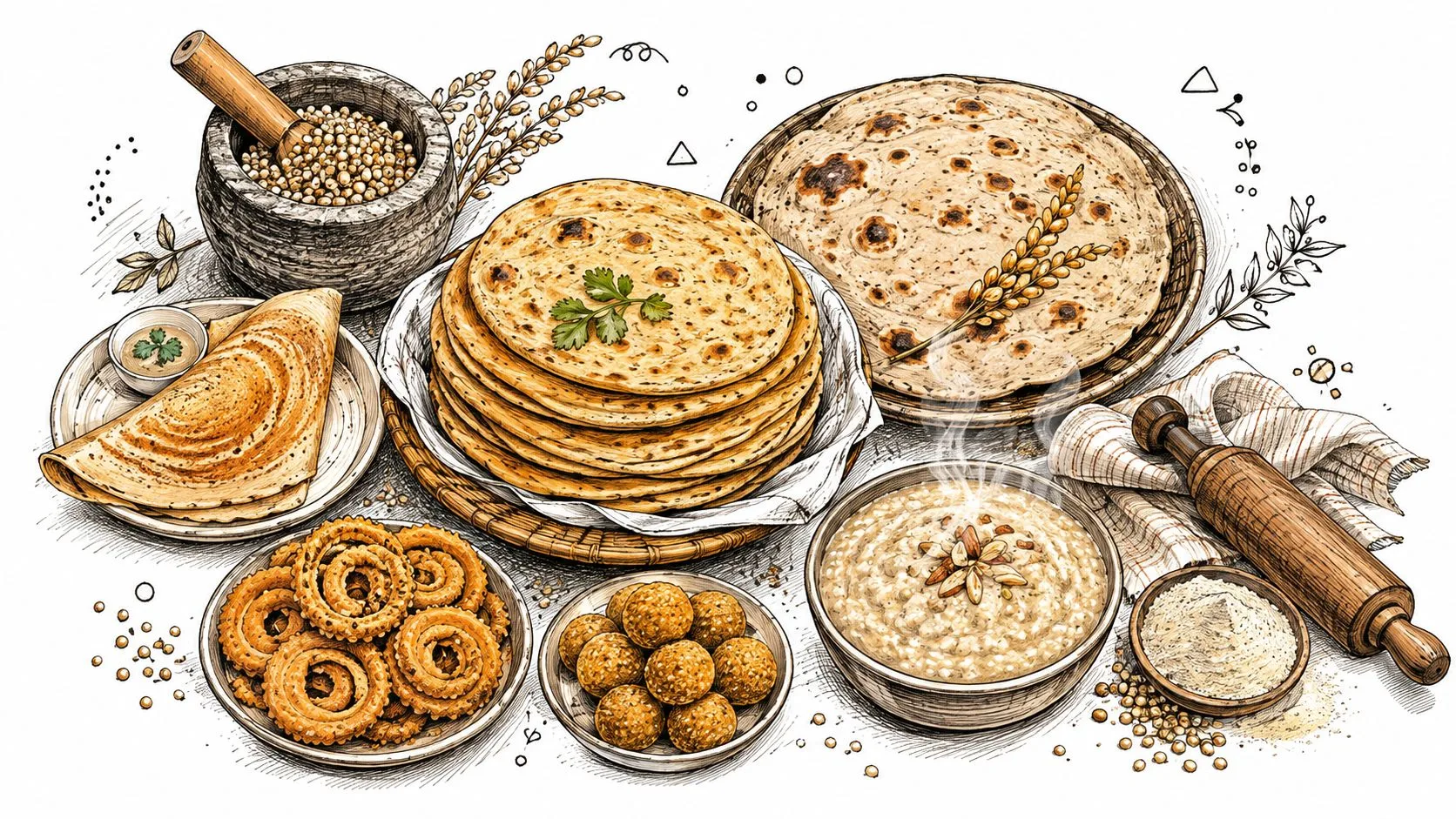
Jowar earns its place in Indian kitchens because it adapts well to different dishes, not because it needs to be eaten in one "correct" form. It can become bhakri, roti, dosa, porridge, upma, murukku, ladoo, or a mixed-flour dough, depending on regional habit and texture preference.
What the common forms give you
A jowar bhakri is usually the most traditional flatbread form, especially in western and central Indian cooking. A jowar roti works similarly, though thickness and size change the final serving. A jowar dosa or fermented batter offers a different texture and may suit some people better than a dry flatbread.
Jowar ambil or porridge is useful when someone wants a softer, more hydrating meal, especially in hot weather or during lighter breakfasts. Mixed-flour rotis with wheat or besan can improve handling and make the meal more practical for households that are easing into jowar rather than switching all at once. Because jowar is naturally gluten-free, it also matters for people avoiding wheat, though dedicated milling is important to reduce cross-contamination risk.
Later in the day, the same grain can show up in more snack-like foods such as laddoo or murukku. Those dishes are still jowar-based, but their nutrition depends heavily on the added sugar, oil, or ghee. That's why the recipe matters as much as the grain.
Here's a useful anchor for the kitchen, jowar works best when it has a partner on the plate. Dal, curd, vegetable sabzi, paneer, eggs, or fish all make the meal more complete.
Does Jowar Really Help Diabetes and Prediabetes
A grain by itself does not control blood sugar. Jowar's effect depends on the form you eat, the portion on the plate, how it is cooked, and what sits beside it, so a small serving with dal behaves very differently from a large, plain roti.
The research is more mixed than the headlines suggest. A 2021 review of millet studies, sorghum included, found that eating millets over the long term lowered fasting and post-meal glucose in people with diabetes, and placed sorghum in the medium glycaemic index range (source). But an Indian test of traditional foods measured plain jowar roti in the high glycaemic index range (84.1), higher than maize or bajra roti, which shows that a whole grain does not automatically mean a slow glucose rise (source).
What that means on the plate
For people with prediabetes or type 2 diabetes, jowar can fit as a reasonable grain choice. It still counts as carbohydrate. A thick bhakri, a roti made with refined flour, or a larger portion can raise the meal's glycaemic load quickly, just as any cereal can.
The better question is not whether jowar is "diabetic-friendly," but how it is eaten. Jowar works better when the meal also includes dal, vegetables, curd, paneer, eggs, or another protein food. That combination slows the meal and gives a steadier response than jowar alone. For a wider Indian context, the glycaemic index in Indian foods guide helps compare cereals, rotis, and common meal patterns.
Portion tracking tools can help here, because the same grain can look very different on the plate once cooking style and side dishes are included.
How Much Jowar to Eat in a Balanced Indian Diet
The 2024 ICMR-NIN Dietary Guidelines keep the cereal message realistic. Cereals and millets together should provide no more than 45% of total calories, and millets can make up roughly 20% to 30% of cereal quantity for adults and about 20% for children up to 10 years, with millet intake also permitted up to 30% to 40% of recommended cereals in raw-weight terms (source). That means jowar belongs in rotation, not as an unlimited staple.
A workable Indian plate model
For many adults eating around 1,800 to 2,000 kcal a day, a total cereal budget often lands around 200 to 250 g by raw weight. Within that framework, a practical jowar share is roughly 50 to 100 g of dry flour across the day, spread across bhakri, roti, or mixed dishes. That range fits better than assuming every meal should be a large millet-heavy one.
The meal still needs completion. Jowar gives the grain base, but pulses, vegetables, and a protein source are what make the thali balanced. If you are using jowar for weight management, the same principle still applies, and the DietOwl guide on millets for weight loss is a useful follow-up.
Balanced plate rule: jowar for the grain, dal or protein for the body, vegetables for volume and micronutrients.
That is also where personalised coaching helps. Portion size changes with activity, diabetes status, appetite, and the rest of the meal, so a fixed one-size-fits-all serving is rarely the right answer.
Quick Reference Card
A plate built around jowar works best when you read the grain numbers correctly. 100 grams of raw jowar gives about 334 kcal, 9.97 g protein, 10.22 g fibre, 3.95 mg iron, 133 mg magnesium, and 328 mg potassium (ICMR-NIN IFCT 2017). A bhakri, roti, or porridge usually uses much less flour than that, so the raw-grain figures describe the ingredient, not the finished serving. For a fuller nutrient reference, the ICMR-NIN Indian Food Composition Tables 2017 can help cross-check raw grain data with real meal planning.
Fast rules to remember
- Use it as a cereal, not a complete meal: pair jowar with dal, curd, eggs, paneer, or vegetables.
- Keep portions realistic: a daily jowar share of 50 to 100 g dry flour fits many adult diets.
- Respect the form: bhakri, roti, porridge, and dosa behave differently once cooked and eaten.
- Gluten-free but not always coeliac-safe: look for flour labelled for a dedicated millet facility if wheat traces matter.
If you want help turning those numbers into a daily pattern that suits your routine, DietOwl offers WhatsApp-based meal planning and coach check-ins built around Indian food habits.
Frequently Asked Questions About Jowar Nutrition
Is jowar better than wheat for weight loss? Not automatically. Jowar can help with fullness because of its fibre, but weight change still depends on total portions, added fat, snacks, and consistency.
Can jowar be eaten daily? Yes, for most healthy adults it can fit daily, as long as the rest of the diet still includes pulses, vegetables, and other protein foods.
Is jowar safe for diabetic rotis? It can be part of a diabetes-friendly meal, but roti thickness, flour amount, and side dishes matter a lot. It's not a free pass to eat unlimited bread.
Does jowar need to be soaked? Dry flour itself doesn't need soaking, but some batters and porridges benefit from pre-hydration or fermentation depending on the recipe and texture you want.
How should jowar flour be stored? Keep it in an airtight container in a cool, dry place, and use it within 2 to 3 months if possible. In humid weather, refrigeration helps reduce spoilage and weevil problems.
If you want practical help turning jowar numbers into meals that fit your own family, DietOwl can build a plan around your rotis, rice, dal, timing, and health goals. It's especially useful if you're trying to manage portions for blood sugar, weight, or a more balanced Indian thali without giving up the foods you already cook.
Related Topics
Biological Audit
Need a customized Indian Food Science plan?
Join 100+ Indians on a personalised Indian plan, on WhatsApp.
Deepen your Discovery.

Tofu vs Soya Chunks vs Paneer: Which Protein Is Best for Indians?
Dry soya chunks win on protein per 100 g, but that is dry weight. Here is how tofu, soya chunks and paneer really compare, with Indian data and goal-wise picks.

Jaggery vs Sugar vs Honey: Which Is Actually Better?
Jaggery, white sugar and honey are all sugars with near-identical effects on blood glucose. Here is the honest, mechanism-first comparison, and why portion size matters far more than which one you pick.

High-Protein Vegetarian Indian Foods: 20 Everyday Options
A practical list of 20 high protein vegetarian Indian foods with rough protein per serving, plus simple combinations that make your dal-roti-sabzi plate work harder for you.