
Soya Paneer Protein per 100g: Tofu Nutrition vs Milk Paneer
Written By
DietOwl Nutrition Team
Published
20 November 2026
Reading Time
11 min read
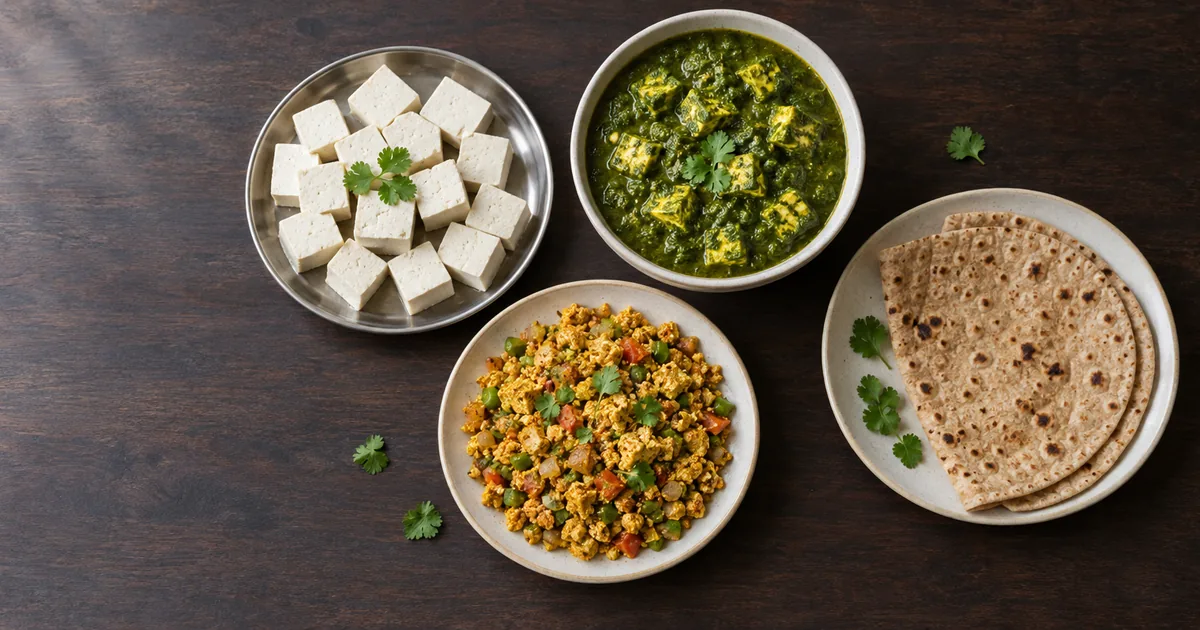
Soya paneer is tofu, the same food under an Indian name. Regular tofu has about 8 g protein per 100 g (USDA), well-pressed tofu made from Indian soybeans in a lab had 11.8 to 15.7 g (Murugkar 2014), and the densest firm row in USDA's table reaches about 17.3 g (USDA). Soft silken tofu has just 4.8 g (USDA), and milk paneer has 18.86 g (IFCT 2017). So the honest answer depends on which block you bought.
Fat is the bigger difference. Even that densest firm row, close to paneer on protein, carries 8.72 g fat per 100 g (USDA), against 24.78 g in paneer (IFCT 2017). Softer tofu is much lighter, but it also has far less protein, and only the pack can tell you which one you are holding.
Is soya paneer the same as tofu?
Yes. Soya paneer is the name many Indian shops and menus use for tofu, because it is made the way paneer is. Paneer is milk that has been curdled and pressed. Tofu is soy milk that has been curdled and pressed. India's food regulator describes tofu as "made by coagulating milky liquid obtained from soybean, and then pressing into soft white blocks" (FSSAI standards).
So what is tofu made from? Soybeans, water and a setting agent. FSSAI allows magnesium chloride (known as nigari), calcium sulfate, calcium chloride, citric acid, acetic acid, magnesium sulfate and glucono-delta-lactone, and the block may also carry spices or herbs (FSSAI standards). Plain tofu has no milk in it, which makes it useful if dairy does not suit you.
Soya paneer protein per 100 g: firm vs soft
IFCT 2017, India's official food table, has no entry for tofu, so these figures come from USDA's food database. They describe American products, so use them as a guide. One Indian lab study pressed calcium-set tofu from four Indian soybean varieties and got 11.8 to 15.7 g protein and 5.2 to 6.9 g fat per 100 g (Murugkar 2014). That is a useful check, though it was not a shop product.
| Tofu type, per 100 g | Water | Protein | Fat | Carbs | Energy | Calcium |
|---|---|---|---|---|---|---|
| Firm, calcium-set | 69.8 g | 17.3 g | 8.72 g | 2.78 g | 144 kcal | 683 mg |
| Hard, nigari-set | 71.1 g | 12.7 g | 9.99 g | 4.39 g | 145 kcal | 345 mg |
| Extra firm, nigari-set | 82.3 g | 9.98 g | 5.26 g | 1.18 g | 83 kcal | 282 mg |
| Regular, calcium-set | 84.6 g | 8.08 g | 4.78 g | 1.87 g | 76 kcal | 350 mg |
| Silken, soft | 89 g | 4.8 g | 2.7 g | 2.9 g | 55 kcal | 31 mg |
Sources: USDA FoodData Central rows for firm, hard, extra firm, regular and silken soft.
Look at the water column. The "extra firm" row has far less protein than the "firm" row because it holds more water. USDA itself warns that soft, firm and extra firm "vary in usage between manufacturers as there are no standards for the various types of tofu" (USDA). This is also why our vegetarian protein list quotes roughly 8 to 12 g for everyday tofu, while a dense, well-pressed block can reach about 17 g. USDA's older household table even lists a firm tofu at 7 g protein in 81 g, about 8.6 g per 100 g (USDA).
Indian rules give you another reason to read the pack. FSSAI caps tofu at 76.0% moisture with fat between 2.0 and 5.0%, but a product sold as soybean curd can hold up to 92.0% moisture and needs only 3.5 g protein per 100 g, while compressed soybean curd must have at least 13.0 g (FSSAI standards). That fat cap sits below USDA's firm and hard rows, and the moisture cap sits below the other three, so none of the five rows above matches a pack sold as tofu under this standard. Fat and protein both come from the soybean, so a block leaner than the firm row will probably carry less protein too. The protein line on your own pack beats every table, this one included.
Soya paneer per 100 g, per 50 g and per serving
Here a serving means half a cup of cubes, USDA's own measure, which weighs 126 g for firm tofu and 124 g for regular (USDA; USDA). That fills about three-quarters of a small 155 ml katori (katori guide).
| Portion | Protein | Energy | Fat | Calcium |
|---|---|---|---|---|
| Firm tofu, 100 g | 17.3 g | 144 kcal | 8.72 g | 683 mg |
| Firm tofu, 50 g | 8.6 g | 72 kcal | 4.4 g | 342 mg |
| Firm tofu, half cup (126 g) | 21.8 g | 181 kcal | 11.0 g | 861 mg |
| Regular tofu, 100 g | 8.08 g | 76 kcal | 4.78 g | 350 mg |
| Regular tofu, 50 g | 4.0 g | 38 kcal | 2.4 g | 175 mg |
| Regular tofu, half cup (124 g) | 10.0 g | 94 kcal | 5.9 g | 434 mg |
| Silken soft tofu, 100 g | 4.8 g | 55 kcal | 2.7 g | 31 mg |
| Silken soft tofu, 50 g | 2.4 g | 28 kcal | 1.4 g | 16 mg |
Sources: per 100 g values from USDA rows for firm, regular and silken soft. The 50 g and half-cup figures are our own arithmetic from those values.
Soya paneer vs milk paneer
| Per 100 g | Milk paneer | Firm tofu | Regular tofu |
|---|---|---|---|
| Protein | 18.86 g | 17.3 g | 8.08 g |
| Fat | 24.78 g | 8.72 g | 4.78 g |
| Carbs | 2.41 g | 2.78 g | 1.87 g |
| Energy | about 305 kcal | 144 kcal | 76 kcal |
| Calcium | 476 mg | 683 mg | 350 mg |
Sources: paneer from IFCT 2017, which prints energy as 1278 kJ, so we divided by 4.184 to get kcal. Tofu from USDA rows for firm and regular.
Say you want 20 g of protein. Firm tofu gets you there in about 116 g and 167 kcal (USDA), while paneer takes about 106 g and 324 kcal (IFCT 2017). That gap is the main reason to swap, and almost all of it is fat.
Regular tofu needs more care. At 8.08 g protein per 100 g (USDA) it has less than half of what paneer has, so replacing paneer with the same weight of soft tofu quietly cuts the protein in your meal. Use a firmer block, or use more of it.
Paneer still earns its place. It gives a steady 476 mg calcium per 100 g (IFCT 2017), while tofu's calcium swings with the setting agent, and most families enjoy it. So which paneer is best, soya or milk? If you want fewer calories or no dairy, choose firm soya paneer. If you enjoy paneer and keep the portion small, it fits a good diet too. Our tofu, soya chunks and paneer comparison goes through all three goal by goal, so we will not repeat it here.
Is soya paneer good for weight loss?
It can help, as a swap. Per 100 kcal, firm tofu gives about 12.0 g protein and regular tofu about 10.6 g, against about 6.2 g for paneer, worked out from USDA, USDA and IFCT 2017 values. More protein for the same calories makes a calorie deficit easier to live with.
Soy does not burn fat by itself, though. A meta-analysis of 24 soy trials found no overall effect on weight, waist size or fat mass, and in some subgroups weight rose slightly, including obese people (0.80 kg) and those eating 40 g soy protein a day or more (0.94 kg), though waist size fell slightly at lower doses (0.31 cm) (Akhlaghi 2017). Another, covering 22 trials and 870 overweight or obese people, found a small drop of 0.34 kg overall and 0.37 kg in Asian groups (Mu 2019). The benefit comes from what tofu replaces on your plate, inside a sensible calorie deficit.
Is soya paneer good for health?
For most people, yes. These are the soya paneer benefits with real evidence behind them:
- Protein quality is good. In a study in minipigs, tofu protein was 95% digestible with a DIAAS score of 97% (Reynaud 2021). Soy protein generally scores 0.9 to 1.0 on the older PDCAAS measure (Messina 2016), where 1.0 is the top score (Rizzo and Baroni 2018).
- Calcium from tofu set with a calcium salt was absorbed about as well as calcium from cow's milk (Messina 2016).
- It may nudge cholesterol down. In 41 trials of adults whose LDL started at 110 to 201 mg/dL, a median 25 g of soy protein a day for a median 6 weeks lowered LDL cholesterol by 4.76 mg/dL, about 3 to 4% (Blanco Mejia 2019). That is modest, it takes about 145 g a day of the densest firm tofu and far more of a softer block (USDA), and most soy trials used isolated soy protein rather than tofu (Messina 2016).
- It is usually gentle on the stomach, because tofu-making greatly reduces the soybean sugars that cause gas (Messina 2016).
One caution comes from ICMR-NIN. Table 15.2 of its Dietary Guidelines for Indians lists commercially produced "soy chunks, tofu and frozen foods with additives" as examples of Group C foods, and classifies Group C as ultra-processed (ICMR-NIN 2024). Paneer fares a little better: commercially available paneer sits in Group B, defined as foods without additives, and only "paneer with additives" is in Group C (ICMR-NIN 2024). The table does not spell out whether a plain block counts, or how it treats the setting agent that every tofu needs. We read it as a push to check the ingredient list: soybean, water and a setting agent is a long way from a flavoured, ready-to-eat pack with preservatives and colours.
Some people should check first. Soybean is on ICMR-NIN's list of common allergy-causing foods (ICMR-NIN 2024). If you take a thyroid tablet, the issue is timing, which our guide to hypothyroidism foods explains. If you have a hormone-sensitive condition or take regular medicine, ask your doctor how soy fits, and do not change any medicine on your own.
How to buy and cook soya paneer
- Read the protein per 100 g first, then the ingredients. A plain block should have a short list.
- If calcium matters to you, look for calcium sulfate or calcium chloride. Across the USDA rows above, calcium runs from 31 mg to 683 mg per 100 g (USDA; USDA).
- Press firm tofu between two plates before cooking. Less water means firmer cubes that take masala better.
- Go easy on frying. Fried tofu has 270 kcal and 20.2 g fat per 100 g (USDA), so use a tawa or air fryer where you can.
For everyday meals, try tofu bhurji in place of paneer or egg bhurji, palak tofu, matar tofu, or tawa tofu tikka with capsicum and onion. In a mixed home, one masala base can take chicken for some and tofu for others.
Common mistakes
- Comparing tofu with dry soya chunks. Chunks are weighed dry and tofu is weighed wet, so the two numbers are not comparable.
- Buying silken tofu for curry. It breaks up, and it has the least protein of the types above.
- Assuming a restaurant dish is light because it says soya. Cream, butter and oil in the gravy can undo the swap.
- Dropping dal because tofu is on the plate. The two work well together.
Key takeaways
- Soya paneer and tofu are the same food: soy milk curdled and pressed into a block.
- Protein follows water, from 4.8 g in silken soft tofu (USDA) to about 17.3 g in firm tofu (USDA) per 100 g, so trust your pack over any label word.
- The densest firm tofu nearly matches paneer on protein with less than half the calories, but many blocks have far less protein, so check the pack.
- Soft or regular tofu is not a like-for-like protein swap for paneer.
- Choose plain blocks and read the ingredients, since ICMR-NIN flags commercial tofu with additives as ultra-processed (ICMR-NIN 2024).
If you would like help fitting soya paneer into the meals your family already eats, while working towards a weight goal, our nutritionists can plan it with you on WhatsApp. You can see how it works on our weight loss coaching page.
Related Topics
Biological Audit
Need a customized Indian Food Science plan?
Join 100+ Indians on a personalised Indian plan, on WhatsApp.
Deepen your Discovery.

High-Protein Vegetarian Indian Foods: 20 Everyday Options
A practical list of 20 high protein vegetarian Indian foods with rough protein per serving, plus simple combinations that make your dal-roti-sabzi plate work harder for you.

Tofu vs Soya Chunks vs Paneer: Which Protein Is Best for Indians?
Dry soya chunks win on protein per 100 g, but that is dry weight. Here is how tofu, soya chunks and paneer really compare, with Indian data and goal-wise picks.

How Much Protein Do Indians Actually Need? (Veg and Non-Veg)
A clear, science-based guide to protein intake in India: how many grams per kg you need, why most Indian diets fall short, and how to spread protein across veg and non-veg meals.