
Does Chana Increase Weight? The Truth for Indians
Written By
DietOwl Nutrition Team
Published
29 October 2026
Reading Time
12 min read
Plain boiled chana in a moderate portion doesn't automatically increase weight. Dry or roasted chana provides roughly 290-380 kcal per 100 g, while cooked chana provides about 164 kcal per 100 g, and either form contributes to weight gain only when it helps create a sustained daily calorie surplus.
The popular advice is often too simple. One person says chana causes weight gain, another calls it a weight-loss food, and both can sound convincing because they're talking about different portions and preparations. A bowl of plain kala chana, a handful of dry roasted chana, oily chole with bhatura, and sweetened sattu aren't nutritionally interchangeable.
The useful question isn't "Is chana fattening?" It's "Which chana am I eating, how much, and what has been added to it?" That shift removes fear from the food and gives you a practical way to fit it into an Indian meal.
Table of Contents
- Does Chana Increase Weight? It Depends on the Form
- The Science Behind Chana and Body Weight
- Boiled Chana vs Roasted Chana - Which Is Better for Weight?
- How Much Chana Should You Eat for Your Goal
- Using Chana for Sustainable Weight Management in India
- Get Personalised Chana Guidance with DietOwl
Does Chana Increase Weight? It Depends on the Form
Here's the part many Indian households miss. Chana is not one fixed food on your plate. Dry chana, boiled chana, roasted chana, chole with extra oil, and sattu mixed with jaggery or ghee can all affect your daily intake very differently, so the answer depends on the version you eat most often.
Start with the dry form. India's food composition tables (IFCT 2017) list whole dry desi chana at about 287 kcal per 100 g and chana dal at about 329 kcal per 100 g, while USDA data put raw chickpeas at about 378 kcal per 100 g. That matters because dry and roasted forms stay calorie-dense. They are a bit like a concentrated ingredient in the kitchen. The water is gone, but the calories remain packed into a smaller amount, so it is easy to eat more than you realise.
Boiled chana works differently. Once chana absorbs water, the same food becomes less concentrated per spoonful. A katori of plain boiled kala chana gives you far more volume for the same calories than dry or roasted chana, even before you add salad or lemon. For many people, that simple shift changes whether chana fits a weight-loss diet, a maintenance diet, or a weight-gain plan.
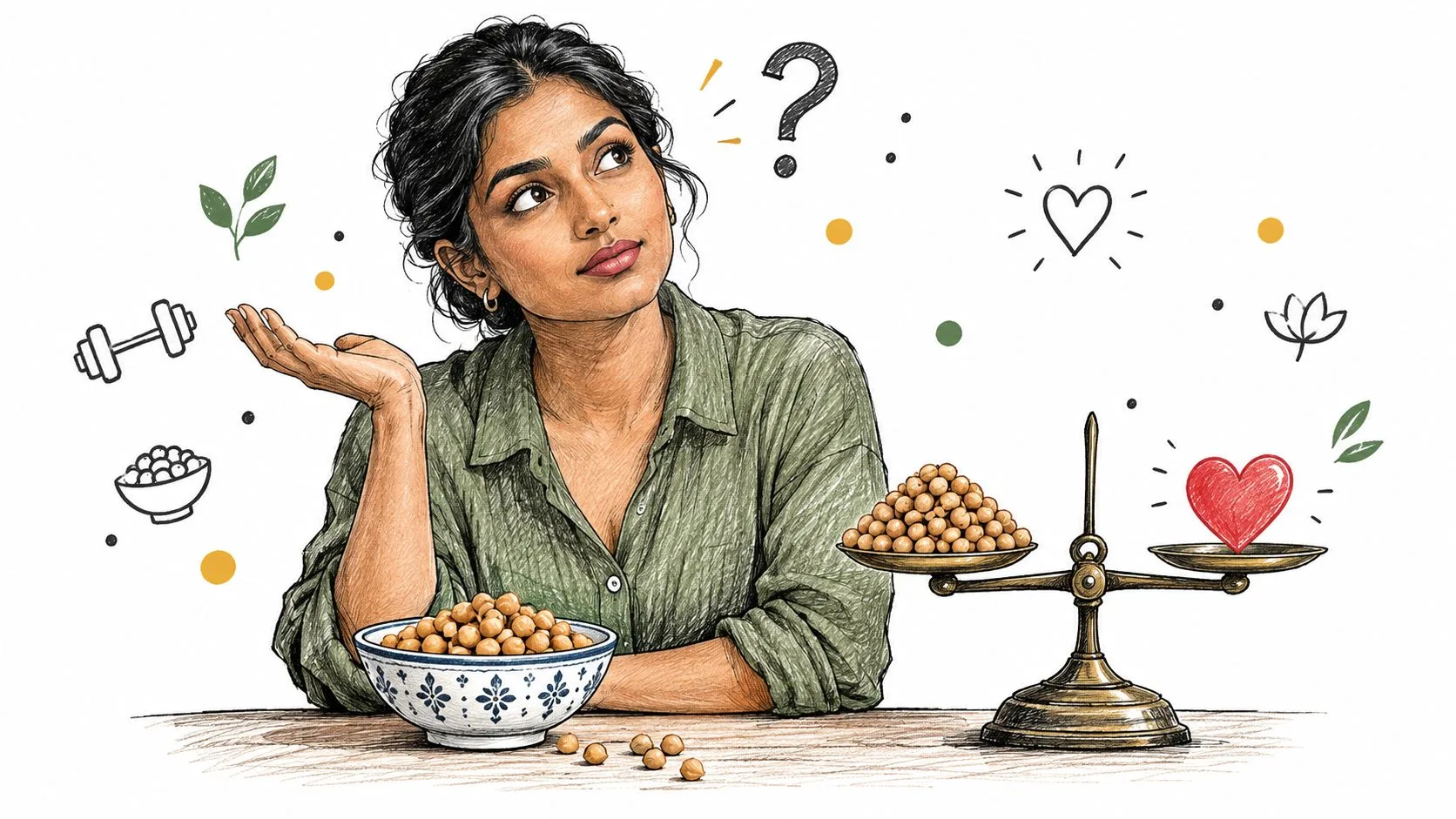
Preparation matters just as much as form. Plain boiled chana with onion, tomato, coriander, green chilli, and lemon is very different from chana cooked with a generous pour of oil or served with bhatura. Sattu also changes character fast. Mixed with water and spices, it can be a practical snack. Mixed with jaggery, sugar, ghee, or lots of dairy, it becomes much heavier.
This is why two people can say opposite things about chana and both sound right. One person may be eating measured boiled chana instead of a fried snack. Another may be adding calorie-dense chana dishes on top of an already full day of eating.
Practical rule: Judge chana by its form, portion and companions, not by the word "chana" alone.
So, does chana increase weight? It can, but only when the form and preparation push your total intake above what your body needs.
The Science Behind Chana and Body Weight
Chana affects body weight through a simple kitchen principle. Water changes density, and cooking changes how fast you can eat it. That is why the same chana can behave very differently in your diet depending on whether it is boiled, roasted, ground into sattu, or cooked with oil-rich extras.
What helps most is not a magic property. It is the combination of protein, fibre, and slow-digesting starch. Together, these can make a meal feel steady and satisfying, a bit like the difference between burning paper and burning coal. One disappears fast. The other releases energy more gradually. In plain Indian meals, this matters because foods that keep you full can reduce the urge to keep reaching for biscuits, namkeen, or a second snack soon after eating.
Why fullness can help, but doesn't guarantee weight loss
Chana's fibre slows digestion, and its resistant starch reaches the colon before being fermented. That can support steadier post-meal hunger and glucose response for some people. Protein adds to that effect. So a bowl of plain boiled chana with onion, tomato, lemon, and masala often behaves very differently from a lighter-looking snack that disappears quickly but does not satisfy for long.
Still, fullness is not the same as automatic fat loss.
If chana replaces a refined snack or becomes part of a balanced meal, it may help you stay satisfied on fewer total calories. If it is added on top of your usual meals, then followed by the same chai snacks, sweets, or large dinners, the total day can still go over your needs. Healthy foods count. They are not free extras.
This is especially useful for vegetarian eating patterns in India, where many people need filling protein sources that fit everyday cooking. Chana can do that job well, especially alongside other high-protein vegetarian Indian foods, but its effect depends on the full plate and the full day.
The practical takeaway is straightforward. Chana supports weight management best when it is prepared with little added fat, eaten in a measured portion, and used to replace less filling foods instead of subtly increasing the day's total intake.
Boiled Chana vs Roasted Chana - Which Is Better for Weight?
Boiled and roasted chana can both fit a balanced diet, but they behave differently on your plate. Boiling increases water content and volume. Roasting removes water and concentrates the food, which makes it easier to eat a large amount without feeling that you've had much.
A bowl of boiled kala chana can work well with vegetables, curd and a moderate amount of oil. It takes time to eat, has a substantial texture and provides fibre-rich volume. Roasted chana is convenient for travel and between-meal eating, but a handful can quickly become several handfuls, especially when you eat directly from a large packet.
The additions matter just as much. Plain roasted chana has a different role from roasted chana mixed with jaggery, ghee or sugar. Similarly, boiled chana in a salad is lighter than chana cooked in an oil-heavy gravy and served with puri.
Chana forms compared
| Form | Calorie impact | Best for |
|---|---|---|
| Plain boiled kala chana or kabuli chana | Lower energy density because water adds volume | Weight management and filling meals |
| Dry roasted chana | More concentrated, so calories can accumulate quickly | Portable snacks with a measured portion |
| Chana chaat with vegetables | Depends on the chana portion and toppings | A balanced snack when sev and sauces are controlled |
| Oil-rich chana masala | Added oil raises total meal energy | Intentional weight gain when portioned |
| Chana with puri, bhatura or large rice portions | The complete meal can become energy-dense | Occasional meals or planned higher-energy diets |
| Sweetened sattu | Jaggery or sugar increases energy intake | Weight gain only when it fits a controlled surplus |
For weight loss or weight maintenance, choose boiled chana more often and measure roasted chana before eating. For weight gain, use chana as the protein-and-fibre base, then add energy deliberately through rice, roti, curd, nuts or measured oil.
A dry handful and a cooked bowl may contain the same ingredient, but they don't create the same eating experience or calorie density.
How Much Chana Should You Eat for Your Goal
Portion planning starts with deciding whether chana is replacing food or being added to it. A typical cup (about 164 g) of plain boiled chana provides roughly 269 kcal, about 15 g protein, 45 g carbohydrate and 12 g fibre, according to USDA food composition data. That can be a nutritious meal component, but it still belongs inside your day's energy budget.
For weight management, begin with approximately ½-1 cup cooked chana, counted as part of the meal rather than eaten as an unlimited side. Pair it with non-starchy vegetables, salad, curd or a measured cereal portion, depending on the rest of your meal.
A simple portion method
-
Choose the form first. Use boiled chana when you want more volume and satiety. Use roasted chana when convenience matters, but place the amount in a bowl before eating.
-
Decide what it replaces. Chana can replace part of a refined snack, contribute to a salad, or form the protein-rich part of a meal. Adding it on top of your regular rice, roti, snacks and sweets changes the calorie balance.
-
Account for the cooking fat. Oil, ghee, sev, puri, bhatura, jaggery and sugar can change the energy content more than the chana itself. Keep the chana portion steady while adjusting these extras to match your goal.
-
Match the portion to appetite and activity. A person trying to gain weight may need chana with rice, roti, dairy, nuts or oil. Someone aiming to reduce intake may prefer boiled chana with vegetables and a smaller cereal portion.
Use a familiar household measure consistently. A guide to portion control with an Indian katori can help you estimate servings without weighing every ingredient.
People with diabetes should pay attention to the total carbohydrate load of the meal, not only chana's glycaemic response. If you take glucose-lowering medication or have a medical condition, individual carbohydrate portions should be discussed with a qualified professional.
Using Chana for Sustainable Weight Management in India
Chana's strongest connection with weight management is satiety, not a special fat-burning effect. Pulse meals can keep people fuller for a few hours, and in one study a bean-based meal doubled the rise in cholecystokinin, a fullness hormone, compared with a low-fibre meal (J Nutr 2001). But a review of pulse trials found that pulses generally helped weight loss only when the overall diet was also calorie-controlled, not on their own.
That distinction matters in Indian kitchens. A bowl of chana may feel filling, but chana served with bhatura, fried toppings, sweetened drinks or large amounts of oil can still create a high-energy meal. Feeling full is useful, but it doesn't make additional calories disappear.
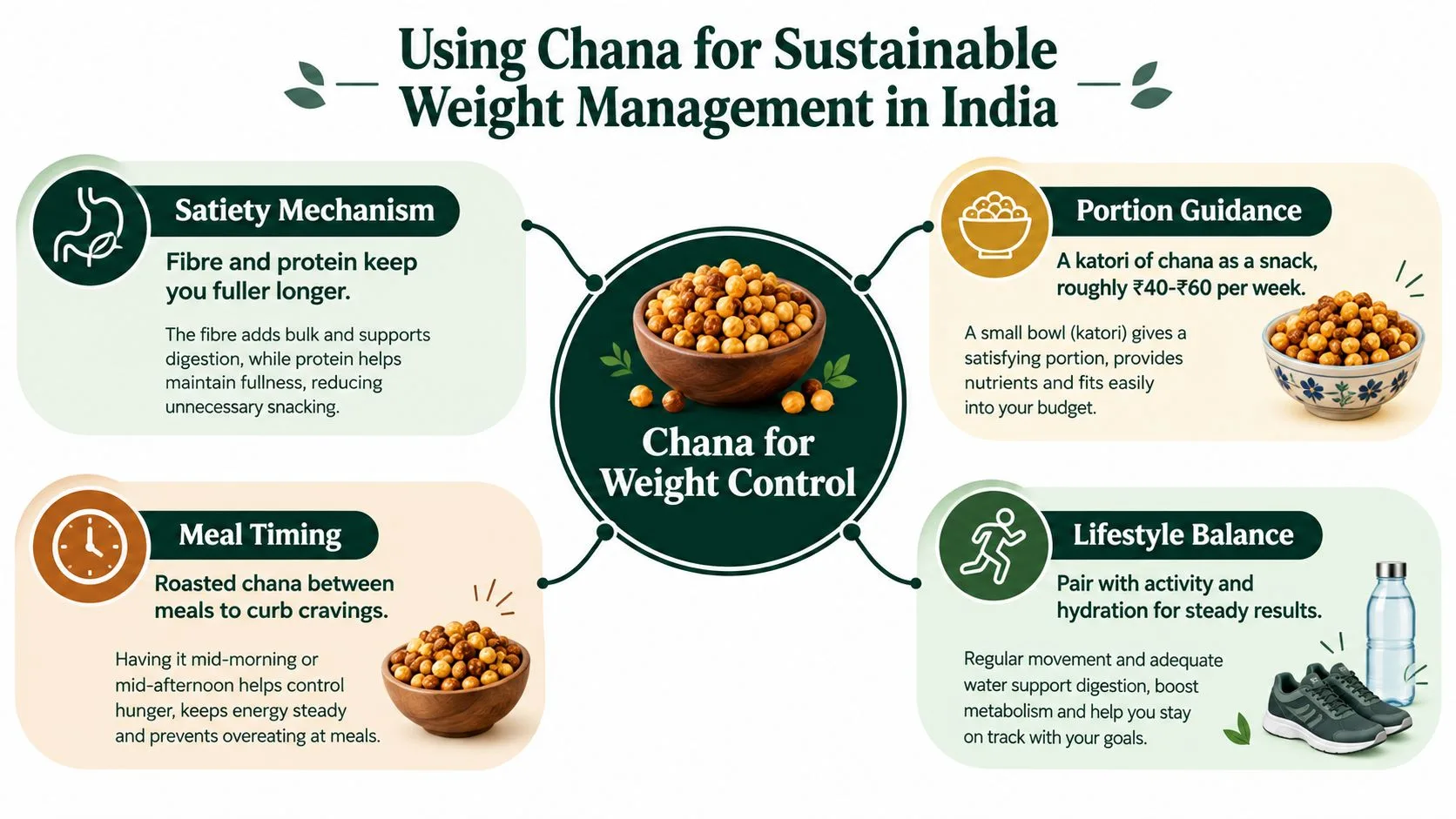
Adjust the plate to the goal
For weight loss or abdominal-fat management, use plain boiled kala chana or chole with vegetables, spices and a moderate oil allowance. Keep fried accompaniments occasional and check whether chana is replacing a snack or being added to the day.
For intentional weight gain, keep the fibre-rich chana serving but combine it with foods that add energy and other nutrients, such as rice, roti, curd, nuts or measured oil. This is more practical than trying to eat very large quantities of chana alone, especially because its fibre can make a person feel full quickly.
For diabetes or prediabetes, low glycaemic index doesn't mean unlimited intake. The meal's total carbohydrate load, portion size and accompanying refined flour or sugar all matter. ICMR-NIN guidance supports pulses, beans, whole grains and vegetables as part of healthy eating while advising limits on sugar, processed foods and high-fat or high-sugar foods.
Make the routine sustainable
A repeatable meal is more useful than a perfect recipe you rarely prepare. You might use boiled chana in a lunch salad, add a measured portion to dinner, or choose roasted chana for travel while avoiding unplanned refills. Hydration and regular physical activity also matter, particularly when increasing fibre intake.
Strength training can be relevant for someone pursuing lean weight gain, because adding calories alone doesn't determine whether the result is muscle or fat. Your age, appetite, activity, medical history and waist measurement should guide the final plan.
Get Personalised Chana Guidance with DietOwl
Nutrition advice becomes difficult when your real meals include family cooking, regional recipes, travel, festivals, work schedules or health conditions. A general rule can tell you that boiled chana and roasted chana differ, but it can't decide whether your usual chole needs less oil, whether your snack should replace another food, or how chana fits with your diabetes plan.
DietOwl provides personalised nutrition and lifestyle coaching through WhatsApp, including meal logging, meal-photo feedback and weekly progress reviews. Its qualified health coaches can adapt plans to Indian cuisines and routines, with condition-specific support for areas such as PCOS or PCOD, thyroid disorders, diabetes and hypertension.
The service includes DietOwl's personalised nutrition plans for goals such as weight loss and weight gain. A coach can help you decide whether chana should replace a snack, form part of a meal, or support a planned calorie surplus, rather than leaving you to guess from a yes-or-no answer.
DietOwl can help you fit boiled, roasted or prepared chana into a plan built around your health goals, appetite and Indian eating routine. Visit DietOwl to explore personalised WhatsApp coaching and start making your chana portions work for the result you want.
Related Topics
Biological Audit
Need a customized Weight Management plan?
Join 100+ Indians on a personalised Indian plan, on WhatsApp.
Deepen your Discovery.

What BMI is Healthy for Indians? (Why the Global Standard is Wrong)
Indian BMI cutoffs are 2 to 5 points lower than WHO global standards because Indian bodies accumulate more body fat at lower BMIs. Here is the correct Indian chart and what each category actually means.
Vegetarian Indian Diet for Weight Loss: A Practical Guide
A practical vegetarian Indian diet for weight loss: protein-first plates, a one-day meal plan, smart swaps, and tips for PCOS, diabetes and thyroid.

Body Fat Percentage for Indians: What's Healthy by Age and Sex
Body fat percentage is a better health indicator than weight or BMI, especially for Indians. Healthy ranges by age and sex, how to measure it, and what to do with your number.