
Vegetarian Indian Diet for Weight Loss: A Practical Guide
Written By
DietOwl Nutrition Team
Published
27 October 2026
Reading Time
16 min read
The most common advice for a vegetarian Indian weight loss diet is also the least useful: "just eat salad." That advice ignores the way most Indian homes cook, with rice, roti, dal, sabzi, curd, tea, snacks, and family meals shared from the same kitchen. The core question isn't whether vegetarian food can support fat loss, it's how to turn the meals you already eat into a calorie deficit while still getting enough protein, without breaking family cooking or eating Western-style plates you won't stick to.
Table of Contents
- Why Vegetarian Does Not Automatically Mean Weight Loss
- The Three Principles Behind Every Indian Vegetarian Weight Loss Plate
- Solving the Indian Vegetarian Protein Problem
- A Realistic One-Day Indian Vegetarian Weight Loss Meal Plan
- Smart Swaps for High-Calorie Vegetarian Favourites
- Adapting the Plan for PCOS, Diabetes, Thyroid and Post-Partum
- Troubleshooting Adherence Across Festivals, Travel and Family Meals
- Putting It All Together Into a Sustainable Routine
Why Vegetarian Does Not Automatically Mean Weight Loss
Vegetarian eating can look lean on paper and still be energy-dense in practice. A nationally representative analysis of India's third National Family Health Survey studied 156,317 adults aged 20 to 49 years and found that a vegetarian label did not mean a lower body weight. Mean BMI was actually highest among lacto-vegetarians (21.2 kg/m²) and lowest among pesco-vegetarians (20.3 kg/m²), a spread of under 1 kg/m² across all the diet types Indian national analysis.
That matters because a vegetarian thali can carry a lot of calories without any meat at all. Rice, roti, potatoes, sweets, fried snacks, dairy, oil, and sugar-sweetened chai all fit easily inside a vegetarian pattern. The label tells you what's excluded, not what's filling the plate.
The mistake most people make
They remove meat and expect the body to respond automatically. In real Indian meals, the problem is usually portion size, cooking fat, refined carbohydrates, and snack frequency, not the presence or absence of chicken or fish. A vegetarian dinner can still be heavier than an omnivorous one if it leans on big cereal portions, creamy gravies, and repeated tea breaks.
Practical rule: judge the plate, not the label.
The right starting question is simpler and tougher. How do you keep familiar vegetarian staples, family food, and cultural meals, while creating a real energy deficit and enough protein to preserve muscle? That's the problem this guide solves.
The Three Principles Behind Every Indian Vegetarian Weight Loss Plate
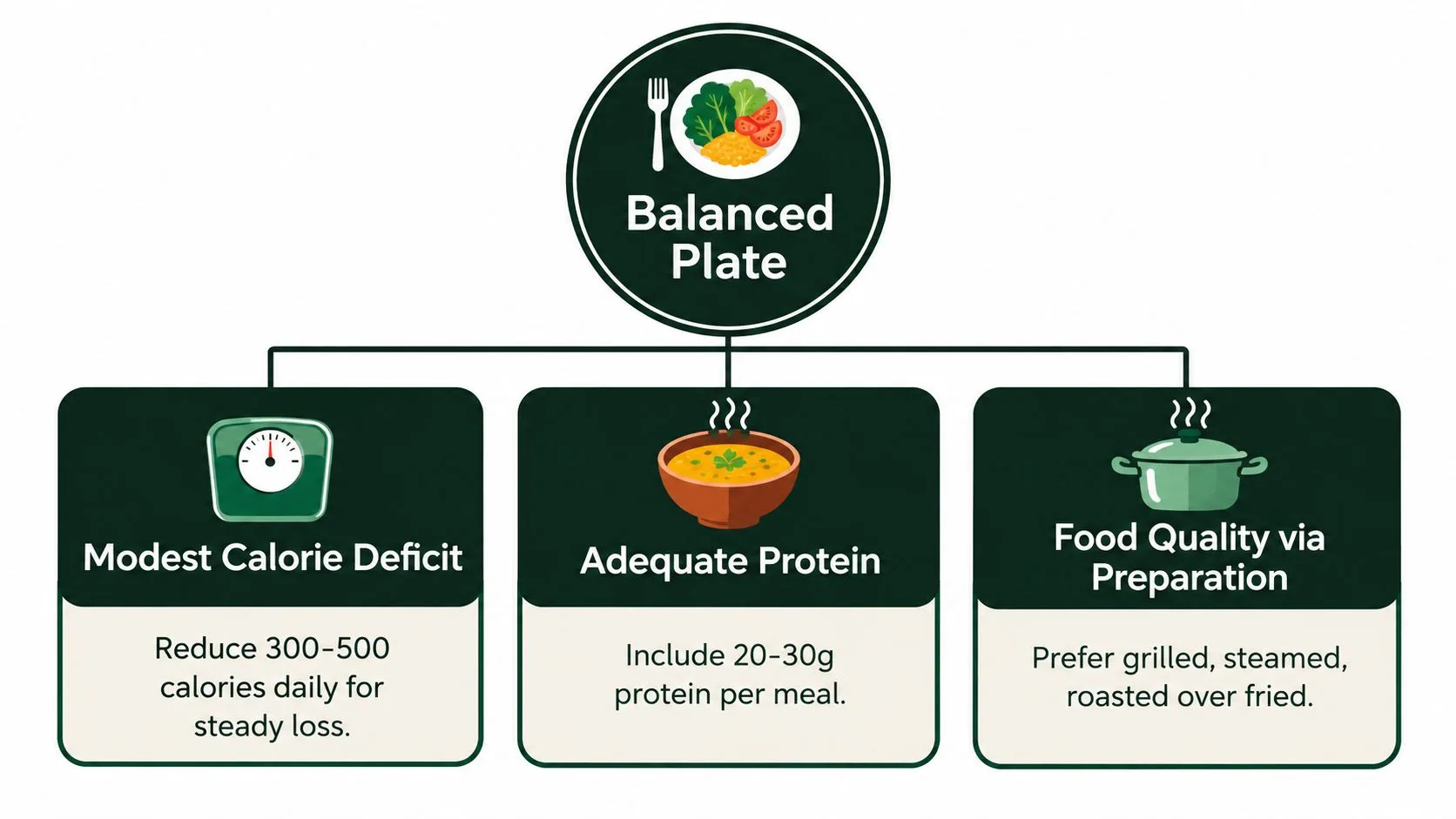
A vegetarian fat-loss plate does not need exotic foods. It needs three things working together, modest calorie deficit, adequate protein, and preparation that doesn't add hidden calories. If one part slips, the plate usually stops working.
1) Start with the budget lines first
Your thali works like a household budget. Decide the dal and sabzi portions first, then size the rice or roti around what remains. Cereals such as rice, roti, poha, idli, and khichdi are fine, but they are also the easiest place for portions to run over target.
That is why the plate has to make room for vegetables and protein before the cereal portion grows. If the rice or roti takes up most of the space, the meal may feel familiar but still leave you short on satiety.
2) Protein belongs at the center
Indian vegetarian weight loss goes off track when dal is treated like a side dish. The 2024 ICMR-NIN Dietary Guidelines advise combining cereals and pulses in a 3:1 ratio to improve protein quality, and they note that vegetarians can meet protein-quality needs through pulses, beans, peas, milk, and curd rather than relying on supplements ICMR-NIN 2024 guidelines. That is a kitchen rule, not a gym rule.
If you want a simple portion reference, this Indian katori reference can help make household servings less guesswork-heavy.
3) Oil is where calories hide
A sabzi can look light and still carry a lot of energy if it starts with extra oil, a heavy tempering, or a creamy gravy. Roasting, steaming, pressure-cooking, dry sautéing, and careful tadka do more for the calorie count than many people expect. If the oil pour is not measured, the calorie count is not either.
Fill half the plate with sabzi or salad first, add a protein source next, then fit the rice or roti around what is left.
Solving the Indian Vegetarian Protein Problem
A cereal-heavy plate with too little protein density is a common reason vegetarian fat loss stalls. In the Indian Migration Study of 6,555 adults, vegetarians ate about 6.4 g less protein a day and 7.0 g more carbohydrate than non-vegetarians Indian Migration Study. Hunger returns early when the meal is built that way.
Why low protein matters during weight loss
Low protein intake makes it harder to hold on to lean tissue while you lose fat. That matters for satiety, strength, and day-to-day energy, especially when calories are lower than usual. For many Indian adults, the answer is not a protein powder first. It is a better split between cereal and pulse, plus a real protein anchor at each meal.
ICMR-NIN gives a practical target for healthy adults: the recommended protein intake is 0.83 g per kg of body weight a day, about 54 g for a 65 kg adult (the average requirement is lower, 0.66 g/kg). Cereals and pulses should be combined in a 3:1 ratio. The same guidance is already linked above. Those figures are useful because they turn a vague goal into something you can build into chapati, dal, curd, and sabzi without changing family cooking.
What to put on the plate
Indian vegetarian protein does not need imported foods or a special menu. It needs familiar anchors such as dal, chana, rajma, soy, tofu, low-fat curd, paneer in controlled portions, and milk. The job is to stop cereal from taking over the meal, not to ban rice or roti.
| Food | Typical Serving | Protein | Calories | Best Meal Fit |
|---|---|---|---|---|
| Soya chunks | 25 g dry | High | Moderate | Lunch, dinner |
| Paneer | Controlled portion | Moderate to high | Moderate to high | Breakfast, lunch, dinner |
| Tofu | 100 g | Moderate | Lower than many paneer dishes | Dinner, stir-fry |
| Dal | 1 to 2 katoris | Moderate | Moderate | Lunch, dinner |
| Rajma | 1 katori | Moderate | Moderate | Lunch |
| Chana | 1 katori | Moderate | Moderate | Lunch, snack, dinner |
| Curd | 1 katori | Moderate | Moderate | Breakfast, lunch, evening snack |
| Milk | 1 glass | Moderate | Moderate | Breakfast, bedtime if needed |
A simple way to use this is to place protein first, then vegetables, then decide how much rice or roti the meal needs. That works better than trying to "eat light" in a vague way, because a meal with enough protein usually settles hunger more cleanly.
A meal built this way can still taste familiar. For more ideas built around Indian ingredients and household portions, this high-protein veg Indian guide is a useful companion read.
If your lunch looks like a mountain of rice with a spoon of dal, the meal is cereal-first. Flip that order and the same kitchen starts behaving differently.
A Realistic One-Day Indian Vegetarian Weight Loss Meal Plan
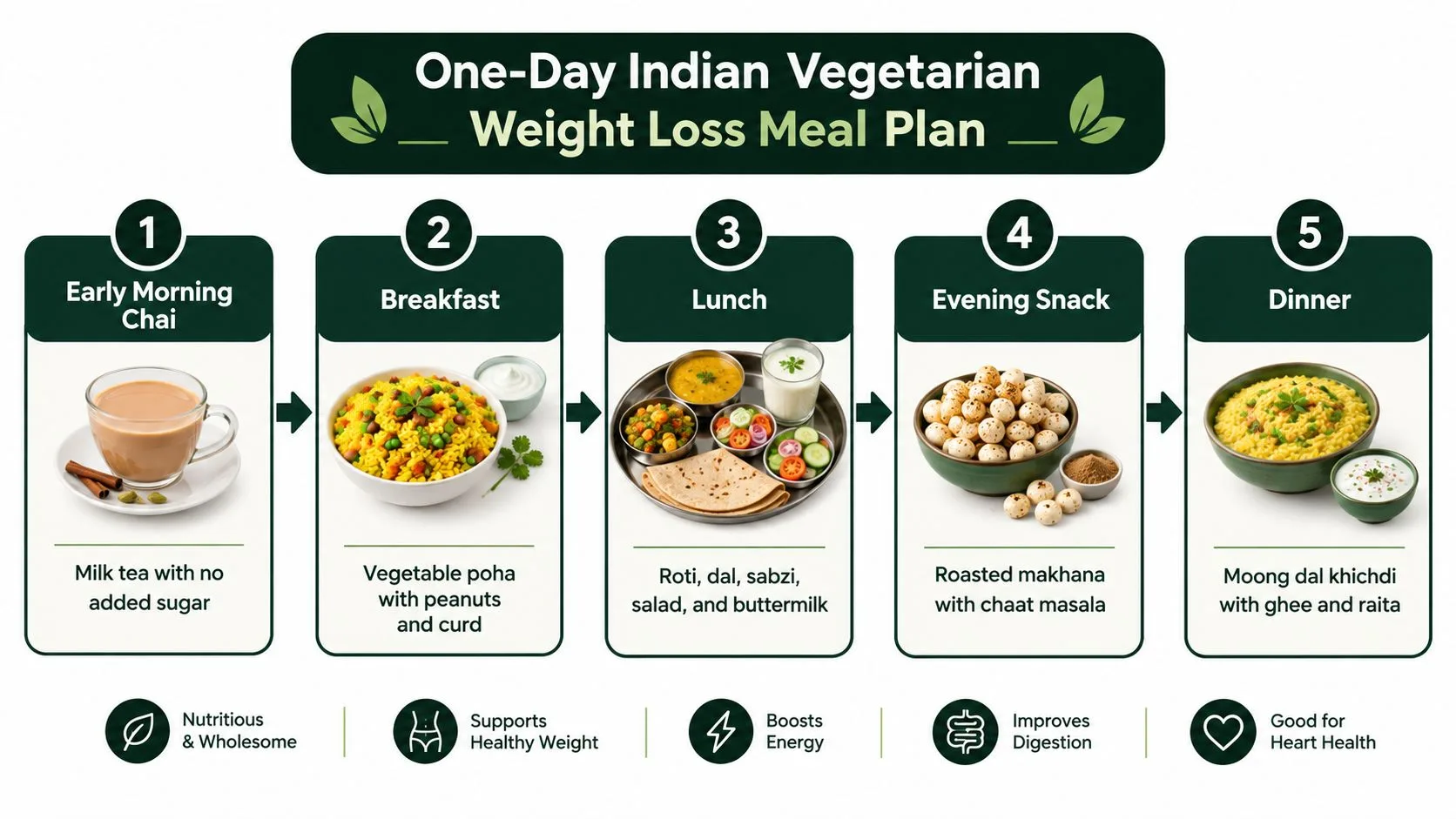
A useful meal plan doesn't feel like a foreign prescription. It should look like a normal day in an Indian kitchen, only with tighter portions, clearer protein, and less mindless snacking.
Morning to evening, in household portions
Early morning: milk tea without added sugar, or with the smallest possible amount if you're tapering down. The point isn't to ban chai, it's to stop turning it into a sweet drink before breakfast.
Breakfast: besan chilla or moong chilla with curd, or vegetable poha with peanuts and a protein side. A breakfast like this keeps the meal recognisably Indian while stopping it from becoming mostly starch.
Lunch: one or two rotis, dal, sabzi, salad, and a controlled rice portion if you want rice at all. If your family serves a bigger thali, start with sabzi and dal first, then take the cereal portion last.
Evening snack: fruit, roasted chana, chaat-style boiled chana, or a curd-based option. This is the place where many diets fail, because snack foods slide in casually and add up quickly.
Dinner: moong dal khichdi with raita, or tofu/paneer with vegetables and one roti. Keep dinner lighter than lunch, but not protein-free.
The dinner mistake we see most often: people cut roti and keep the oil, then wonder why weight loss stalls.
Here's a companion resource on meal composition if you want more recipe-level guidance, Indian weight-loss recipes, but the bigger lesson is the pattern, not the recipe.
Two traps to watch
- Hidden oil in sabzi: if the pan starts heavy, the meal starts heavy.
- Rice refills: one helping can fit, repeated helpings usually break the plan.
A practical reading of the plate
You don't need to count every calorie to use this. If the plate has protein, vegetables, and a moderate cereal portion, you're close. If the cereal dominates and the protein is an afterthought, the day usually runs too high in energy and too low in satiety.
Smart Swaps for High-Calorie Vegetarian Favourites
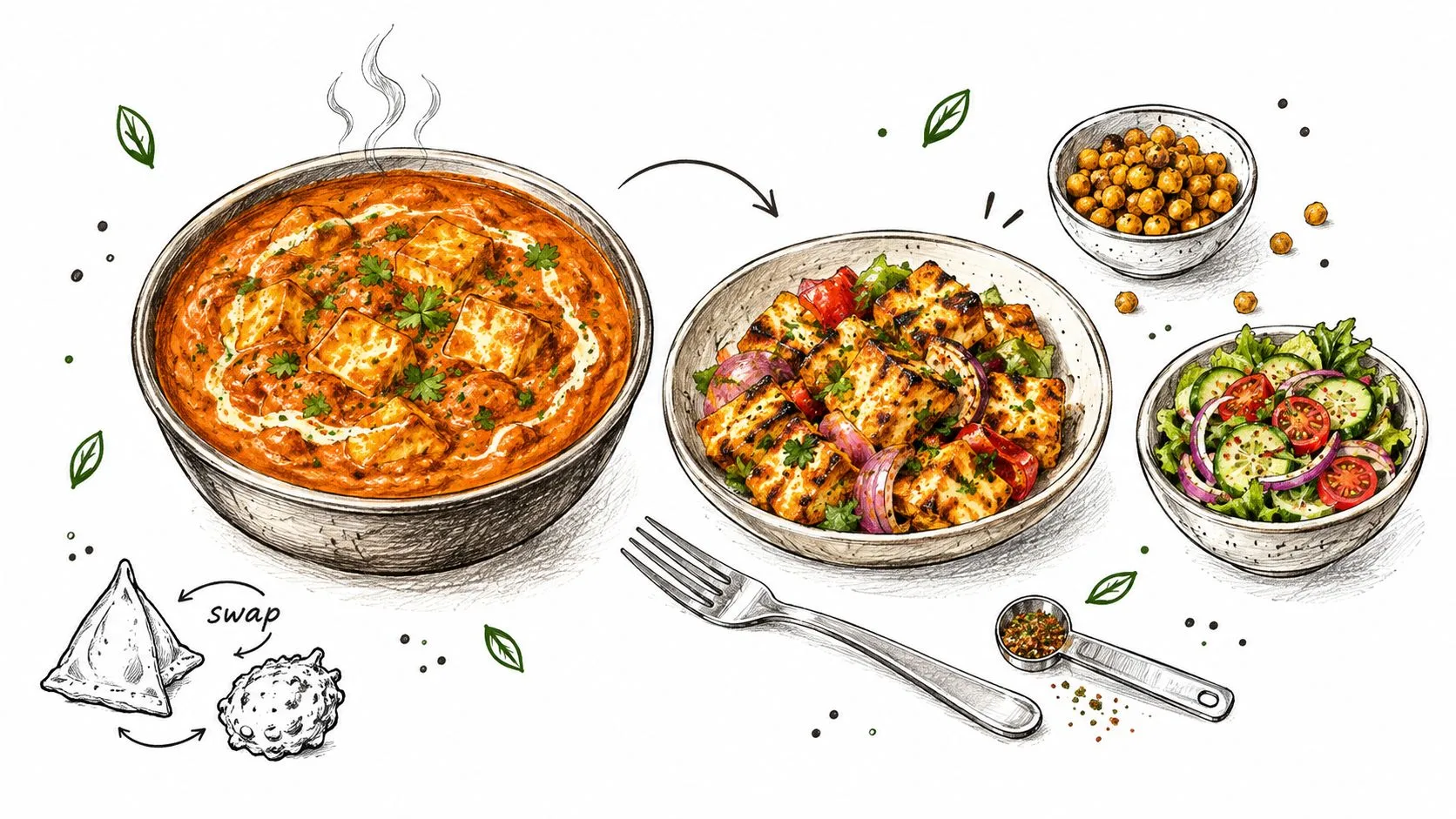
You don't have to stop eating the foods you like. You do have to change what sits beside them, how often they show up, and how they're cooked. That's how family food stays familiar without sabotaging progress.
| Instead of | Try this | Why it works |
|---|---|---|
| Fried namkeen | Roasted chana or lightly spiced makhana | Less oil, more volume, easier to portion |
| Samosa or pakora | Chana chaat or baked stuffed snack | Keeps the savoury profile with less frying |
| Creamy paneer butter masala | Paneer bhurji or grilled paneer with sabzi | Lower oil and cream load |
| Large biryani serving | Smaller rice portion with dal or curd on the side | Better control over cereal density |
| Full-fat curd in excess | Measured curd or low-fat curd | Easier to fit into a calorie deficit |
| Sugary chai | Tea with less sugar, or unsweetened | Cuts invisible daily calories |
| Mithai after meals | Fruit, or a small planned sweet portion | Reduces unplanned energy intake |
| Fruit juice | Whole fruit | More fibre, more chewing, better fullness |
| Oversized rotis | Normal roti size, or one less roti with extra sabzi | Keeps the meal satisfying without excess starch |
The best swap is the one you can keep using at home. If the family is having paneer curry, you don't need a separate "diet meal". Make yours with less oil, more paneer in a measured amount, and a larger vegetable side. If the family is ordering snacks, choose the item that can be portioned and shared instead of the item that disappears before you notice.
Mid-meal hunger often comes from low protein, not lack of willpower. When the snack is a carb-heavy bite with very little satiety, the next meal starts from a higher appetite baseline.
The same logic applies to sweets and drinks. A sweetened beverage can disappear in minutes, but it still affects the day's energy balance. Whole fruit, curd, roasted chana, and paneer-based options take longer to eat and usually work better for adherence.
Adapting the Plan for PCOS, Diabetes, Thyroid and Post-Partum
A vegetarian weight-loss plan is rarely searched for in a vacuum. It's often part of managing insulin resistance, thyroid medication timing, heavy periods, low energy after childbirth, or a general sense that the body doesn't respond to casual dieting the way it used to.
Keep the base template, change the lever
The base structure stays the same, protein-anchored meals, controlled cereals, low oil, and plenty of vegetables. What changes is the emphasis. For PCOS and insulin resistance, lower the meal's glycaemic load by reducing refined carbs and pairing starch with protein and fibre. For diabetes or prediabetes, carb portions and timing matter more, so the cereal side of the meal needs to be more deliberate.
For thyroid disorders, consistency matters more than extremes. Avoid swinging into severe restriction, and keep the plan nutritionally steady so you're not layering one problem on top of another. For post-partum and post-menopausal women, gentler deficits usually work better, with extra attention to iron, calcium, hydration, and energy levels.
The 2024 ICMR-NIN guidance frames India's nutrition challenge as a dual burden, undernutrition alongside rising obesity, and it emphasises dietary diversity, more vegetables and legumes, moderation of salt, fat, and sugar, physical activity, and prevention of diet-related noncommunicable disease nutrition guidance overview.
What stays the same
- Protein first: dal, paneer, tofu, curd, soy, or beans still anchor the meal.
- Oil stays measured: the cooking method still decides how dense the dish becomes.
- Family meals remain family meals: you're adjusting portions, not building a second kitchen.
What changes in practice
For PCOS or insulin resistance, the easiest move is to reduce the cereal share and increase non-starchy vegetables and protein. For diabetes, the same meal needs tighter portions and fewer liquid calories. For post-partum recovery, the food pattern should support healing, milk supply if relevant, and sleep-deprived appetite control rather than aggressive cutting.
If a condition is part of your picture, the right plan isn't a different cuisine. It's the same kitchen, with a different set of priorities.
If you prefer guided adjustments rather than doing this by guesswork, a personalised service such as DietOwl builds plans around Indian foods through WhatsApp check-ins, meal logging, and condition-aware adjustments. That matters most when the same household meal has to work for weight loss, family life, and a medical condition at the same time.
Troubleshooting Adherence Across Festivals, Travel and Family Meals
The reason most vegetarian fat-loss attempts fail isn't ignorance. It's irregular life. Weddings, festival sweets, train food, hotel breakfasts, office lunches, hostel mess meals, and shared family thalis all make the "perfect plan" irrelevant by Thursday.
Use if-then rules, not perfect-day rules
At a buffet, start with protein and vegetables, then take the cereals and sweets only after you've eaten something stabilising. At a festival, don't try to pretend the sweets don't exist, choose a portion on purpose, eat it slowly, and don't let it become an all-day nibble. At travel stops, pick the simplest plate you can portion clearly, rather than the richest item on the counter.
If the family is cooking one meal for everyone, keep your plate smaller rather than demanding a separate menu. That usually means taking the same sabzi and dal, then reducing roti or rice slightly while increasing the protein share where possible.
Weekly habits that protect progress
- Weigh once a week: use the same time and clothing so your trend is readable.
- Pre-decide two travel meals: it reduces last-minute eating off autopilot.
- Keep a protein backup at home: curd, chana, paneer, soy, or dal that's already cooked.
- Treat sweets as planned, not casual: one deliberate portion is easier to recover from than repeated bites.
- Walk after the heaviest meal: it helps the day feel less fixed around the buffet or the dinner table.
A perfect week is rare. A recoverable week is realistic. That's the standard that matters for a vegetarian Indian weight-loss diet, because consistency beats dramatic resets.
Putting It All Together Into a Sustainable Routine
A workable vegetarian Indian fat-loss routine has a simple shape. Keep the familiar meals, but make protein the first decision, keep vegetables present in every main meal, and let rice or roti fill the remaining space instead of leading the plate. That one change turns family cooking into something that can support weight loss instead of fighting it.
The long game is not about a temporary "diet period". It's about repeating a small set of meals, using the same grocery list often enough that the kitchen becomes easier to manage, and making room for travel, festivals, and medical conditions without breaking the system. If your plate still feels random after a few weeks, the problem is usually structure, not effort.
If you want a plan that fits your usual meals, medical context, and schedule, DietOwl offers personalised WhatsApp-based coaching, meal logging, and week-by-week adjustments around Indian food habits. If you've got the basics right but keep stalling on portions, cravings, or condition-specific tweaks, that kind of support can turn a generic vegetarian Indian weight loss plan into something you can live with.
Related Topics
Biological Audit
Need a customized Weight Management plan?
Join 100+ Indians on a personalised Indian plan, on WhatsApp.
Deepen your Discovery.

What BMI is Healthy for Indians? (Why the Global Standard is Wrong)
Indian BMI cutoffs are 2 to 5 points lower than WHO global standards because Indian bodies accumulate more body fat at lower BMIs. Here is the correct Indian chart and what each category actually means.

How to Gain Weight Healthily on an Indian Diet
A calm, practical guide to gaining weight with real Indian food: a steady calorie surplus from nuts, ghee, dals, paneer and bananas, paired with strength training. No junk, no shortcuts.

Body Fat Percentage for Indians: What's Healthy by Age and Sex
Body fat percentage is a better health indicator than weight or BMI, especially for Indians. Healthy ranges by age and sex, how to measure it, and what to do with your number.