
Idli Chutney Calories: Complete Calorie Guide
Written By
DietOwl Nutrition Team
Published
13 October 2026
Reading Time
13 min read
Two standard idlis are about 150 kcal, one tablespoon of coconut chutney adds roughly 60 kcal, and one tablespoon of tomato chutney adds about 10 kcal. That means the chutney on your plate can shift the meal by 50 kcal or more without changing the idlis at all.
You've probably stood at the breakfast table with a steel plate in one hand and a chutney katori in the other, wondering why a simple idli meal can feel light on one day and heavy on another. The answer usually isn't the idli alone. It's the portion size, the chutney type, and the amount of oil or tempering hidden in the recipe.
Table of Contents
- Why Idli Chutney Calories Vary More Than You Think
- Understanding Portion Sizes and Calories in Idli
- Coconut, Tomato, and Coriander Chutney Calorie Comparison
- How to Log Idli Chutney Accurately in Your Diet Tracker
- How Tempering and Cooking Oil Affect Chutney Calories
- Is Cutting Idlis the Best Way to Reduce Calories
- Idli Chutney for Blood Sugar Management and Diabetes
- Building a Balanced Idli Meal with Measured Chutney
- Quick Reference Idli Chutney Calories at a Glance
- Real Example: How Chutney Choice Changes Your Breakfast
Why Idli Chutney Calories Vary More Than You Think
A plate of idli with sambar and a small bowl of chutney can look simple, but idli chutney calories are not fixed. Two standard idlis are a useful baseline at about 150 kcal under the ICMR-NIN dietary guidelines, and the chutney can shift the total quickly. Coconut or groundnut chutney is much denser than tomato chutney, so the same breakfast can add up very differently depending on what you spoon beside it. Household nutrition references place coconut or groundnut chutney at about 60 kcal per tablespoon and tomato chutney at about 10 kcal per tablespoon.
The breakfast math behind two tablespoons of chutney
Two tablespoons of coconut chutney can add around 120 kcal on top of the idlis. That makes the chutney almost as important as the steamed cakes if you are tracking calories closely. Tomato chutney stays lighter because it usually contains more water and vegetables, with less added fat.
A small katori can also mislead you. In many homes, a "small bowl" holds several spoonfuls, so logging only "one serving of chutney" can undercount the meal. If you eat with a generous scoop, the difference is large enough to matter for weight loss, diabetes management, or keeping breakfast consistent.
For practical logging, record the chutney type and the amount you ate, not just "idli with chutney." If your plate felt light but the chutney was generous, the total calories may still be higher than you expected. That is the detail that changes the number on the tracker.
Understanding Portion Sizes and Calories in Idli
A plate of idli can look identical and still carry a different calorie total, because one idli is not a standard size at home or in restaurants. A food database built on Indian Food Composition Tables 2017 reports about 138 kcal per 100 g of idli and 4.6 g protein per 100 g. At a representative 40 g piece, that comes to roughly 55 kcal and 1.8 g protein per idli, so two such idlis are about 110 kcal before chutney is added. Idli nutrition database entry
Why the plate can look the same but count differently
A smaller 30 g idli would be about 41 kcal using the same 138-kcal-per-100-g figure, while a 40 g idli would be about 55 kcal. Two small homemade idlis may land around 80-110 kcal, while larger restaurant idlis can sit higher. The name stays the same, but the portion does not.
| Idli portion | Approximate calories |
|---|---|
| 30 g piece | 41 kcal |
| 40 g piece | 55 kcal |
| Two 40 g idlis | 110 kcal |
For practical logging, weigh idlis occasionally so your eye for portions stays honest. If you do not weigh them every day, record whether they were small homemade pieces or larger restaurant servings. That habit matters because the next variable is often the chutney, and the meal total can shift quickly once you add it. For a broader look at idli and dosa in a weight-loss diet, see our analysis of whether idli and dosa are healthy.
Coconut, Tomato, and Coriander Chutney Calorie Comparison
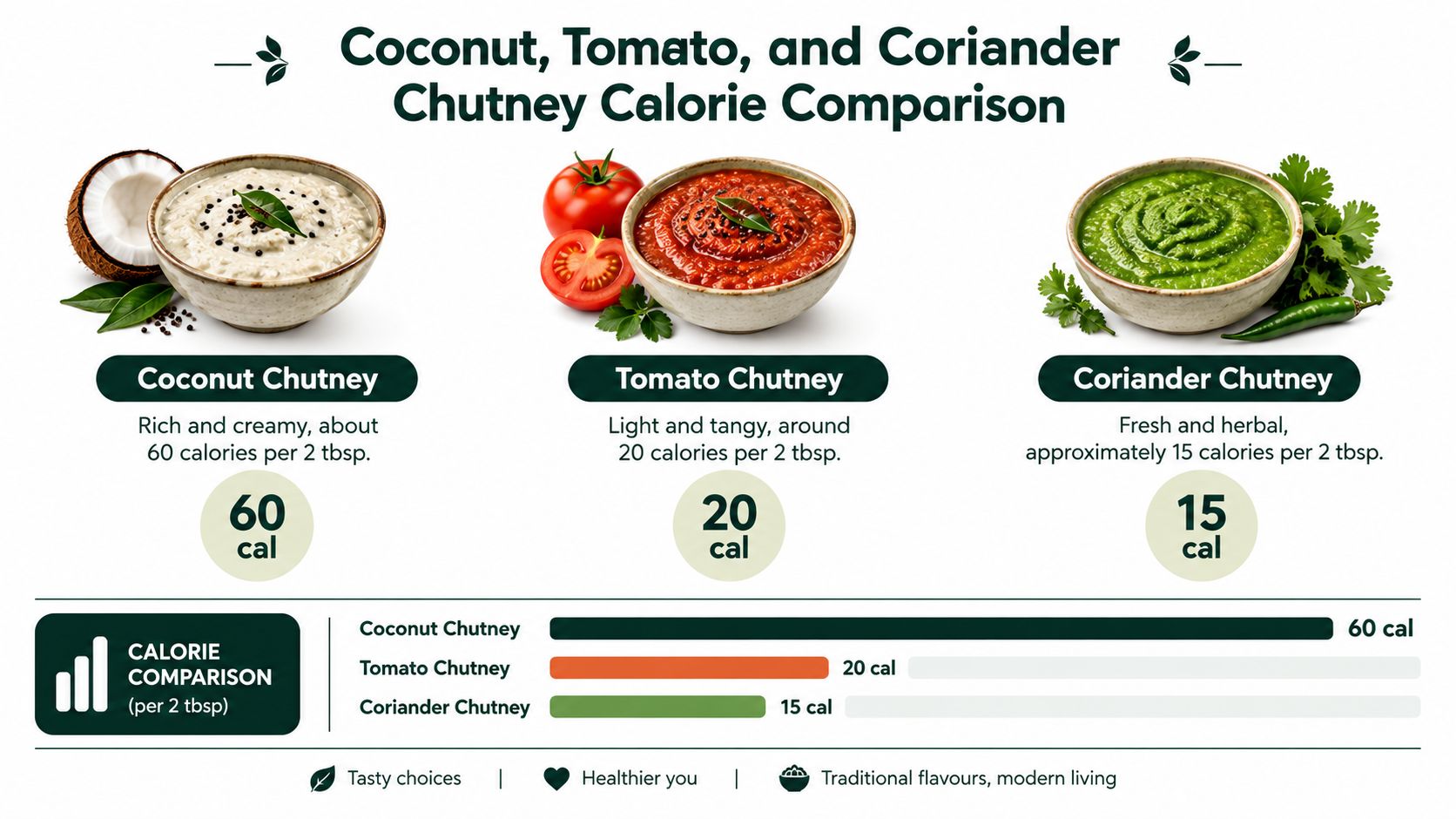
Coconut chutney and groundnut chutney are the heavier choices on an idli plate because they bring more fat into the meal. In household portions, they often sit near 60 kcal per tablespoon, so a normal 2 to 3 tablespoon serving can add a noticeable calorie load to breakfast. Tomato chutney is lighter, commonly around 10 kcal per tablespoon, since it is mostly vegetables, water, and spices rather than fat.
What changes the total most
Coriander chutney usually falls between those two. A plain coriander chutney without nuts or heavy tempering typically lands around 15-25 kcal per tablespoon. Add peanuts, coconut, or extra oil, and the count rises quickly. That is why a label like "coriander chutney" does not tell you enough for meal logging.
Useful habit: log chutney by the spoon, not by the word.
For practical breakfast planning, coconut chutney is the one to watch if you are trying to keep calories down. Tomato chutney gives more volume for less energy, which makes it a useful choice when you want a lighter plate. Coriander chutney sits in the middle, but only if the recipe stays simple. If it is made with a generous tempering or nut paste, treat it more like a richer chutney and log it that way.
That trade-off matters in Indian diets because a small katori can still contain several spoonfuls. If you track by tablespoons, you will get a much closer estimate than if you enter a vague bowl size.
How to Log Idli Chutney Accurately in Your Diet Tracker
Most apps fail here because they let you enter a vague food name and move on. That's not enough for idli chutney calories. The more useful habit is to log the number of idlis, the approximate size, the type of chutney, and the tablespoons eaten. If you're using a structured coach-led system such as DietOwl, that kind of logging is far more useful than a single generic entry.
A simple logging method that actually works
Start with the idlis themselves. Note whether you ate two small homemade idlis or two larger restaurant idlis, because that alone changes the calorie estimate. Then record the chutney separately, by spoon count, not by bowl size.
- Count the idlis: write down the number and whether they were small, standard, or oversized.
- Name the chutney: coconut, tomato, coriander, mint, peanut, or onion.
- Measure the spoonfuls: estimate tablespoons if you don't have a measured serving spoon.
- Add sides separately: sambar, oil, or ghee should never be buried inside the same entry.
That approach is more reliable because it reflects how people typically eat at home. A tiny katori can still hold several spoonfuls, and that can change the total more than the idlis do. If you're eating out, use the restaurant portion as the reference and avoid assuming it matches the standard home serving.
How Tempering and Cooking Oil Affect Chutney Calories
Tempering is often where home-style chutneys gain extra calories. A base made with coconut, peanuts, or dal may already be energy-dense, and the tadka can push the total higher fast. One teaspoon of oil adds about 40 kcal, so a chutney with a generous tempering can carry noticeably more calories than a dry-ground version.
Why two home recipes can look identical
Two bowls can look the same and log very differently. A coconut chutney with a light tempering will not match one where the oil is poured in freely, because the oil changes the calorie density of each spoonful. If the quantity is unclear, log the richer version rather than assuming it was light.
A practical rule is to treat coconut and groundnut chutneys as fat-containing condiments first, not as free extras. That habit helps when the same breakfast shows up day after day. For a broader look at household oil choices, the DietOwl oil comparison guide gives useful context for everyday cooking.
Is Cutting Idlis the Best Way to Reduce Calories
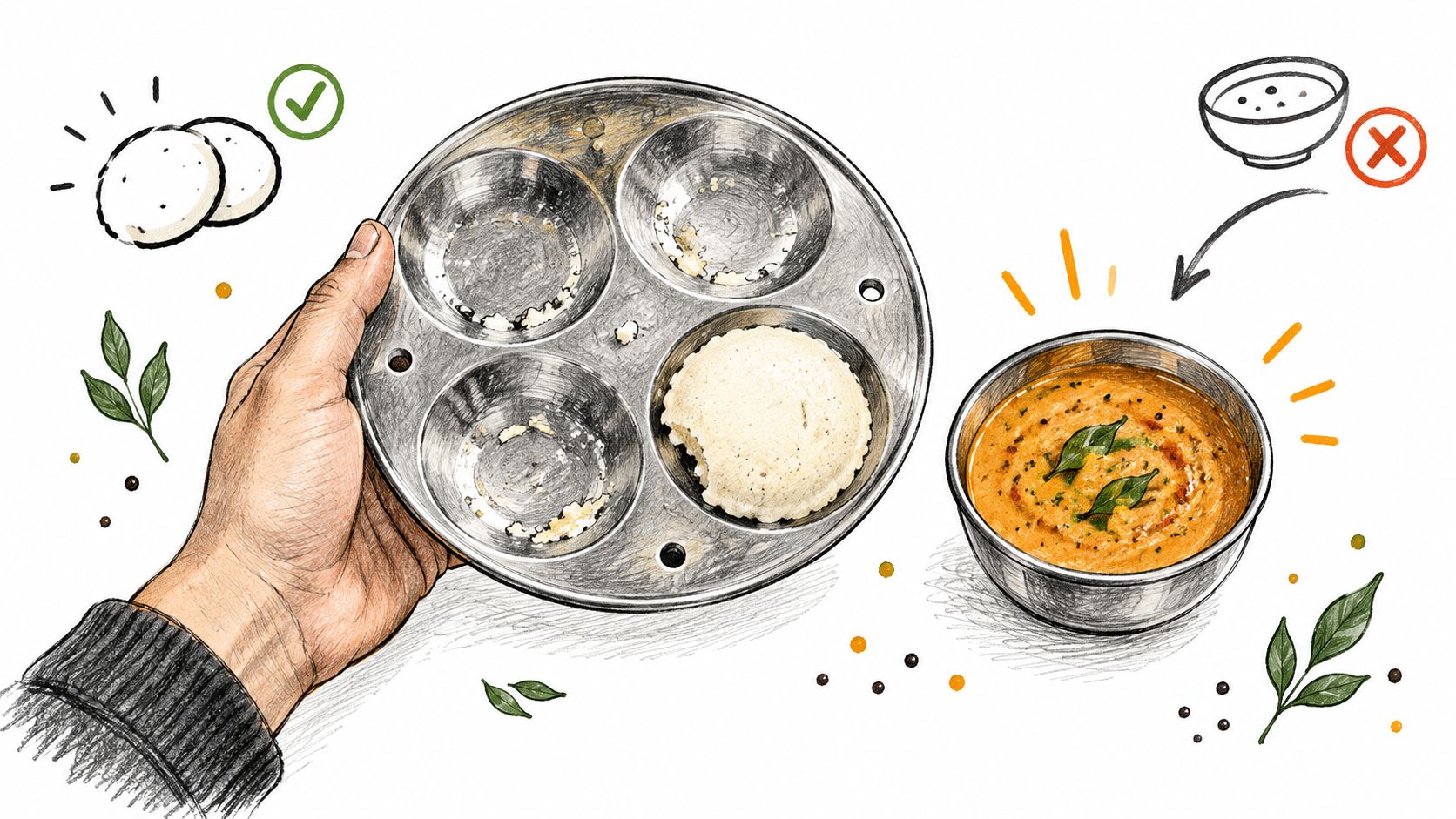
Not always. In many breakfasts, trimming chutney is a more efficient move than cutting the idlis themselves. If you reduce a coconut chutney serving or switch to a lighter tomato version, you can sometimes save more calories while keeping the same familiar meal structure.
The better lever is often the side dish
Idli is usually the part people can eat comfortably without much extra oil. The calorie swing often comes from what sits beside it, especially chutney and tempering. If you enjoy idli regularly, controlling the accompaniment is easier to sustain than repeatedly shrinking the main dish.
That's why a small shift in chutney type can be more practical than making breakfast feel stingy. A plate that stays satisfying is more likely to stick, and adherence matters more than short-lived restriction. If your goal is long-term calorie control, the smartest move is often to preserve the idli and adjust the spoonfuls around it.
Idli Chutney for Blood Sugar Management and Diabetes
Calories matter, but they do not tell the full story for prediabetes and type 2 diabetes. Carbohydrate load, protein, fibre, portion size, and the timing of medication or insulin all affect the glucose response. In Indian diabetes guidance, 15 g carbohydrate is commonly treated as one carbohydrate serving, and many adults may need around 45-60 g carbohydrate at a meal, although the right amount depends on body weight, activity, medicines, insulin use, and glucose goals. Indian carbohydrate guidance
RSSDI guidance also draws on ICMR-INDIAB evidence that reducing dietary carbohydrate by 10-15% and replacing it with protein, preferably plant protein that also increases fibre, may help in diabetes prevention for people with prediabetes and may support remission in selected type 2 diabetes cases.
What that means on an idli plate
A lower-calorie chutney does not lower the glucose impact of three large idlis. Portion and composition both matter. A better plate usually has measured idlis, a controlled chutney portion, dal-rich sambar, vegetables, and, where appropriate, a protein addition. That keeps the meal more balanced than trying to manage blood sugar through chutney alone.
For practical Indian breakfast planning around glucose management, the DietOwl guide to diabetic Indian breakfast choices is useful because it looks at the whole plate, not just one food item.
Building a Balanced Idli Meal with Measured Chutney
A balanced idli breakfast starts with restraint in the right place and generosity in the right place. Keep the chutney measured, let sambar bring volume and lentils, and use vegetables or protein where your plan allows. That way, the meal stays familiar without turning into a calorie surprise.
A practical plate formula
A useful everyday plate has three parts. First, the idlis stay at a sensible portion for your appetite. Second, the chutney is treated as a measured condiment, not an unlimited side. Third, sambar and vegetables do the satiety work, because they add texture and fullness without relying on heavy fat.
You can also keep the meal satisfying by changing how you serve it. A smaller bowl for coconut chutney naturally limits the scoop size, while a tomato or herb chutney can bring sharper flavour with fewer calories. If you need more staying power, add dal-rich sambar or a protein-containing side rather than doubling the chutney.
The point is not to remove pleasure from breakfast. It's to make the calories more predictable so the same meal supports either weight loss or maintenance without guesswork.
Quick Reference Idli Chutney Calories at a Glance
- Two standard idlis: about 150 kcal under the ICMR household benchmark.
- One idli piece: about 75 kcal in that same benchmark, though actual size still matters.
- Coconut or groundnut chutney: about 60 kcal per tablespoon.
- Tomato chutney: about 10 kcal per tablespoon.
- Two idlis with one tablespoon coconut chutney: roughly 210 kcal.
- Two idlis with one tablespoon tomato chutney: roughly 160 kcal.
- Best logging habit: record idli count + chutney type + tablespoon quantity.
If you remember only one thing, remember this. The idli is usually the stable part of breakfast, while the chutney is where the calorie swing happens. Measuring the condiment gives you a far better read on the meal than treating everything on the plate as one item.
Real Example: How Chutney Choice Changes Your Breakfast
Say you eat two standard idlis for breakfast. With coconut chutney, the plate lands around 210 kcal when you add one tablespoon to the 150 kcal idli base. Swap that for tomato chutney and the same plate drops to roughly 160 kcal.
That gap may look modest, but it adds up across the week. If you eat idli with coconut chutney five days a week, the richer choice adds about 250 kcal over the week. If you replace coconut chutney with tomato chutney on three of those days, you keep roughly 150 kcal of that difference out of your week. A lighter chutney helps when you are trying to keep calories in check, while a richer chutney can still fit if the rest of the day is lighter and the portion stays measured.
Match the chutney serving to your goal rather than labelling either one good or bad.
For diabetes or prediabetes, the better check is the full plate. Two idlis with measured chutney, sambar, and enough protein in the meal is usually more useful than watching one item alone. That is the practical way to make idli fit real Indian eating patterns, not just a food label.
If you want help turning meals like this into a daily plan, DietOwl can log Indian breakfasts, measure portions, and tailor nutrition advice around your actual routine. It is useful when you want the numbers to match what you really eat, not a generic food database.
Related Topics
Biological Audit
Need a customized Weight Loss plan?
Join 100+ Indians on a personalised Indian plan, on WhatsApp.
Deepen your Discovery.

PCOS Diet Chart for Indian Women: A 7-Day Meal Plan That Works With Your Food
A realistic 7-day PCOS meal plan built with rice, roti, dal and sabzi, using insulin-sensitivity science and not food-avoidance folklore. Cycle-aware, family-friendly.

Indian Diabetes Diet Chart: A 7-Day Meal Plan That Keeps Rice
A realistic 7-day diabetes diet chart for Indian kitchens that keeps rice, roti, dal and sabzi. Built on glycemic load, smart pairing and portion, not food bans.