
Palak Moong Dal: Recipe, Nutrition, and Smart Portions
Written By
DietOwl Nutrition Team
Published
15 October 2026
Reading Time
13 min read
You've had a long day, the spinach needs using, and the easiest dinner seems to be a quick dal with rice or roti. Yet the difference between a thin bowl of lentils with a few wilted leaves and a genuinely satisfying palak moong dal comes down to more than seasoning. The dal-to-palak ratio, cooking sequence, tempering oil, and final serving size all shape what lands in your bowl.
This is why I treat palak moong dal as a nutritionally complementary Indian meal, not just a "healthy green curry". Moong dal does most of the work for plant protein, while palak adds volume and leafy-vegetable variety. Once you understand that division, it becomes much easier to cook it well and fit it into routines for weight management, PCOS, diabetes, or everyday family meals.
Table of Contents
- Why Palak Moong Dal Works in the Indian Kitchen
- Preparing Palak Moong Dal Like a Pro
- Understanding the Actual Nutrition Numbers
- Choosing Your Version for Your Goals
- Portion Guidance for Real Indian Diets
- Common Myths About Iron and Diabetes
- Making Palak Moong Dal a Sustainable Routine
Why Palak Moong Dal Works in the Indian Kitchen
In one household, palak moong dal might be a loose weekday dal served with rice. In another, it may be thick enough to scoop with roti, with garlic, cumin, and a generous tadka. Both can be reasonable meals, but they won't have the same nutrient density because water, dal quantity, spinach quantity, and oil vary from kitchen to kitchen.
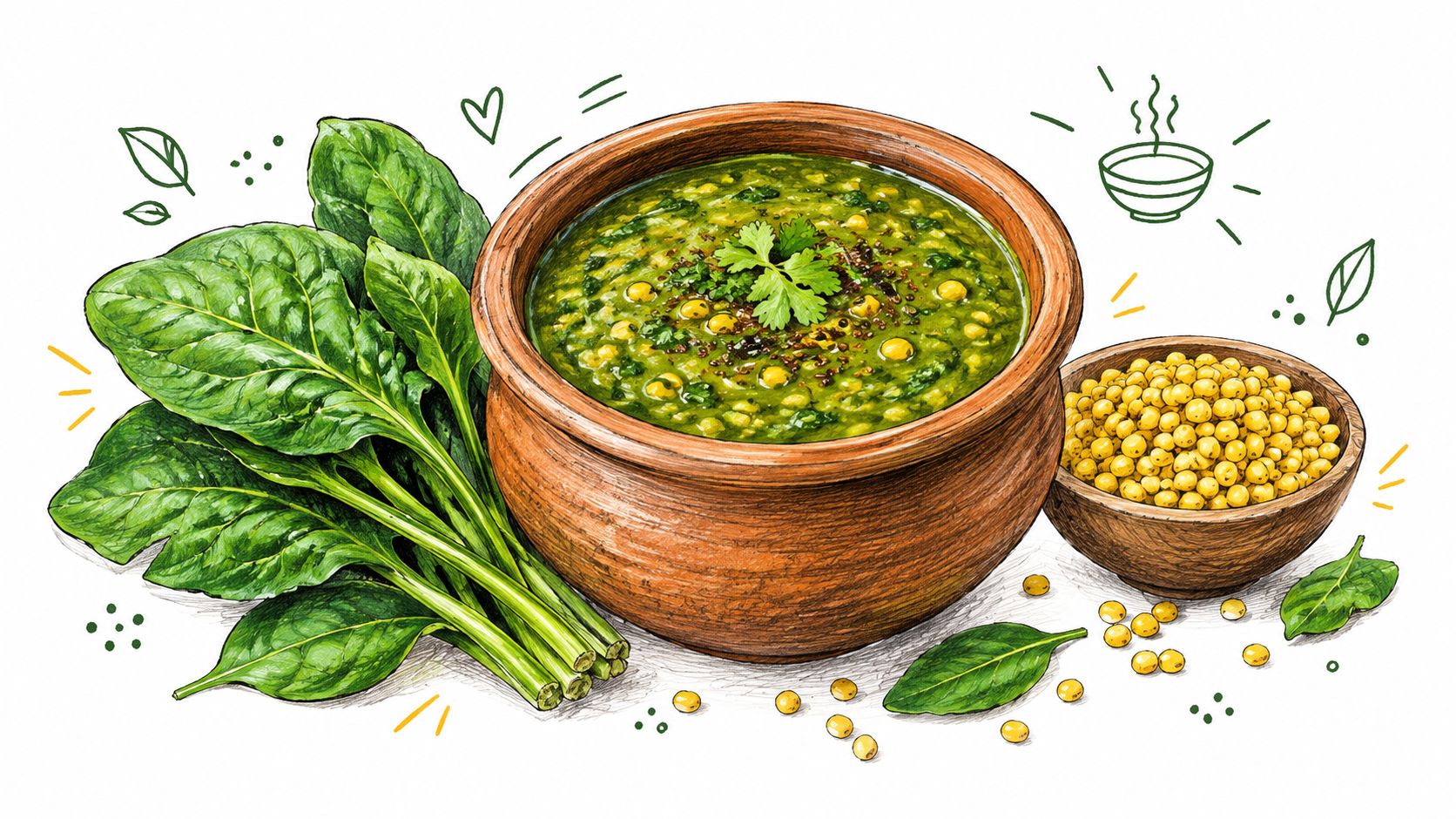
The Indian Food Composition Tables 2017 provide a useful India-specific starting point. They list green-gram dal at approximately 23.88 g protein per 100 g of raw edible portion, while spinach contains approximately 90.31 g water, 2.14 g protein, 0.64 g fat, and 2.47 g carbohydrate per 100 g. These figures come from national sampling across Indian food varieties, so they offer a more relevant baseline for Indian meal planning than automatically copying values from a non-Indian database. The IFCT 2017 tables also make the important distinction between raw ingredients and a cooked dish.
That distinction explains the pairing. Moong dal supplies the principal plant protein, whereas palak contributes moisture, volume, and a leafy vegetable component with relatively little fat. Spinach alone won't turn a meal into a protein-rich dish, and dal alone doesn't provide the same colour, bulk, or vegetable diversity.
A measured recipe is more useful than a recipe described as "light" or "high-protein". Weigh the dry moong, estimate the spinach you use, measure the oil for tempering, and record the final cooked yield. A family recipe can remain flexible, but those measurements give you control when the dish needs to fit a specific eating plan.
Give the finished dal a few minutes to settle before serving. The texture thickens, the greens distribute more evenly, and you can judge whether you need a smaller cereal accompaniment rather than automatically adding more dal or rice.
The pairing also reflects familiar Indian food categories, pulses and green leafy vegetables, rather than relying on an imported "superfood" idea. That makes it practical: the same basic preparation can work in a shared family meal while each person adjusts the cereal portion, oil, or serving size.
The cooking order matters as much as the ingredients. This short visual guide shows the sequence I use to avoid a watery, dull, or undercooked result.
Preparing Palak Moong Dal Like a Pro
Start by spreading the dry moong on a plate. Remove stones, darkened grains, or visible debris, then rinse until the wash water is relatively clear. If your schedule allows, soak the dal for 20-30 minutes, which can help it cook more evenly. Indian pulse-processing guidance emphasises that raw pulses require thermal processing, so don't treat rinsing or soaking as a substitute for cooking.
Cook the dal until properly soft
Use approximately 2.5-3 parts water to 1 part dry dal, then pressure-cook until the grains are completely soft. The exact time depends on the cooker, soaking, pulse age, and preferred consistency, so softness is a more reliable test than copying a fixed whistle count from another kitchen.
A dal that still has a hard centre won't become pleasant just because spinach is added later. It can also tempt you to keep boiling the complete mixture for too long, which is one route to dull greens and a flat flavour.
Handle the palak separately
Wash the spinach carefully, drain it, and either blanch it briefly or sauté it until just wilted. You don't need to cook it into a dark paste. Keeping the heating brief preserves a fresher colour and prevents the leafy component from disappearing into the dal.
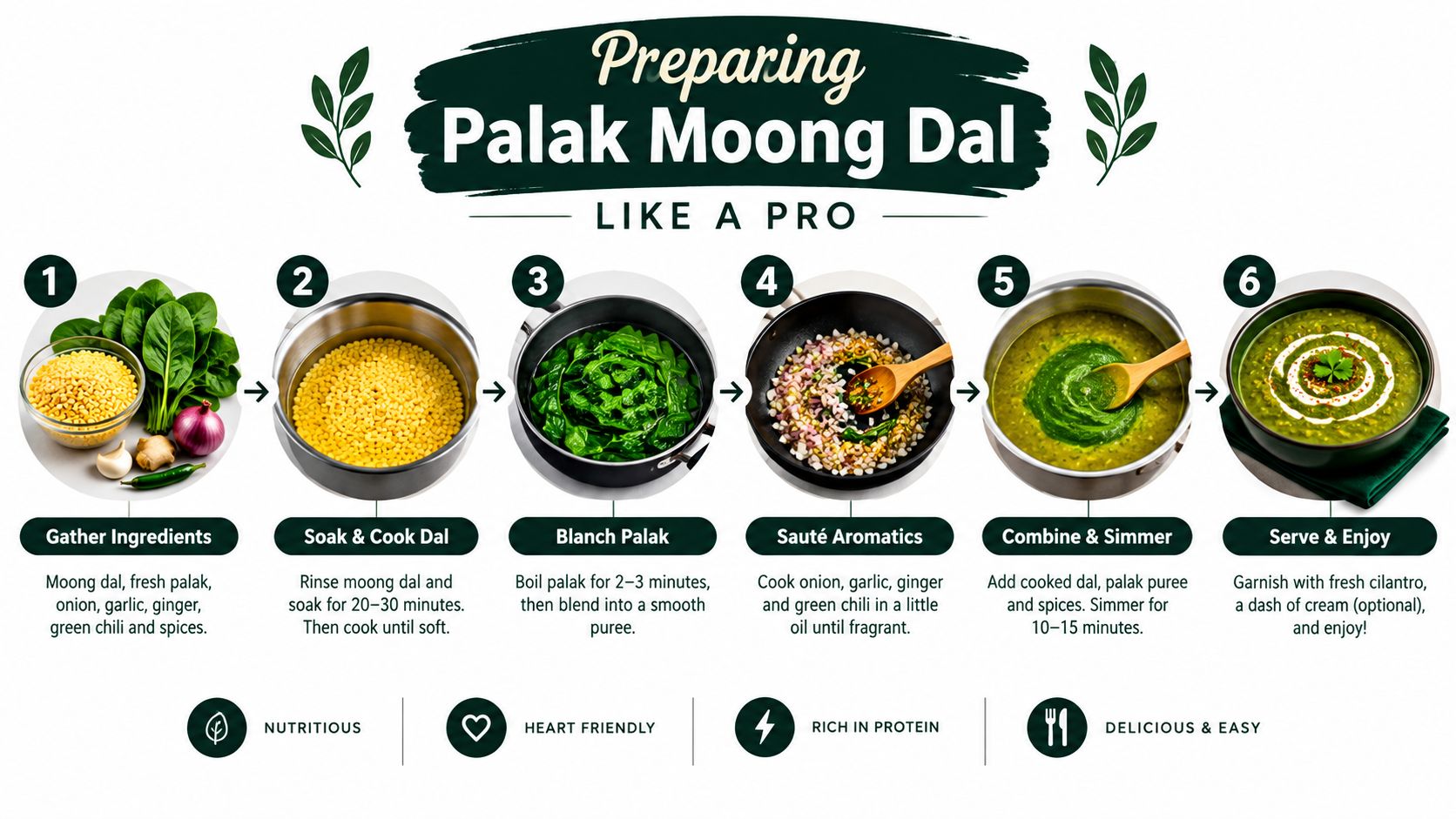
Combine the cooked dal and prepared palak, adjust the water gradually, and simmer for 5-8 minutes before adding the tempering. This sequence, described in the practical pulse preparation method, gives the pulse time to finish softening while limiting prolonged heating of the spinach.
For the tadka, keep the oil measurable. Cumin, garlic, ginger, hing, dried chilli, or mustard seeds can supply plenty of character without requiring a free-poured quantity of oil. Add the tempering at the end, taste for salt, and remember that a thinner consistency increases volume but reduces nutrient concentration per 100 g.
Practical rule: If the dal is undercooked, fix the dal first. If the greens are overcooked, adding extra spices won't restore their texture or colour.
Understanding the Actual Nutrition Numbers
A bowl of palak moong dal can look generous while providing less pulse than expected. The difference usually comes from how the recipe is measured. Dry moong, cooked moong, and the finished dal should be recorded separately, especially when you are managing portions for diabetes, PCOS, or weight management.
The IFCT values cited above place green-gram dal at approximately 23.88 g protein per 100 g raw edible portion, while raw spinach provides approximately 2.14 g protein per 100 g. The national food-composition tables describe ingredients before cooking, so these figures help compare ingredients rather than label the final bowl. Palak contributes colour, volume, and vegetables. Moong supplies most of the meal's protein.
Cooked weight changes the calculation. A plain cooked-moong reference gives about 105 kcal and 7.02 g protein per 100 g cooked dal, compared with 347 kcal and 23.9 g protein per 100 g dry dal. This Indian nutrition reference shows why a dry number cannot be applied directly to a cooked ladle. Water increases weight and volume, while the original nutrients remain distributed through the cooked batch.
Turn the recipe into a serving estimate
For a repeatable household recipe, write down:
- Dry moong: the quantity added before soaking.
- Palak: the trimmed quantity added to the pot.
- Tempering: the measured oil or ghee.
- Other ingredients: tomatoes, onions, coconut, or any additions that affect the meal.
- Final yield: the total cooked weight.
Weigh the finished dal, divide it into the number of portions you plan to serve, and use that portion consistently. A thinner dal may fill a larger bowl without containing more moong. A thicker dal may deliver more pulse in a smaller serving.
Serve the dal alongside a deliberate amount of rice or roti rather than treating the cereal portion as an afterthought. For broader planning, this guide to dal and protein helps place dal within a daily protein pattern. The useful question is whether the measured dal, cereal accompaniment, tempering, and rest of the day fit your dietary needs.
Choosing Your Version for Your Goals
The same dish can be adapted in two broad directions. A lighter, palak-forward version works well when you want more vegetable volume and a thinner accompaniment. A dal-forward version gives a thicker, more substantial bowl and may suit someone who needs greater satiety from the pulse component.
| Version | Key characteristic | Best for |
|---|---|---|
| Palak-forward | More spinach, a lighter dal consistency, measured tempering | Weight-management routines and meals where roti or rice is also served |
| Dal-forward | More cooked moong, thicker texture, a clearly substantial pulse portion | Greater satiety, active routines, and meals where the dal carries more of the plate |
The lighter version isn't automatically lower in calories if the tempering becomes generous. Oil is concentrated, and a large tadka can change the meal more than an extra handful of spinach. Use a spoon to measure it, particularly if the dal appears on the menu frequently.
The thicker version doesn't give permission to eat unlimited portions. A dense dal paired with a large serving of rice, several rotis, papad, and a potato side can become a very different meal from the one you planned. The better adjustment is often to increase the visible palak, keep the oil controlled, and decide the cereal quantity before serving.
Yellow split moong usually produces a soft, quick-cooking dal. Green whole moong has a firmer texture and a more pronounced pulse character, so it can work when you want more bite, but it may require different cooking management. Blending the finished dal creates a smooth texture, while leaving some grains intact slows down the eating pace and makes the pulse component easier to see.
For PCOS or weight management, focus on the complete plate rather than assigning the dish a magic label. For diabetes or prediabetes, the same principle applies. The dal's effect depends on the recipe, softness, oil, portion, and what accompanies it, so the cereal portion deserves as much attention as the bowl of dal.
Portion Guidance for Real Indian Diets
A family pot can look generous or modest depending on how much water the dal absorbed. The same dry quantity of moong may produce different cooked weights in different kitchens, so portion decisions should begin with the finished palak moong dal. Weigh the cooked pot once, then use that total to serve consistent portions.
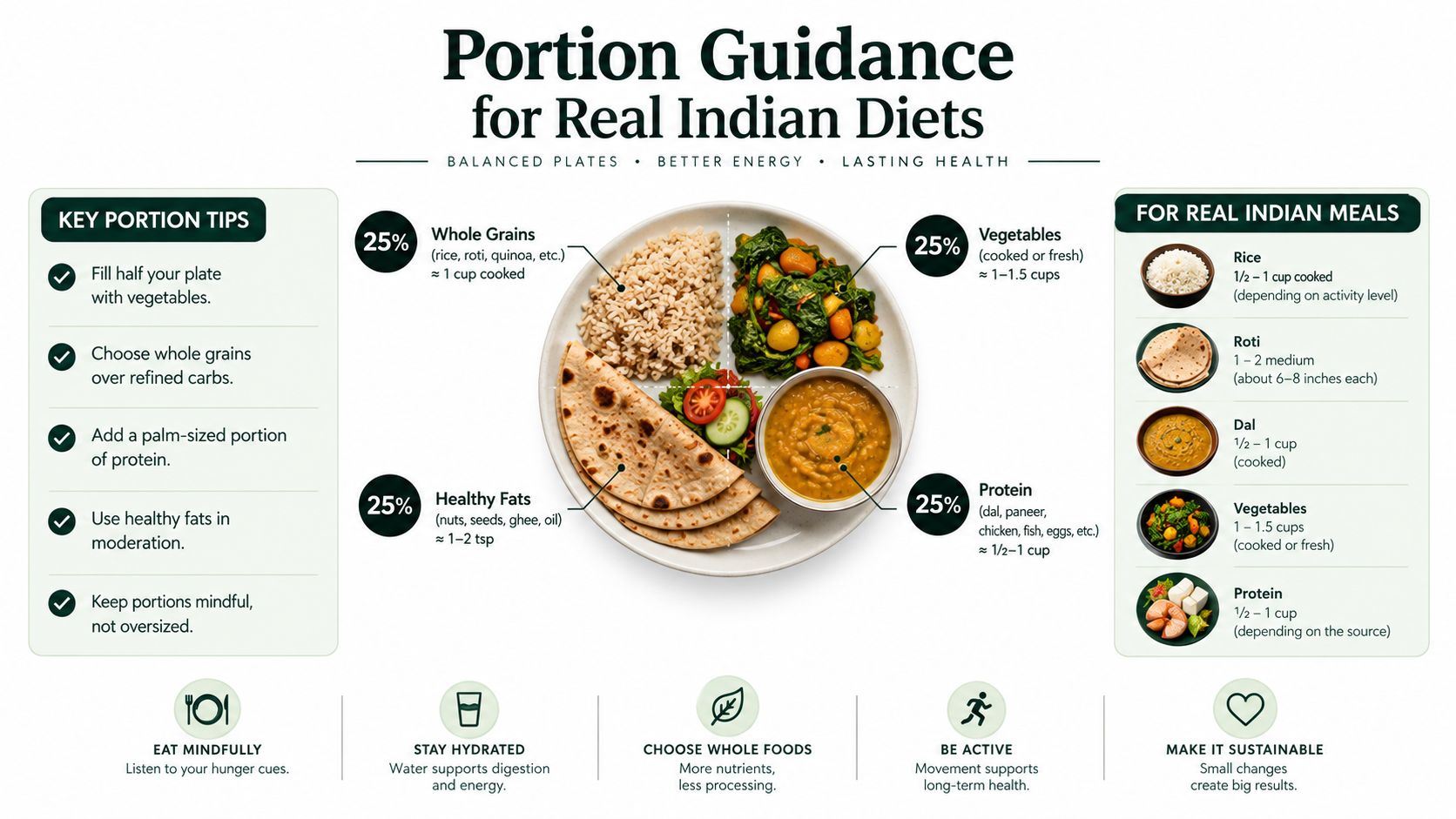
A practical benchmark is a 200-250 g cooked serving with a visible spinach component, paired with a measured cereal portion such as roti or rice. Treat this as a household starting point, not a fixed prescription. The cereal portion should suit the person's glucose response, carbohydrate target, activity, and clinical plan.
Build a repeatable household method
- Standardise the pot: Record the dry moong, palak, oil, salt, and final cooked weight.
- Serve the dal deliberately: Use one bowl consistently, or weigh portions while establishing the routine.
- Choose the cereal next: Set the rice or roti quantity instead of serving the usual amount automatically.
- Keep extras visible: Pickle, papad, ghee, and fried sides can add energy or sodium without making the dal bowl look larger.
- Review the whole meal: Palak-heavy dal with roti differs nutritionally from a pulse-heavy preparation served with rice and potato.
A small kitchen scale helps during the first few meals, but a familiar bowl can work once its capacity is known. A practical guide to portion control with an Indian katori can help match serving habits to a repeatable bowl size.
For diabetes or prediabetes, measure the oil and observe glucose response to the complete meal, including rice, roti, and sides. Anyone taking glucose-lowering medication should discuss major carbohydrate changes with their clinical team.
For PCOS and weight management, consistency usually matters more than giving this dish an unlimited or forbidden label. Keep the dal serving measured, choose the cereal portion deliberately, and include vegetables across the day. With hypertension, record salt as part of the recipe and check salty accompaniments before adding more.
Earlier Indian dietary guidance recommended roughly 85 g of pulses and legumes and 400 g of vegetables daily, including 100 g of green leafy vegetables. These figures describe the daily eating pattern, not a reason to eat unlimited palak moong dal in one sitting. The Indian dietary guidance summarised in this source is best applied across meals, alongside suitable cereal portions and other vegetables.
The goal is a cooking system that works on ordinary weekdays. Measure the pot once, serve with a known bowl, and adjust the cereal and accompaniments to the person and the meal.
Common Myths About Iron and Diabetes
Myth one: spinach makes palak moong dal an iron treatment. Spinach does contain iron, but it also contains oxalate, which can reduce mineral bioavailability. Moong contributes plant protein and iron, yet one bowl cannot diagnose or correct iron-deficiency anaemia.
Treat palak moong dal as one useful part of an iron-supportive eating pattern. Add a vitamin-C-containing food such as lemon, tomato, amla, or guava to support non-haem iron absorption. Soaking and thoroughly cooking the dal are sensible preparation steps, while tea or coffee immediately with the meal may work against absorption because their polyphenols can inhibit non-haem iron absorption. The AYUSH compendium's discussion of spinach and oxalate supports this more careful interpretation.
If you're menstruating, pregnant, vegetarian, or concerned about low haemoglobin, use blood-test context and professional advice rather than relying on a recipe. This practical guide to iron and anaemia in Indian women can help you think beyond the ingredient list.
Myth two: moong dal makes the dish automatically diabetic-friendly. The glycaemic effect depends on the amount of dal, how soft it becomes, the oil used, and the foods served alongside it. Rice, roti, papad, and potato can change the total meal even when the dal itself is prepared sensibly.
The sounder approach is to use pulses and leafy vegetables regularly, control the cereal portion, and monitor your individual response where appropriate. A dish can be fibre-and-protein-rich without becoming a free-food category.
Making Palak Moong Dal a Sustainable Routine
The most workable routine is simple: measure the dry dal, cook it fully, add palak late, temper with controlled oil, and weigh the cooked yield. Then serve a portion that fits the rest of the meal instead of treating the dal as separate from rice, roti, sides, and drinks.
You can keep the same framework through busy weekdays and family meals. Make the dal thicker when it needs to stand in for a larger part of the meal, or keep it lighter when vegetables and a measured cereal are already present. Taste should remain part of the routine, but it doesn't require abandoning measurement.
For diabetes, PCOS, hypertension, or weight-management goals, recipe standardisation turns a familiar comfort food into a dependable meal component. The best version is the one your household can cook repeatedly, portion accurately, and adapt without preparing a separate menu.
DietOwl provides personalised nutrition and lifestyle coaching on WhatsApp, with meal plans shaped around Indian food habits, medical conditions, schedules, and available ingredients. Visit DietOwl to explore support for practical portions, meal logging, and condition-specific routines that can include dishes such as palak moong dal.
Related Topics
Biological Audit
Need a customized Nutrition plan?
Join 100+ Indians on a personalised Indian plan, on WhatsApp.
Deepen your Discovery.
8 Weight Loss Diet Recipes Indian Cooks Can Try
Explore 8 weight loss diet recipes indian cooks can make with calorie and protein estimates, practical tips, and quick variations for everyday meals.

PCOS Diet Chart for Indian Women: A 7-Day Meal Plan That Works With Your Food
A realistic 7-day PCOS meal plan built with rice, roti, dal and sabzi, using insulin-sensitivity science and not food-avoidance folklore. Cycle-aware, family-friendly.

Indian Diabetes Diet Chart: A 7-Day Meal Plan That Keeps Rice
A realistic 7-day diabetes diet chart for Indian kitchens that keeps rice, roti, dal and sabzi. Built on glycemic load, smart pairing and portion, not food bans.