
How Much Protein Is in 1 Egg? Boiled, Whole and Per 100 g
Written By
DietOwl Nutrition Team
Published
17 November 2026
Reading Time
11 min read
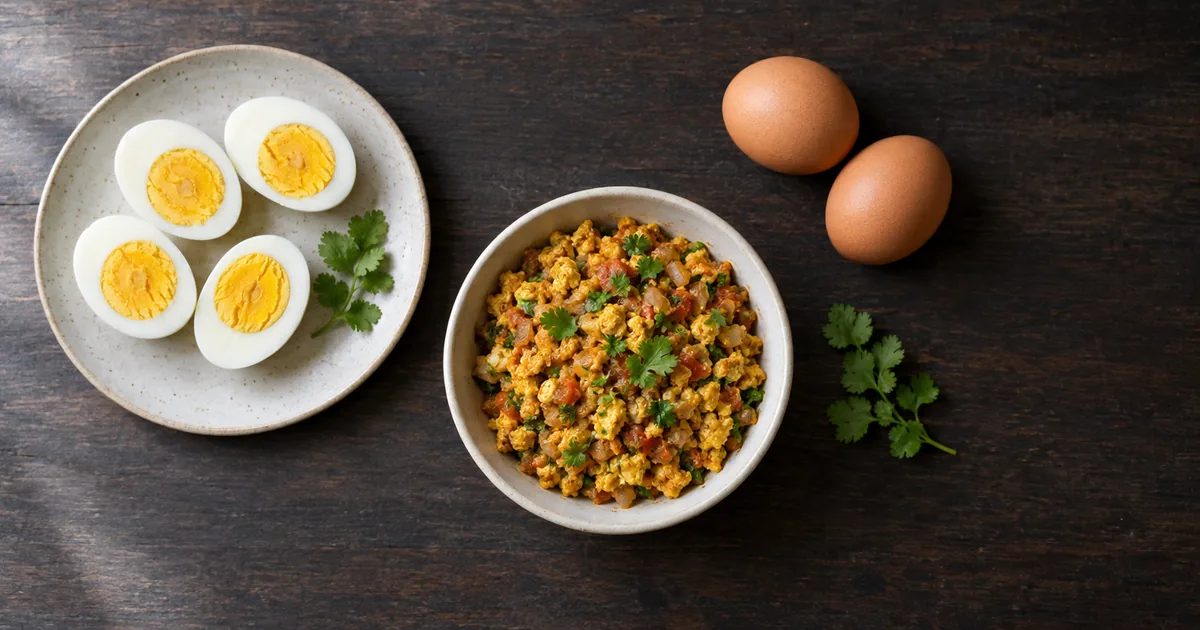
One large whole egg gives you about 6.28 g of protein (USDA NAL). Cooking barely changes this: a large fried egg has 6.26 g and a large poached egg has 6.25 g (USDA NAL). Per 100 g, an Indian hen egg has 13.28 g of protein raw and 13.43 g boiled, according to the Indian Food Composition Tables (ICMR-NIN).
So whichever way you like your anda, one egg is a small but reliable portion of protein. Below you will find boiled vs raw, white vs yolk, desi vs farm eggs, what 2 to 5 eggs add up to, and how eggs fit into a normal Indian day of roti, dal and rice.
Protein in 1 egg: the quick answer
Here is what one large egg gives you, depending on how it is prepared.
| One large egg | Protein |
|---|---|
| Whole, raw | 6.28 g |
| Whole, fried | 6.26 g |
| Whole, poached | 6.25 g |
| White only, raw | 3.6 g |
Source: USDA NAL protein per measure list.
A word on size. These figures are for a standard US "large" egg. Eggs sold in India come in different sizes, and we could not find a trusted source for the typical weight of an Indian egg. That is why we do not convert the Indian per 100 g values into a per-egg number. If your eggs are smaller than a US large egg, they will give a little less protein than the figures above, and bigger eggs will give a little more.
How much protein is in one boiled egg?
The USDA list we checked does not have a separate entry for a hard-boiled egg. The closest match is the poached egg, which is cooked in water without oil, at 6.25 g per large egg (USDA NAL).
Boiling does not add protein and does not destroy it. The egg simply loses a little water as it cooks, which concentrates what is left. You can see this in the Indian data: a whole hen egg has 13.28 g protein per 100 g raw and 13.43 g per 100 g boiled (ICMR-NIN). The protein in the egg stays the same; it just sits in slightly less weight.
In practice, a boiled egg gives you the same protein as a raw, fried or poached egg of the same size. Choose the method you enjoy and that suits your oil budget.
Protein in 2, 3, 4 and 5 eggs
Many people search for this because they eat eggs in twos and threes, in bhurji, omelettes or egg curry. The table below assumes every egg is a large egg with 6.28 g of protein each, and simply multiplies that by the number of eggs.
| Number of large eggs | Total protein |
|---|---|
| 1 egg | 6.28 g |
| 2 eggs | 12.56 g |
| 3 eggs | 18.84 g |
| 4 eggs | 25.12 g |
| 5 eggs | 31.40 g |
Based on 6.28 g per large whole egg from the USDA NAL list, multiplied by the number of eggs.
If you use only the whites, the numbers fall. Each large white gives 3.6 g (USDA NAL), so a three-white omelette has less protein than three whole eggs.
Egg white vs egg yolk: where is the protein?
This surprises people: the yolk is not just fat. Both parts carry protein.
The white of one large egg has 3.6 g of protein, while the whole egg has 6.28 g (USDA NAL). That means a little more than half of the egg's protein is in the white, and the rest is in the yolk.
Gram for gram, the yolk is actually richer. Raw yolk has 15.74 g protein per 100 g against 10.84 g in raw white (ICMR-NIN). After boiling, yolk has 16.13 g and white has 12.37 g per 100 g (ICMR-NIN). The white still contributes more protein per egg simply because there is more of it.
The big difference is fat. Raw yolk carries 26.34 g fat per 100 g, while raw white has almost none at 0.06 g (ICMR-NIN).
So which should you eat?
- Whole eggs give you more protein per egg, plus everything else the yolk carries.
- Egg whites are a near fat-free way to add protein, useful when you want extra protein without extra fat, for example adding two whites to one whole egg in a bhurji.
- If you have high cholesterol or heart disease, ask your doctor or nutritionist how many yolks suit you. Our guide to cholesterol and Indian food explains what actually moves the numbers.
Protein per 100 g: every egg type in the Indian tables
The Indian Food Composition Tables 2017 from ICMR-NIN list protein for several kinds of eggs. All values are per 100 g of edible egg.
| Egg (IFCT 2017) | Protein per 100 g |
|---|---|
| Hen egg, whole, raw | 13.28 g |
| Hen egg, whole, boiled | 13.43 g |
| Hen egg white, raw | 10.84 g |
| Hen egg white, boiled | 12.37 g |
| Hen egg yolk, raw | 15.74 g |
| Hen egg yolk, boiled | 16.13 g |
| Hen egg omelette | 16.53 g |
| Country hen (desi) egg, whole, raw | 13.14 g |
| Country hen (desi) egg, whole, boiled | 14.43 g |
| Duck egg, whole, raw | 14.60 g |
| Quail egg, whole, raw | 12.39 g |
Source: Indian Food Composition Tables 2017, ICMR-NIN.
Does an omelette have more protein?
Per 100 g, the omelette shows the highest figure at 16.53 g (ICMR-NIN). This is mainly because cooking drives off water, so the same eggs weigh less on the plate. Your two-egg omelette does not contain more protein than two boiled eggs. It contains what the two eggs brought in, as the near-identical fried and poached figures show (USDA NAL).
Is a desi egg higher in protein?
Not meaningfully. A raw desi egg has 13.14 g protein per 100 g, against 13.28 g for a regular raw hen egg (ICMR-NIN). The boiled desi egg shows 14.43 g per 100 g, but both desi values come from a single sample each (ICMR-NIN), so do not read too much into it. Buy desi eggs if you prefer the taste, not because you expect a lot more protein.
Duck and quail eggs
Duck eggs have 14.60 g protein per 100 g and quail eggs 12.39 g (ICMR-NIN). Quail eggs are tiny, so you need several to match one hen egg.
How many eggs fit your daily protein need?
ICMR-NIN sets the protein RDA for healthy Indian adults at 0.83 g per kg body weight per day, with an average requirement (EAR) of 0.66 g per kg (ICMR-NIN). For a sedentary man with a reference weight of 65 kg, that works out to 54.0 g a day, and for a sedentary woman with a reference weight of 55 kg, 45.7 g a day (ICMR-NIN).
There are two important details here:
- These figures assume high-quality protein, and ICMR-NIN now uses DIAAS (digestible indispensable amino acid score) to judge protein quality (ICMR-NIN). Egg is an animal protein, generally counted among the better quality sources.
- People eating a mostly cereal-based diet with lower quality protein need about 1 g per kg per day (ICMR-NIN). Many Indian plates are heavy on rice or roti and light on dal, so this applies to a lot of us.
Pregnancy raises the need further: ICMR-NIN adds 9.5 g a day in the second trimester and 22.0 g a day in the third (ICMR-NIN).
To put eggs in context: two large eggs at breakfast give 12.56 g of protein, based on 6.28 g each (USDA NAL). That is a useful start, but most of a sedentary woman's 45.7 g (ICMR-NIN) still has to come from the rest of the day: dal, curd, paneer, chicken, fish, chana and your grains. For the full picture by body weight and goal, read how much protein Indians actually need.
Easy ways to add eggs to an Indian day
Eggs work best as part of a meal, not as a stand-alone protein fix. Some simple ideas:
Breakfast
- Egg bhurji with onion, tomato and capsicum, with one or two rotis.
- Boiled eggs alongside a katori of poha or upma, which on their own are low in protein.
- Egg dosa or a thin anda paratha, cooked with a measured teaspoon of oil rather than a pour.
- More ideas in our Indian weight loss breakfasts.
Lunch and dinner
- Egg curry with rice, plus a katori of dal or a bowl of salad to round it out.
- Egg bhurji tucked into a roti roll with plenty of sabzi.
- Leftover boiled eggs chopped into a vegetable pulao.
Snacks
- A boiled egg with a little chaat masala and lemon.
- A boiled egg with a small bowl of roasted chana or a fruit.
Vegetarian or eggless? You can meet your needs without eggs by combining dal, curd, paneer, soya and sprouts through the day. See whether dal is enough protein and our list of high-protein vegetarian Indian foods.
Common mistakes with egg protein
- Counting only the eggs. Eggs are one part of the meal. A two-egg breakfast with nothing else protein-rich for the rest of the day still leaves you short.
- Throwing away every yolk for no reason. You lose a good part of the egg's protein along with the yolk's other nutrients. Skip yolks only if your doctor or nutritionist has advised it.
- Believing omelettes or desi eggs have far more protein. The higher per 100 g figures come from water loss and a single sample, not from a more protein-rich egg.
- Drinking raw eggs for protein. A raw large egg has 6.28 g and a fried or poached one 6.25 to 6.26 g (USDA NAL), so you gain nothing by drinking them raw, and raw eggs carry a food safety risk. Cook them until set.
- Frying in a lot of oil or butter. The protein stays the same, but the calories climb quickly. Boiled, poached or a lightly oiled bhurji keeps the meal lighter.
- Loading all your protein into one meal. Many people find it easier to feel full and reach their target when protein appears at breakfast, lunch and dinner, rather than a big pile at dinner.
When to talk to your doctor
Eggs are an everyday food for most healthy adults, but please check with your doctor before changing how many eggs or how much protein you eat if you have kidney disease, high cholesterol or heart disease, a known egg allergy, or you are pregnant. If you are managing a condition, your doctor and a qualified nutritionist can help you decide how eggs fit your plan.
Key takeaways
- One large whole egg has about 6.28 g of protein, and frying or poaching barely changes it (USDA NAL).
- A boiled egg gives the same protein as any other egg of its size; per 100 g, a boiled hen egg has 13.43 g (ICMR-NIN).
- The white of one large egg has 3.6 g of protein, so a little more than half the protein is in the white (USDA NAL).
- Desi eggs and omelettes are not meaningfully higher in protein per egg.
- Sedentary Indian adults need about 54.0 g (men) or 45.7 g (women) of protein a day (ICMR-NIN), so eggs should sit alongside dal, curd, paneer, meat or fish, not replace them.
If you would like help building meals around eggs, dal and your family's usual food, so that you get enough protein while losing weight steadily, our nutritionists can guide you one WhatsApp message at a time. You can read how it works on our weight loss coaching page.
Related Topics
Biological Audit
Need a customized Indian Nutrition plan?
Join 100+ Indians on a personalised Indian plan, on WhatsApp.
Deepen your Discovery.

Is Rice Really Bad for Weight Loss? An Indian Dietitian's Truth
Rice is not bad for weight loss. Eating rice without thought, portioning, and pairing is. Here is what the science actually says, and how to eat rice while losing weight.
Half Fried Egg Calories: Portion Sizes and Cooking Fat
A half fried egg is one whole egg: about 74 kcal from the egg, plus 20-45 kcal from half to one teaspoon of oil or ghee. Here is how to count it.

Is Roti Healthier Than Rice? Every Indian Staple Ranked
Roti and rice are far more similar than popular nutrition advice suggests. An honest comparison, the full Indian staple ranking, and when each actually wins.