
Non-Veg Weight Loss Diet: A Practical Indian Guide
Written By
DietOwl Nutrition Team
Published
13 November 2026
Reading Time
17 min read
"Eat more chicken and eggs" is incomplete weight-loss advice. So is "stop non-veg". Neither tells you what to do with the oily curry, the oversized rice serving or the extra butter brushed onto a supposedly healthy kebab.
A practical weight loss diet non veg approach starts with replacement, not addition. Keep familiar foods, change the parts of the meal that make portions and calories difficult to manage, and build a routine that survives Mumbai commutes, family dinners and wedding invitations. You don't need imported protein foods or separate cooking for everyone at home.
Table of Contents
- Why Non Veg Gets Blamed and What the Evidence Actually Shows
- The Protein Question Every Reader Asks First
- Choosing the Right Non Veg Staples for Indian Kitchens
- Cooking Methods That Keep Calories in Check
- Portion Sizes and Plate Composition for Real Indian Thalis
- Meal Timing, Hunger and Protein Spread Across the Day
- A 7-Day Sample Non Veg Indian Diet Plan
- Tracking Progress and When to Bring in a Coach
Why Non Veg Gets Blamed and What the Evidence Actually Shows
Chicken and eggs don't automatically cause weight gain, and eating them doesn't automatically produce weight loss. The whole meal matters, including the preparation, the accompaniments and how much you serve.
India's weight-management challenge is substantial. NFHS-5 recorded overweight or obesity in 24.0% of women and 22.9% of men in the surveyed adult age groups, compared with 20.6% and 18.9%, respectively, in NFHS-4, according to the government summary of India's nutrition indicators. These are population figures, not evidence that a particular chicken curry caused someone's weight gain.
Read the evidence without turning it into a food ban
Indian findings aren't uniform. In a study of more than 15,000 adults in Delhi, Chennai and Karachi, vegetarians were only slightly less often overweight or obese than non-vegetarians, 49% versus 53%, and South Asian vegetarians ate fried foods and desserts more often, according to this analysis of vegetarian diets in South Asia.
Those findings don't justify treating every non-vegetarian meal as equivalent. They also don't establish that changing only the vegetarian or non-vegetarian label will solve weight management.
Look at what you eat:
- The protein itself: Is there a meaningful serving of fish, eggs or poultry, or mainly gravy with a small piece of meat?
- The preparation: Is the food steamed, grilled or simmered, or battered and fried?
- The pairing: Does the plate include vegetables, or does rice occupy nearly all the available space?
- The extras: Count the butter finish, creamy dip, sweetened drink and dessert as part of dinner.
Practical rule: Assess the plate, not the dietary label.
Dhania chutney, ghee tempering, coconut curry and biryani can remain familiar foods rather than forbidden foods. But they require different decisions about preparation and serving. The useful question isn't whether chicken is "good" or "bad". It's whether this particular meal fits the way you're trying to eat.
The Protein Question Every Reader Asks First
A chicken curry can look like a protein meal while the plate is mostly rice and gravy. For weight loss, redesigning that plate often matters more than choosing a different non-veg label.
The analysis of Indian dietary intake and nutritional patterns reports that protein supplied about 12% of calories nationally, below the 15% guideline, while animal protein supplied about 1%. Having meat in a dish does not guarantee a meaningful protein serving.
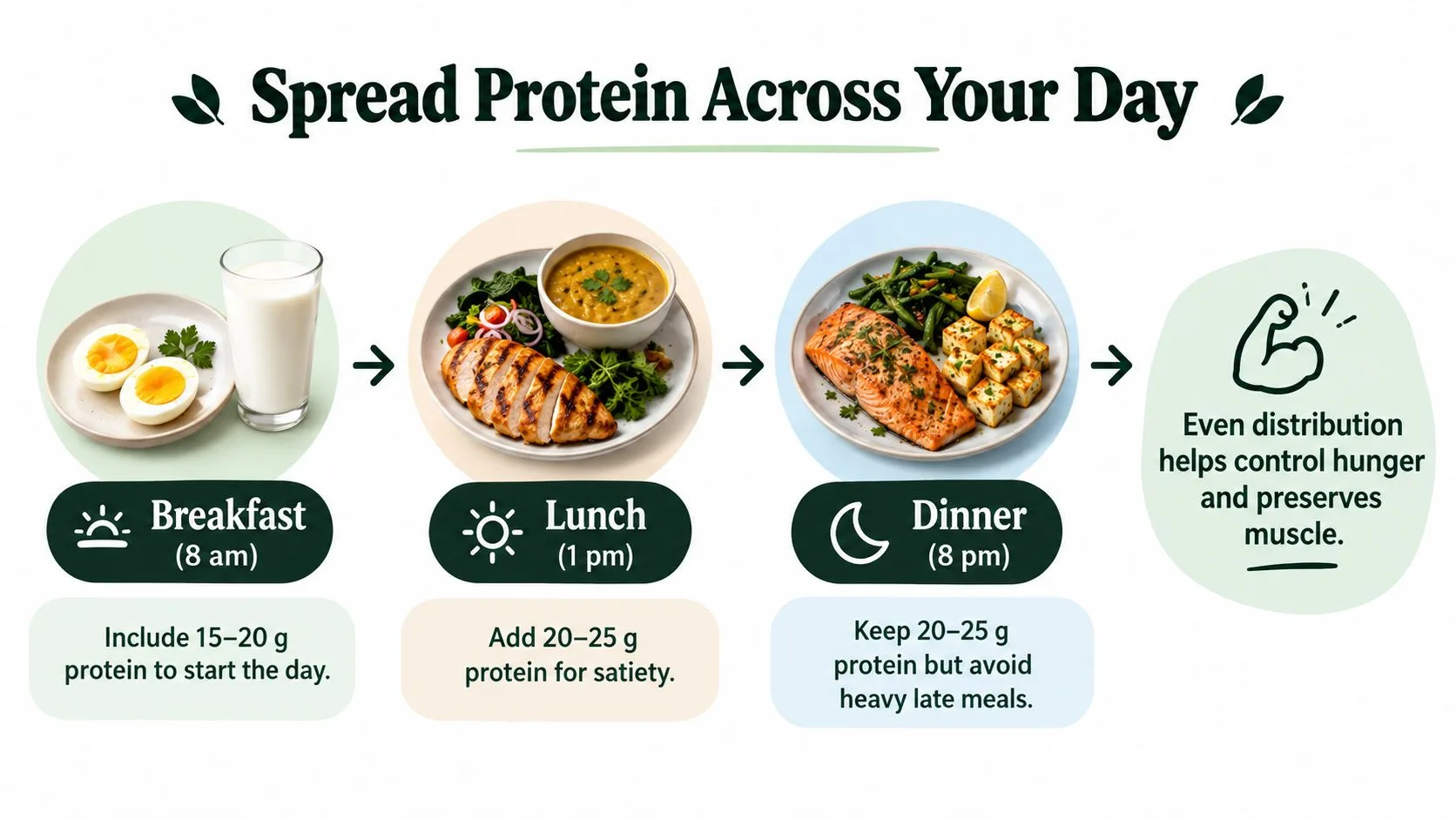
For healthy adults, the ICMR-NIN Dietary Guidelines for Indians specify 0.83 g of protein per kilogram of body weight daily. That works out to approximately 54 g a day for a 65 kg adult. The guidelines also discuss protein contributing about 15% of energy during a 500-750 kcal daily deficit. One practical example is roughly 54-65 g across three meals, or about 18-22 g per meal. Medical conditions can change an appropriate target.
Use the recommendation as a starting point, not a reason to enlarge every meat portion. Multiply your body weight by the recommended factor, then compare the result with what your meals provide. This guide to protein requirements for Indians explains the calculation.
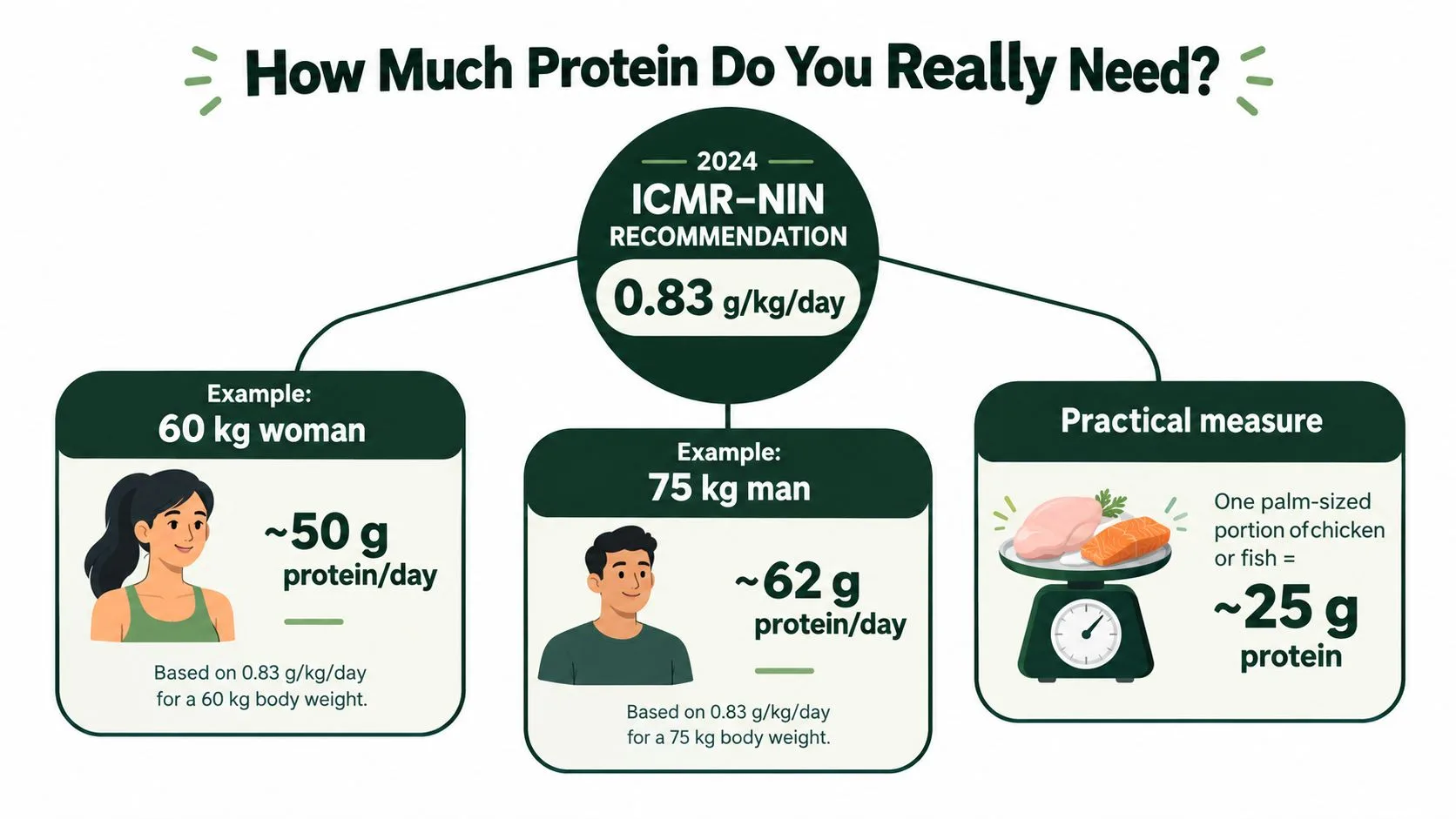
Treat the hand-sized portions in the infographic as visual prompts, not precise measurements. Fish species, bones, cuts and cooking losses all affect the edible protein on your plate.
Build the meal around one protein anchor, such as eggs, fish or chicken. Measure the edible portion: the weight of bone-in curry is not the weight of meat you eat. Keep familiar foods in the meal, too. A moderate serving of chicken alongside dal or unsweetened curd can work better than replacing those foods with an oversized meat portion.
If you have kidney disease, diabetes, are pregnant or manage another medical condition, ask a clinician to review your protein target. More is not automatically better.
Choosing the Right Non Veg Staples for Indian Kitchens
A non-veg meal does not need a special "fitness" ingredient to support weight loss. The more useful change is often what goes around the meat: less oily gravy, a sensible serving, and less of the plate taken up by rice. Eggs, local fish and familiar chicken cuts can all fit a household's usual cooking.
Choose staples people will prepare regularly. A food that suits your market, storage and cooking routine is more useful than one that looks ideal on a chart but gets abandoned after a busy workday.
Common staples at a glance
Protein and calorie values below are indicative, and vary with the cut, edible portion and preparation.
| Staple | Protein | Calories | Practical preparation |
|---|---|---|---|
| Eggs | About 6 g per egg | About 70 kcal per egg | Boiled, or a vegetable omelette with measured oil |
| Skinless chicken | About 25-31 g per 100 g cooked | About 165-210 kcal per 100 g cooked | Grilled, roasted or simmered in a lighter curry |
| Rohu | About 20-25 g per 100 g cooked edible fish | About 120-150 kcal per 100 g cooked | Steamed, baked or cooked in a lighter curry |
| Trimmed mutton | About 25-28 g per 100 g cooked | About 200-260 kcal per 100 g cooked | Slow-cooked after trimming visible fat |
Use these as broad comparisons, not exact meal calculations. Bones, skin, cut and added oil change what ends up on the plate.
For a quick meal, keep eggs on hand for bhurji, boiled eggs or an omelette with vegetables. In a family chicken curry, serve a portion based on edible meat rather than counting the bones. For fish, buy what is fresh and available locally; an expensive fillet is not required. Mutton can stay on the menu, but trim visible fat and plan the rice and gravy alongside it rather than treating the meat as an unlimited serving.
Dal and curd can round out a meal when the meat portion is modest. That is often easier to maintain than asking the household to buy much more chicken. The practical test is whether the swap changes the whole plate, not just the name of the protein.
Oil control matters: a lean cut does not make an oily gravy low-calorie. Choose the staple and decide how it will be cooked before it reaches the pan.
Cooking Methods That Keep Calories in Check
A tandoori label does not make a meal weight-loss-friendly. Oil in the marinade, a butter finish, naan and dips can add up, so judge the full plate, not the cooking name.
The useful question is what goes into the pan. Grilling and steaming make added fat easier to control. Deep-frying adds oil, often along with batter. Pan-frying can still work if you brush the pan with a measured amount instead of pouring from the bottle.
Keep the flavour and change the technique
A tomato-onion curry gives you more control when you make it at home. Coconut, cashew paste and cream bring a different richness from a thin tomato base. If the dish depends on that texture, serving less gravy may be more satisfying than stripping out the ingredients that define it.
Start by building flavour with dry-roasted whole spices, ginger, garlic, chilli and coriander. Measure the oil used for the onions, as well as any finishing tadka. A spoon makes the amount visible; a free-poured bottle does not.
Hung curd can replace some of the creaminess where it suits the recipe. Add it carefully to reduce the chance of splitting. Lemon, crushed kasuri methi and fresh herbs can give a dish a satisfying finish without a routine malai topping.
Keep the flavour you enjoy. Remove the additions you barely notice.
A tawa works well without a home tandoor. An air fryer can help prepare fish or kebabs, though it will not remove oil already in a heavy marinade. Choose the equipment that makes controlled cooking practical in your kitchen.
Restaurant meals can fit too. Ask if the kitchen can leave out butter or cream and serve gravy separately. A dry preparation with vegetables and a planned grain portion is easier to assess than a mixed platter covered in sauces. The useful swap is often the cooking and serving style, not avoiding non-veg altogether.
Portion Sizes and Plate Composition for Real Indian Thalis
A non-veg thali can look balanced and still overshoot your needs when oily gravy, a large rice serving and fried sides all land together. Keep the familiar foods; change how much of each reaches your plate. Serve the components separately first, so the balance is visible before you start eating.
Use your hand and a familiar katori to make portions more consistent from meal to meal. They are practical guides, not exact measurements, since hand size and bowl capacity differ. The Indian katori portion-control guide can help you calibrate the bowls you use at home.
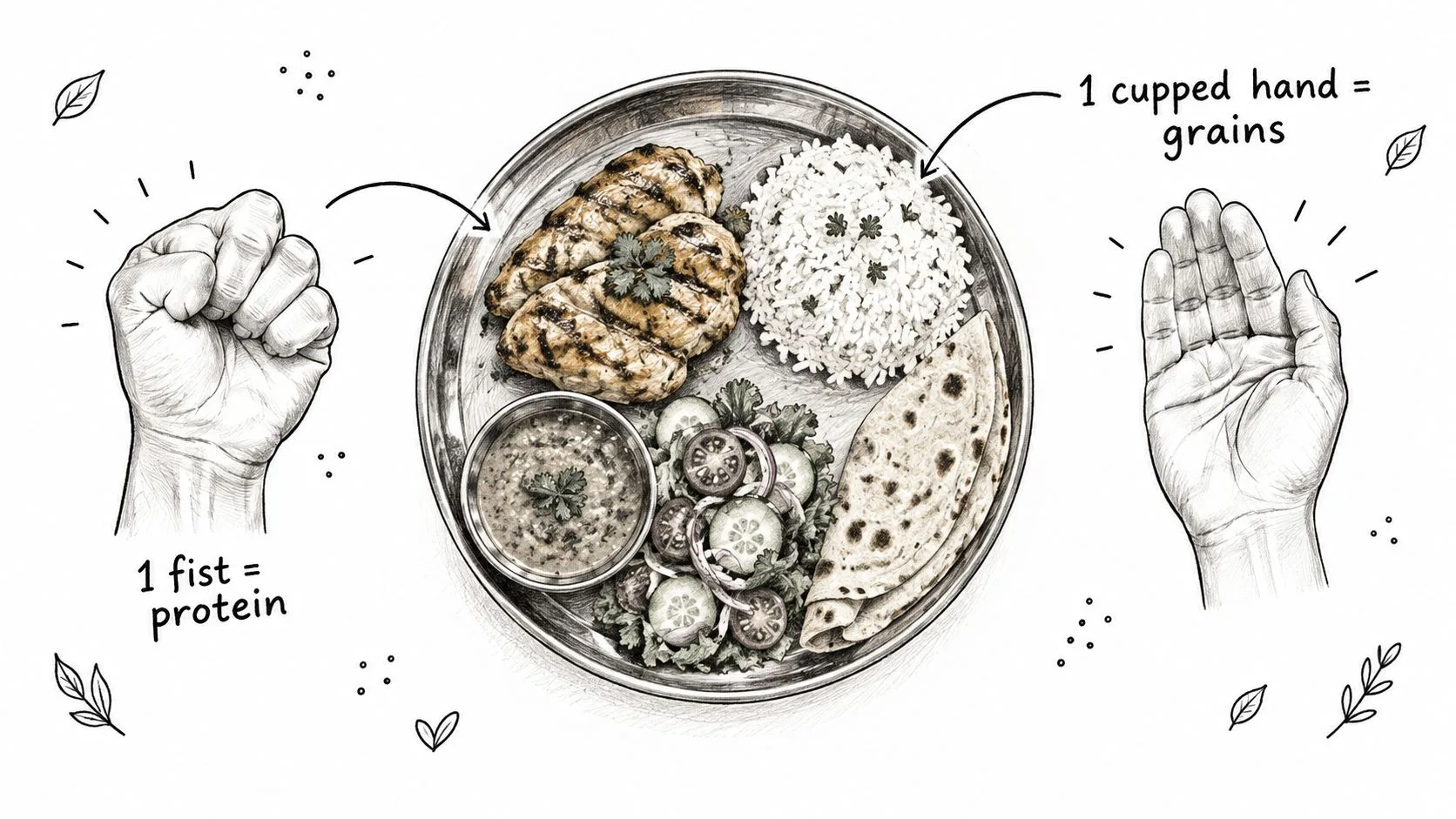
Build the plate in order: set aside the chicken, fish or eggs you plan to eat, add vegetables, then serve rice or roti deliberately. Add curd or dal if it suits the meal and your overall plan. A kitchen scale can teach you what your usual serving looks like; you do not need to weigh dinner indefinitely.
The adjustment depends on the thali:
- South Indian lunch: Keep fish curry and sambar, serve rice separately, and add a vegetable dish. Fish on the plate does not make a large rice serving automatically appropriate.
- North Indian dinner: Plate chicken curry, phulka and salad before eating. Take the chicken pieces you intend to have, and avoid repeatedly adding gravy over the roti.
- Bengali-style meal: Keep steamed rice and egg curry, then reconsider begun bhaja. Roasted or lightly pan-cooked brinjal is a useful option when you want less frying.
A family curry can stay on the menu without everyone taking the same portion. The cook need not make separate meals; each person can serve an amount suited to their needs.
At the serving counter: Decide your plate before eating, rather than adjusting portions bite by bite.
There is no universal spoonful of oil to assign each person. Recipes, the rest of the meal and individual energy needs vary. If portions are hard to judge, note how much oil goes into the pan and how much of the finished dish each person serves.
Biryani needs the same portion awareness. Count the rice and meat together, add raita or vegetables, then decide whether fried starters or dessert belong with that meal. You can keep biryani without automatically keeping every accompaniment.
Meal Timing, Hunger and Protein Spread Across the Day
A protein-focused dinner can't fix a day that leaves you hungry and unprepared. Chai and biscuits at breakfast, a rushed lunch and a late kebab order may fit a busy schedule, but they're worth reviewing if you repeatedly arrive home ravenous.
The useful timing rule is predictability, not a rigid clock. Arrange meals around your waking time, commute, work breaks and medication requirements rather than copying someone else's schedule.
This visual shows how to think about protein across the day; its clock times aren't compulsory.
What the Indian trial actually supports
In a 12-week randomised trial involving 122 overweight or obese Asian Indians, a higher-protein meal-replacement intervention alongside lifestyle measures produced an additional BMI reduction of approximately 0.9 units and reduced triglycerides by about 11.9 mg/dL compared with the control condition, according to the British Journal of Nutrition trial.
That doesn't prove meat alone causes weight loss, or that a particular dinner time improves glucose control. The practical lesson is to design replacements within a structured lifestyle plan, not just add protein products to existing meals.
- Breakfast preparation: Keep ingredients ready for eggs, curd-based meals or another planned protein option.
- Workday backup: Carry a lunch you can easily eat during your break, plus an optional snack such as boiled egg, roasted chana or unsweetened curd.
- Late-shift planning: Bring dinner or identify an order in advance instead of choosing while extremely hungry.
Home cooking gives you visibility over ingredients. With tiffin services, ask about preparation and whether vegetables can replace some rice. For packaged meals, inspect the label and serving information rather than relying on a "high-protein" claim.
Choose water and unsweetened chai when they suit you, without treating hydration as a fat-loss trick. Intermittent fasting is optional, not a requirement for non-vegetarian eaters. If it worsens hunger or conflicts with medication, discuss another schedule with your clinician.
A 7-Day Sample Non Veg Indian Diet Plan
The useful change is rarely a special "diet" dish. It is often the same familiar meal with less oily gravy, a sensible serving of rice and a clear protein portion. Use this week as a menu template, not a fixed-calorie prescription. Body size, activity, health conditions and appetite all affect portions, and home recipes vary.
Eggs, chicken, fish, curd, dal and seasonal vegetables can carry through the week, so the plan does not depend on hard-to-find ingredients. For more ideas using familiar foods, browse this Indian weight-loss recipe collection.
| Day | Meals to build around |
|---|---|
| Monday | Vegetable egg bhurji and roti at breakfast; chicken curry, a measured rice serving and cucumber salad at lunch; unsweetened curd as a snack; dal and cooked vegetables for dinner. Keep an eye on the oil used to fry the bhurji onions. |
| Tuesday | Oats with milk and a boiled egg; rohu curry with rice and beans; roasted chana; vegetable khichdi with curd. A tasty fish curry can make extra rice easy to serve, so decide the portion first. |
| Wednesday | Omelette and toast; packed chicken, phulka and cabbage sabzi; fruit; egg curry with vegetables. Butter on toast and extra gravy are easy additions to miss. |
| Thursday | Curd and fruit with a planned protein option; dal, roti and vegetables; a boiled egg; steamed fish with rice and greens. Keep the snack a snack rather than turning it into another full meal. |
| Friday | Egg bhurji and phulka; leftover fish with vegetables and rice; curd; lean chicken keema with peas and roti. Measure the keema oil instead of pouring it by eye. |
| Saturday | Eggs and fruit; dal, rice and sabzi; a snack before dinner; tandoori chicken, vegetables and your chosen bread at a restaurant. Going hungry can make automatic starter orders more tempting. |
| Sunday | Vegetable omelette; trimmed mutton curry, a deliberate rice serving and salad; fruit or curd; a simple dal-based dinner. A substantial lunch is a good reason to keep dinner simple, not add a rich takeaway. |
Treat the rotation as a starting point, not a rulebook. If a meal is vegetarian, use pulses or suitable dairy in place of the meat rather than leaving the meal without a protein option. Someone with higher activity may need a different grain portion; cutting carbohydrates arbitrarily is not the answer.
PCOS/PCOD, thyroid disorders and diabetes call for individual adjustments, not a separate miracle menu. Anyone taking diabetes medication should discuss meal changes and fasting with their treating clinician before changing the routine.
Tracking Progress and When to Bring in a Coach
A rotating menu is useful only if you can follow it and assess what happens. Track more than the scale, and don't interpret every fluctuation as a reason to cut food further.
Choose a consistent weighing routine and record waist measurements periodically. Compare like with like, rather than comparing a morning reading with a post-dinner reading.
Keep a short, useful record
- Meal photos: Capture the complete plate, including drinks, sauces and second servings.
- Hunger notes: Record whether meals leave you satisfied and when unplanned eating happens.
- Practical barriers: Note missed breaks, takeaway orders, travel and family meals.
- Health context: Ask your clinician whether glucose, lipids or other tests are appropriate, and when to repeat them.
A phone note or paper diary is also reasonable. The useful tool is the one you'll keep using.
Look for a sustained direction in weight and waist alongside manageable hunger, normal functioning and a routine you can maintain. If progress stalls, review portions, recipe changes and consistency before automatically increasing protein or skipping meals.
Know when self-adjustment isn't enough
Persistent fatigue, dizziness, marked mood changes, hair loss or menstrual changes deserve professional review, not praise for being disciplined. They're not proof that the diet is working harder.
A qualified nutrition coach can help when you understand the principles but struggle to apply them to household food. Look for regional meal adjustments, feedback on actual plate photos and coordination with medical care where needed.
Coaching should reduce guesswork, not make you dependent on permission to eat. Ask how the coach handles restaurant meals, irregular shifts and maintenance before signing up.
The true test isn't whether you can avoid biryani briefly. It's whether you can manage ordinary meals and the next wedding season without abandoning the routine or compensating with extreme restriction.
DietOwl offers personalised nutrition and lifestyle coaching on WhatsApp, including meal-photo feedback and plans built around Indian food habits and medical needs. If you want help fitting eggs, fish, chicken and family curries into a sustainable weight-loss routine, visit DietOwl to explore personalised support.
Related Topics
Biological Audit
Need a customized Weight Management plan?
Join 100+ Indians on a personalised Indian plan, on WhatsApp.
Deepen your Discovery.

What BMI is Healthy for Indians? (Why the Global Standard is Wrong)
Indian BMI cutoffs are 2 to 5 points lower than WHO global standards because Indian bodies accumulate more body fat at lower BMIs. Here is the correct Indian chart and what each category actually means.
Vegetarian Weight Gain Diet Chart for Indians
A practical vegetarian weight gain diet chart built on Indian staples, with calorie and protein targets, sample menus, snack ideas and timing tips.

Body Fat Percentage for Indians: What's Healthy by Age and Sex
Body fat percentage is a better health indicator than weight or BMI, especially for Indians. Healthy ranges by age and sex, how to measure it, and what to do with your number.