
Weight Loss Diet Chart for Female: Calories, Meals and PCOS
Written By
DietOwl Nutrition Team
Published
17 November 2026
Reading Time
16 min read

The rice from last night is still in the fridge, the weighing scale has not moved, and the chart you saved last month asks you to drop roti. That mismatch is why a single calorie number fails a weight loss diet chart for female readers in India. Your target is a band tied to steps, hormones, and life stage, built from measured staples rather than banned foods.
ICMR-NIN dietary guidance is clear on the pace. Weight reduction should be gradual: weight-reduction diets should not provide less than 1,000 kcal a day, they should still supply all nutrients, and a loss of about 0.5 kg a week is considered safe. Crash cuts from rice, dal, and oil look tidy on paper and fall apart by the next family lunch.
Table of Contents
- Calorie Bands and Daily Targets by Activity Level
- A Full-Day Indian Meal Chart with Measured Portions
- Hormonal Factors That Change Your Chart
- Postpartum and Breastfeeding Charts at a Slower Pace
- Track Progress Beyond the Scale
- Keeping the Chart Going Through Cravings, Festivals and Plateaus
- Confirm the Plan Before You Start
Calorie Bands and Daily Targets by Activity Level
A 55 kg woman who is 158 cm tall and about 35 years old may have a different calorie target from a woman of the same age and height who walks more, trains regularly, or has a physically demanding job. Mifflin-St Jeor estimates resting needs from age, height, weight and sex; an activity multiplier then gives an estimated maintenance range. A starting weight-loss target is usually set below maintenance, with the size of that gap adjusted to the person.
The figures below are estimates for that reference woman. A 10 kg increase in body weight would raise estimated maintenance by about 120 kcal on the sedentary row, 155 kcal on the moderately active row and 170 kcal on the very active row. Recalculate your own estimate with a TDEE calculator for Indian adults if your age, height or weight differs substantially.
| Activity level | Maintenance kcal (approx.) | Daily target band | Expected loss per week |
|---|---|---|---|
| Sedentary, desk job, under 5,000 steps | 1,440 | 1,200 (floor) | Slower than 0.5 kg, because the real deficit is only about 250 kcal |
| Moderately active, exercise 3-4 days a week | 1,860 | 1,360-1,560 | About 0.3 to 0.45 kg, from a 300-500 kcal daily deficit |
| Very active, physical job or daily training | 2,070 | 1,570-1,770 | About 0.3 to 0.45 kg, provided training days are real and not hoped for |
Why the sedentary row stops at 1,200 kcal
For the desk-job estimate, subtracting 300-500 kcal from maintenance would put the target below 1,200 kcal. The chart uses 1,200 kcal as its practical lower edge for most women, although ICMR-NIN's stated minimum is 1,000 kcal. The resulting deficit is about 250 kcal, so weight loss may be slower than the other rows. Lower targets call for supervision by a doctor or nutritionist.
Choose the row that matches a typical week. Count the walks and workouts you actually complete, not the sessions you plan to do. Two workouts in a mostly seated week generally fit the sedentary estimate better than the moderately active one.
Adjustment rule: If your average weight has not changed for three weeks and your food record matches the target, review portions and activity before lowering intake. Any reduction should be modest and should preserve meals that provide protein, fibre and micronutrients.
Check weekly weight alongside waist measurement. Rice and roti can stay in the chart; adjust their portions against dal, curd, eggs, fish, chicken, paneer or soy, and include vegetables. The aim is a target you can follow through an ordinary week, not a number that requires eliminating a staple.
A Full-Day Indian Meal Chart with Measured Portions
This sample day sits in the sedentary band from the table above, at the 1,200 kcal floor. The whole day comes to about 1,260 kcal. It uses idli, rice or roti, dal, sabzi, curd, and a simple protein, which most Indian kitchens already have. Oil is the quiet variable. A heavy tadka can move the total by more than the fruit snack, so measure cooking oil with a teaspoon for one week before you change anything else.
| Time | Meal | Measured portion | Approx. kcal |
|---|---|---|---|
| 7:00 am | Warm water with lemon | 1 glass water | 0 |
| 8:00 am | Breakfast | 2 idli, 1 katori sambar, 1 tbsp chutney | ~240 |
| 11:00 am | Mid-morning | 1 small guava or apple, or 1 glass buttermilk | ~50 |
| 1:30 pm | Lunch | 3/4 cup cooked rice or 2 rotis, 1 katori dal, 1 katori sabzi, salad, 1 small katori curd | ~450 |
| 5:00 pm | Evening snack | 30 g roasted chana or 1 boiled egg with green tea | ~110 |
| 8:30 pm | Dinner | 2 rotis, 100 g grilled fish or paneer bhurji from 50 g paneer, 1 katori sabzi | ~410 |
| Day total | Sits in the sedentary band (1,200 kcal floor) | Whole day | ~1,260 |
Measures you can see without a scale
One katori is about 150 ml. A cup of cooked rice is about 150-180 g, so three-quarters of that cup is the lunch cereal in this chart. A medium roti made from about 25 g of atta is roughly 80 kcal (IFCT 2017 lists atta at about 320 kcal per 100 g), which is why two rotis replace that rice portion rather than sitting on top of it.
Breakfast can swap to a besan chilla with a small bowl of curd if idli is not your kitchen. Keep the chilla to two small pieces and skip extra oil on the tawa. Chutney stays at one tablespoon. Coconut chutney is tasty and energy-dense, so the spoon matters more than the idli count.
Two protein swaps and one millet lunch
Vegetarian plate: Keep the same katori sizes and use paneer, soy chunks, sprouts, or an extra dal. Paneer bhurji at dinner should stay near 50 g of paneer, not a full frying pan: IFCT 2017 puts paneer at about 305 kcal per 100 g, roughly three times the same weight of rohu or catla. Soy chunks need to be weighed after squeezing, or the portion creeps up while the curry looks the same.
Non-vegetarian plate: Use an egg at the evening snack, or 100 g skinless chicken curry or fish at dinner. Grilled or lightly cooked fish fits the 410 kcal dinner slot. A restaurant-style gravy with extra oil does not, even if the fish piece looks small.
Millet lunch: Replace half the rice with cooked millet and keep the dal, sabzi, salad, and curd. You are not removing cereal. You are changing the mix so the plate stays familiar and the fibre goes up.
Keep lunch and dinner portions constant across the week. Change only one item at a time, such as the snack or the breakfast grain. If you rewrite every meal on Monday, you will not know what helped by Friday.
Hormonal Factors That Change Your Chart
A chart that suits a woman with PCOS may not suit someone managing thyroid disease, diabetes, or perimenopause. The 2023 international PCOS guideline finds no single diet composition superior for weight, metabolic, hormonal, reproductive, or psychological outcomes. It supports a personalised energy deficit when weight loss is a goal. A regional eating pattern with measured rice, roti, millet, dal, and protein is easier to tailor than a restrictive template that ignores food preferences, medication, cycles, or fertility goals.
A modest deficit is a starting point, not a promise of a particular change in ovulation or cycle regularity. Low-GI foods, adequate protein, and unsaturated fats can be included according to preference and medical needs. An analysis of repeated NFHS data reports that combined overweight or obesity among women aged 15-49 rose from 12.6% to 24% over roughly 15 years. These figures describe population trends, not an individual target.
| Condition or stage | Chart adjustment | What to track |
|---|---|---|
| PCOS | Keep familiar staples; pair rice or roti with dal, curd, eggs, paneer, fish, or another protein, plus vegetables. Set any calorie deficit to the individual. | Cycle pattern, waist, energy, and weight trend |
| Hypothyroidism | Use an appropriate calorie range and follow the prescribing clinician's instructions for thyroid tablets. | Energy, symptoms, and thyroid results on your doctor's schedule |
| Type 2 diabetes or prediabetes | Spread carbohydrate portions across meals and pair them with protein or vegetables. Follow your clinician's advice on portions and medication. | Glucose readings and HbA1c as your doctor advises |
| Perimenopause | Include protein foods at meals and add strength exercise suited to your ability. A specific protein target should be set with a clinician or nutritionist when health needs warrant it. | Waist, sleep, and strength |
| Luteal-phase cravings | If hunger rises, try a planned snack such as fruit with curd or a small portion of roasted chana, then adjust based on hunger and your overall intake. | Cravings, hunger, and cycle day |
What to change, and what to leave to your doctor
For PCOS, keep the plate built from foods you already eat. For example, serve rice with dal, curd, egg, paneer, or fish, and vegetables; millet can replace some rice if you enjoy it. Record cycle dates and waist alongside weight, since scale changes alone do not describe every change in symptoms or health markers. Pair food changes with a realistic PCOS exercise routine.
With hypothyroidism, do not cut food sharply to compensate for symptoms. Take thyroid medicine according to your prescription; timing and food interactions can vary by medication, so confirm instructions with your doctor or pharmacist. For diabetes or prediabetes, coordinate meal changes with your care team, especially if you use glucose-lowering medication. During perimenopause, adequate nourishment and strength work can support muscle; a clinician or nutritionist can help set a suitable protein intake.
Never change thyroid or diabetes medication because of a diet chart. Share significant food or activity changes with your treating doctor.
Postpartum and Breastfeeding Charts at a Slower Pace
Eating less can backfire after delivery. A deficit that suits a rested woman can deepen fatigue in the early months, and very low intakes may affect milk supply. Indian evidence on postpartum weight found that 64.1% of mothers still held extra weight one year after delivery, with an average retained amount of 5.2 kg. Overweight prevalence rose from 27.1% in the first trimester to 35.1% at one year. In that study, women from lower-income households and those who gained more weight in pregnancy were more likely to keep the extra weight. The aim is neither "eat freely" nor "eat tiny", but the right amount for each stage.
Three stages, not one postpartum menu
First six weeks. Recovery comes before loss. Put protein at every meal, sip fluids through the day, and include iron-rich foods such as dal, greens, and small jaggery-based snacks. Calcium can come from curd, milk, and ragi. Sleep will be broken. A strict band on top of that usually fails.
While breastfeeding is being established. Keep energy near maintenance. Do not start a deficit until feeding is settled and your doctor agrees. A separate breastfeeding diet for Indian mothers is the right companion here, because milk, iron, and fluids change the plate more than the scale does.
Later months, once sleep is steadier. A modest deficit of 250-300 kcal can be added, taken mainly from refined carbohydrates and fried snacks. Pre-pregnancy BMI, caesarean recovery, complications, and sleep each shift that timing. If nights are still fragmented, wait.
See a doctor before you tighten food if tiredness will not lift, mood stays low, you are breathless, bleeding is heavy, or you suspect anaemia or thyroid trouble.
Family meals keep the chart alive. Khichdi with a measured spoon of ghee, dal-roti with extra vegetables, or curd rice with a small handful of roasted peanuts feeds the table. You should not cook a second postpartum menu no one else will eat.
Track Progress Beyond the Scale
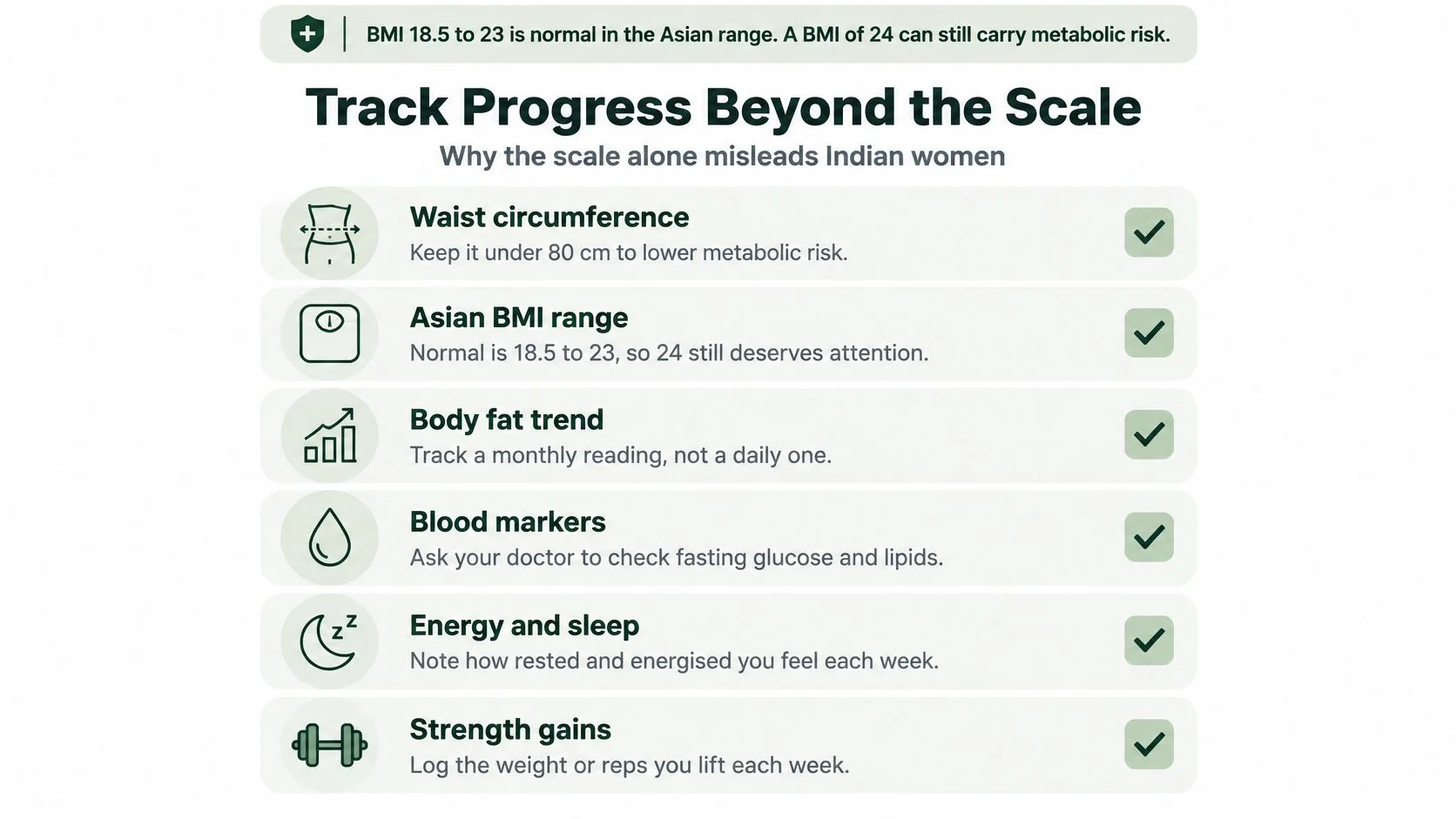
A week of scale readings can hide changes in waist size, energy or menstrual regularity. Track those alongside weight, and treat any calorie target as an estimate that may need adjustment for activity, health and life stage.
The NFHS-5 analysis published in The Lancet Regional Health - Southeast Asia reports that about 23% of women had a BMI above 25 kg/m², while 39.6% had a waist circumference above 80 cm. These are separate measures: BMI compares weight with height, while waist circumference helps assess abdominal fat. ICMR-NIN uses 18.5-23 as the Asian reference range for normal BMI. A BMI of 24 therefore falls above that range, though it cannot diagnose an individual's health on its own.
Measure consistently, then log what matters
Place the tape midway between your lowest rib and the top of your hip bone. Keep it level and snug without pressing into the skin, and measure after a normal breath out. Use the same spot and conditions each time.
- Weight: If weighing daily suits you, compare seven-day averages rather than single readings.
- Waist: Measure every two weeks.
- Meals: Record portions on five days a week to spot patterns without aiming for perfect logging.
- Energy and sleep: Note both briefly each day; persistent fatigue deserves attention even if weight is changing.
- Cycle: Record period dates, especially if cycles are irregular.
- Photos: Take a monthly photo in similar clothing, lighting and time of day.
A stable scale with a smaller waist may still reflect progress. Weight can also shift temporarily with fluid, salt intake or the menstrual cycle, so avoid changing your chart based on one reading. If your weekly average stays unchanged for several weeks, review portions, activity and consistency before reducing food further.
Keeping the Chart Going Through Cravings, Festivals and Plateaus
A meal chart has to work on ordinary weekdays and at family gatherings. In an India-based cluster randomised trial of 1,671 adults from 750 families, including 1,111 women, half the families received structured lifestyle support from nonphysician health workers, with screening, referral and follow-up, and the rest received enhanced usual care. At two years, the intervention group had an adjusted additional reduction of 2.61 kg in weight, 1.06 kg/m² in BMI and 4.17 cm in waist circumference versus enhanced usual care. The PubMed trial summary reports these findings. That trial tested health-worker support. At home, sharing the family meal and setting a weekly check-in are practical ways to make your chart easier to follow.
Three habits you can start this week
Use the family dal. Serve your measured rice or roti from the same meal the household eats. You do not need to cook a separate menu; keep the meal familiar and measure your own portion.
Plan for festival meals. Choose the sweet or savoury item you most want, serve it on a plate and enjoy it with lunch. Return to your usual portions at the next meal rather than skipping dinner or trying to compensate the following day.
Pack for delays. Roasted chana and a fruit can cover a late train or meeting. Add a boiled egg or a small cup of curd if you need a more filling snack.
Set a realistic walking time and, if it helps, invite a family member to join or check in. For cravings, include a protein source at breakfast, get enough sleep where possible, and serve a planned sweet rather than eating from the packet. If you miss several logging days, simplify the menu before reducing portions. A chart you can follow on busy days is more useful than a stricter one you soon abandon.
Confirm the Plan Before You Start
Stop and speak to a doctor before you start if you are pregnant, or breastfeeding without medical clearance, if you have a history of an eating disorder, if you take diabetes or thyroid medication, or if your BMI is below 18.5. Do not change thyroid or diabetes medication because of this chart.
- Record a baseline. Weigh on three mornings and average the result. Measure waist. Log three typical days of meals, including chai and snacks. Note cycle dates and an energy rating.
- Choose a starting band from the calorie table using real activity, then run the chart for two to three weeks without rewriting it mid-week.
- Review weekly weight, waist, and how many days you ate the portions as written.
- Adjust one variable. Change the band, one portion, or the walking target. Not all three.
If you have PCOS, thyroid disease, diabetes, or postpartum concerns, share that baseline with your doctor or a qualified nutritionist before week one. No specific weight loss or health outcome is guaranteed by any chart, including this one.
A full month with DietOwl costs ₹2,499 + GST. To ask whether this plan fits your condition, call the DietOwl health-coaching team at +91 80 4568 2359 or email support@dietowl.in.
DietOwl builds a weight loss diet chart for female clients around the rice, roti, dal, and family meals you already cook, then adjusts portions on WhatsApp as your steps, cycle, or postpartum stage change. A coach reviews meal photos and weekly trends so the plan stays gradual, with no promised kilos. If you want that chart matched to your kitchen, visit DietOwl.
Related Topics
Biological Audit
Need a customized Weight Management plan?
Join 100+ Indians on a personalised Indian plan, on WhatsApp.
Deepen your Discovery.
Does Chana Increase Weight? The Truth for Indians
Does chana increase weight? How chickpea calories change with roasting, boiling and portions, and how to fit chana into an Indian weight-loss plan.
1800 Calorie Diet Plan Indian: A Practical Guide
An 1800 calorie Indian diet plan built from home food: a full vegetarian day, non-veg swaps, the cereal limit, snack ideas and activity adjustments.
Is Corn Flour Good for Weight Loss? An Honest Guide
Is corn flour good for weight loss? Explore the real nutrition, glycaemic impact, portions and Indian meal strategies that decide the answer.