
Indian Corn Recipes: 9 Regional Dishes to Cook at Home
Written By
DietOwl Nutrition Team
Published
12 November 2026
Reading Time
20 min read
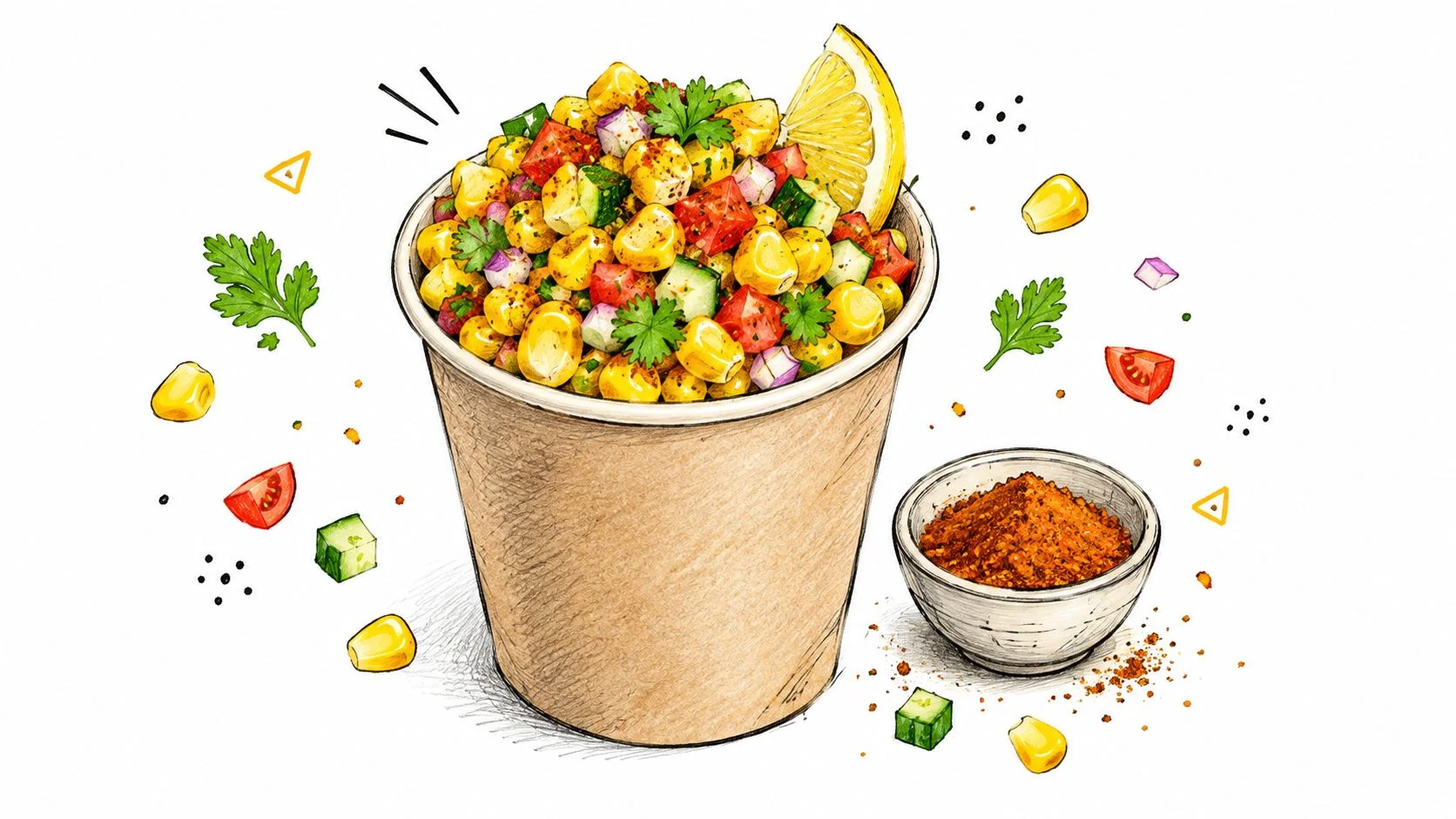
Does corn become a healthier choice because it's boiled rather than fried, or does the rest of your plate matter just as much? A lemon-rubbed bhutta, makki di roti with saag, and sweet corn pulao need different decisions about portions, toppings and protein.
Indian kitchens already offer plenty of ways to cook maize without turning every meal into buttered sweet corn. Maize is generally thought to have reached India around the 16th century, probably through Portuguese trading networks, and gradually found distinct uses in northern flatbreads, central Indian snacks and breakfast preparations.
The useful distinction is the form of corn you're cooking. Tender kernels, coarse meal and makki atta behave differently in a pan and shouldn't share a generic nutrition entry. These nine Indian corn recipes keep those differences practical, with preparation cues, small swaps and condition-conscious serving ideas.
- For a family meal: Build around roti, curry or pulao, then decide where the protein comes from.
- For a snack: Keep the corn portion deliberate rather than letting butter, sev and repeated refills determine it.
You don't need to abandon familiar food for weight management, PCOS or diabetes. You do need to look beyond the ingredient's healthy reputation.
Table of Contents
- 1. Makki di Roti with Sarson da Saag
- 2. Bhutte ka Kees
- 3. Masala Corn Chaat
- 4. Makai Palak (Spinach Corn Curry)
- 5. Makai Pulao (Sweet Corn Pulao)
- 6. Makki ka Cheela (Corn Flour Chilla)
- 7. Makai Poha (Corn Poha)
- 8. Corn Upma
- 9. Makki Dhokla (Corn Flour Dhokla)
- 9 Indian Corn Recipes Comparison Guide
- Make Corn Fit Your Plate, Not Fight It
1. Makki di Roti with Sarson da Saag
A good makki di roti should taste of maize, not of the extra flour added to make rolling easier. For a Punjabi-style winter meal, pair it with mustard greens cooked until tender, using palak or bathua alongside them if that suits your kitchen.
Start with makki atta, not the white cornflour used for thickening sauces. Add warm water gradually, bring the dough together and pat it between damp palms or on a lightly moistened sheet before transferring it to a hot tawa.
Cracked edges usually call for gentler handling or a little more moisture, not a heavy dusting of dry flour. A little wheat flour can make shaping easier if your household uses it, but the result will differ from an all-maize roti.
Keep the traditional pairing, adjust the extras
Cook the greens with ginger, garlic and chilli, then finish with a measured amount of ghee rather than pouring it over every serving. A dal or curd accompaniment makes the meal more complete without requiring another elaborate dish.
- For diabetes or PCOS: Keep the roti serving within your meal plan and give saag and protein a clear place on the plate.
- For weight goals: Measure the cooking fat, including any butter added at the table.
- For hypertension: Taste the saag before reaching for salted butter, pickle or extra salt.
For a family winter lunch, serve the same saag to everyone and vary the roti and accompaniments. DietOwl's guide to corn flour and weight loss can help frame the ingredient question without treating flour choice as the whole answer.
2. Bhutte ka Kees
The texture is what makes bhutte ka kees worth cooking. Grated corn becomes a soft, spoonable preparation, quite different from a bowl of seasoned whole kernels.
For an Indore-inspired home version, grate tender corn into a wide bowl, catching the milky liquid as well as the solids. Warm a little oil, add mustard seeds, ginger, green chilli and curry leaves, then stir in the corn.
Cook over moderate heat, scraping the base so the mixture doesn't catch. Add a splash of milk if you want a softer preparation, and finish with lemon and coriander after cooking.
Tender corn matters more than extra richness
A coarse pulse in a mixer is a practical shortcut, but don't blend the kernels into a completely smooth paste. If the mixture becomes stiff, loosen it gradually rather than compensating with butter.
For an evening snack at home, put sev and coconut on the table separately. That lets someone who wants the familiar garnish add it without making the whole batch heavier or saltier.
Practical rule: Decide whether kees is your snack or part of your meal before serving it. Don't let a soft texture turn it into an uncounted extra.
For diabetes or PCOS, pair a planned serving with curd or a suitable protein-containing accompaniment rather than assuming corn alone makes a balanced breakfast. For hypertension, use ginger, chilli, coriander and lemon confidently, while keeping salt and namkeen modest.
If weight management is the priority, measure the oil and go easy on coconut. Neither ingredient needs banning, but both deserve a deliberate place in the recipe.
3. Masala Corn Chaat
Masala corn chaat works best when the vegetables are crisp, the kernels are well drained and the seasoning isn't dominated by salt. It's a useful alternative when the evening choice would otherwise be a fried snack, but it still needs a sensible serving.
Boil or steam tender kernels until cooked, drain thoroughly and let the surface moisture evaporate. Toss with chopped cucumber, onion, tomato, coriander, lemon, roasted cumin and chilli according to taste.
Add chaat masala near the end, then taste before adding black salt. Using both automatically can make the seasoning unnecessarily salty.
Build the bowl around the occasion
- After work: Add cooked chickpeas, cooked sprouts or paneer and treat the chaat as a planned snack.
- Alongside dinner: Reduce another starch if corn is taking its place, rather than adding the bowl to an unchanged meal.
- For a family gathering: Keep butter, sev and sweet chutney separate so each person can choose their additions.
Corn forms aren't nutritionally identical. The Indian Food Composition Tables 2017 list tender sweet corn at about 97 kcal per 100 g and tender local corn at about 120 kcal, while dry maize comes to about 334 kcal, mostly because fresh kernels hold far more water. That is why tender sweet corn and dry maize need separate entries when you estimate a recipe.
For diabetes, don't rely on lemon or chilli to offset a large corn serving. For PCOS and weight goals, use vegetables and a protein accompaniment to make the snack more purposeful.
For hypertension, the simplest adjustment is to avoid stacking chaat masala, black salt and packaged toppings. Strong flavour doesn't have to mean using every seasoning in the cupboard.
4. Makai Palak (Spinach Corn Curry)
Make the spinach gravy first, then add the corn. This keeps makai palak from becoming sweet kernels floating in a thin green sauce.
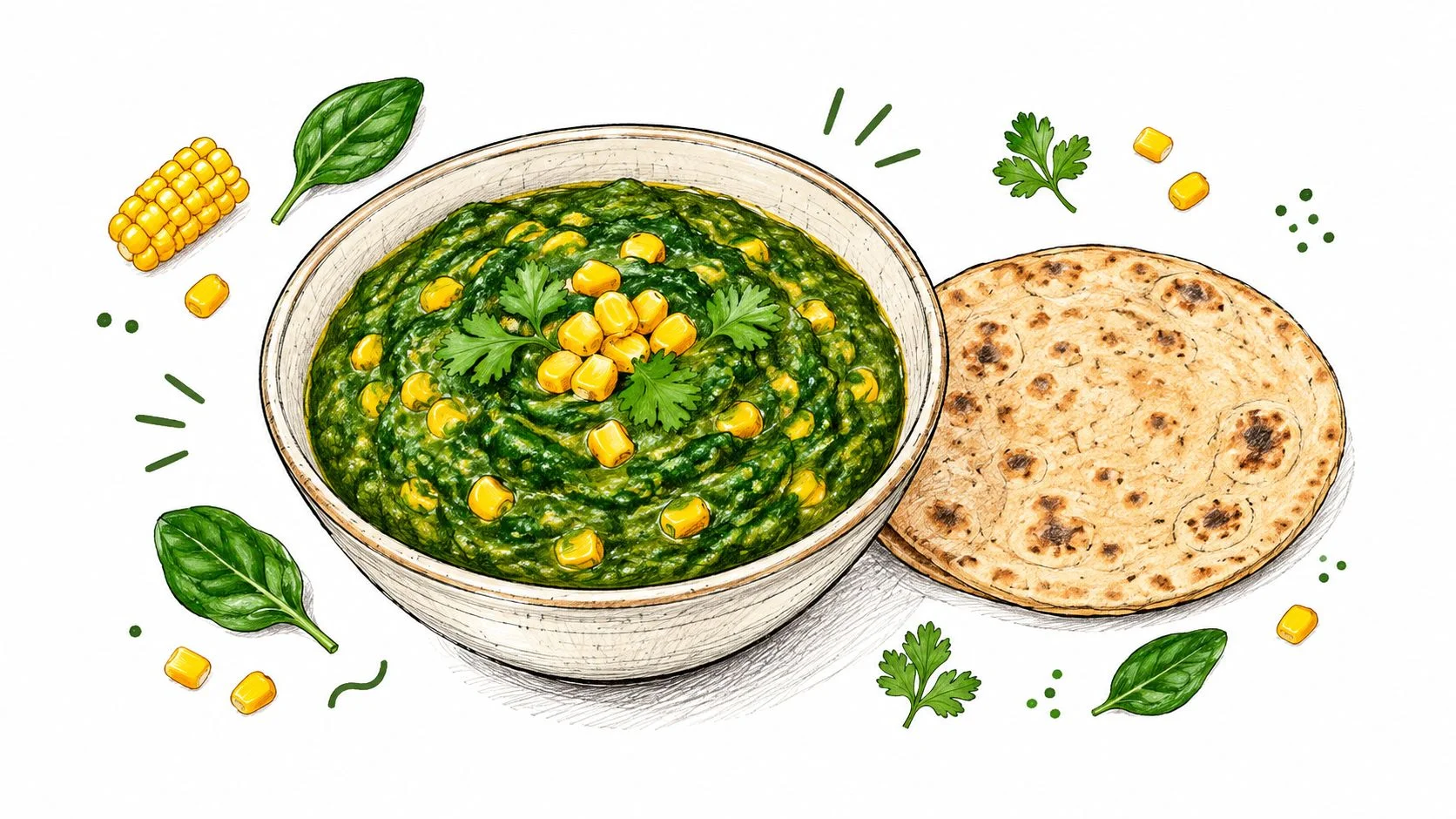
Wash the spinach thoroughly, cook until wilted and chop or blend it to your preferred texture. In a separate pan, soften ginger, garlic and cumin in measured oil, then add tomato and cook until the mixture comes together.
Stir in the spinach and cooked kernels, adding only enough water for a spoonable gravy. Finish with garam masala if you like, but keep the seasoning gentle enough for the greens to remain noticeable.
Give protein its own place
Corn and spinach don't remove the need to consider the rest of dinner. Add paneer to the curry, or serve dal alongside it; DietOwl's palak moong dal preparation offers another way to combine greens with a familiar pulse.
For a weekday family meal, make the base curry without cream and let anyone who wants a richer finish add it separately. A little curd can also be incorporated carefully over gentle heat if that flavour suits your household.
- For diabetes or PCOS: Count the kernels as part of the meal's carbohydrate component when deciding on rice or roti.
- For weight management: Use spinach and tomato for body rather than relying on cream, butter or a large nut paste.
- For hypertension: Avoid making pickle or papad an automatic accompaniment.
A smaller roti serving with curry and dal may fit some plans better than curry, a large rice serving and additional rotis. The appropriate balance depends on the person, not the dish's green colour.
5. Makai Pulao (Sweet Corn Pulao)
The main trade-off in corn pulao is straightforward: rice and corn both need accounting for. Adding vegetables improves the variety of the meal, but doesn't make an unrestricted rice portion suitable for every goal.
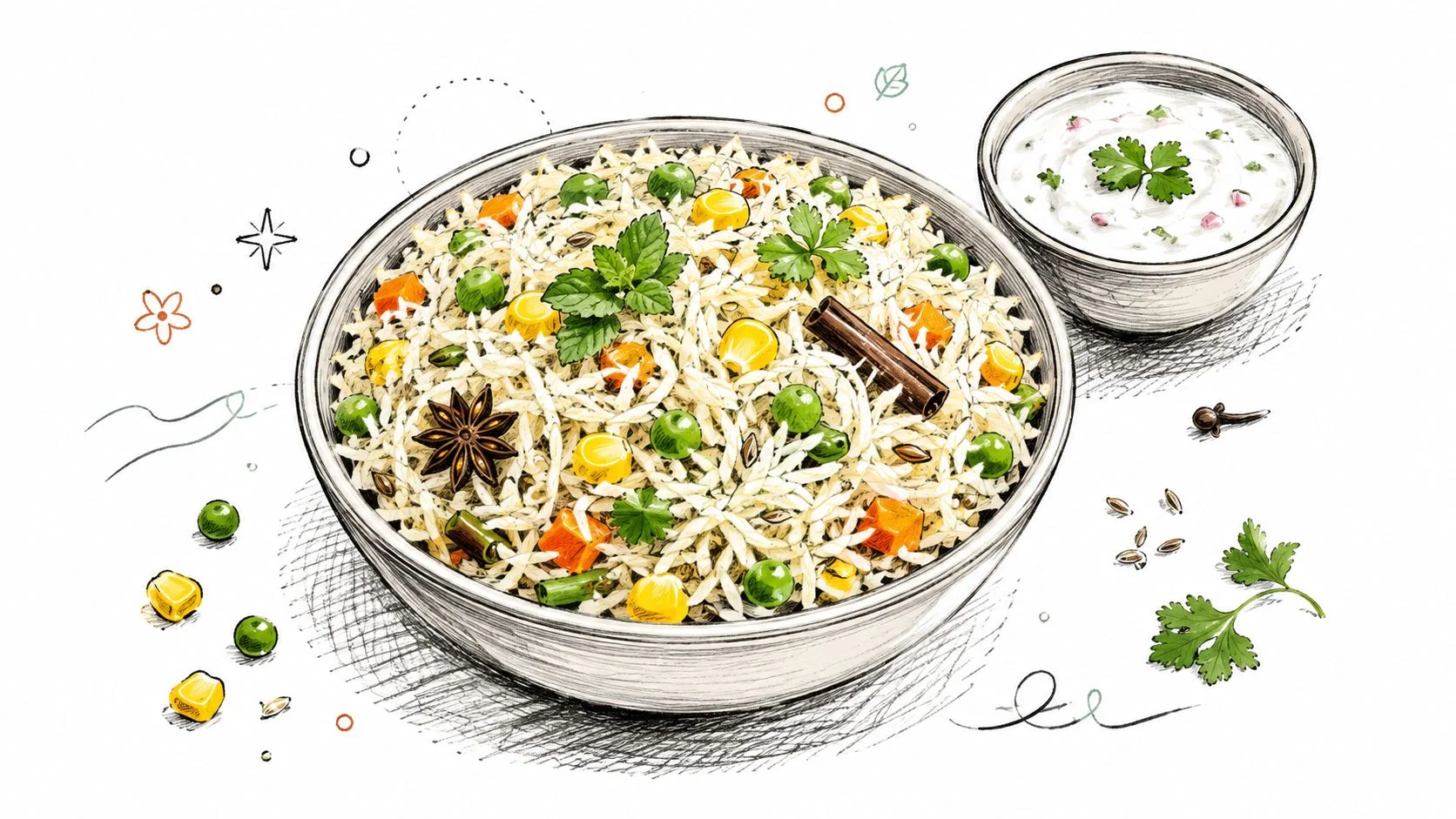
For a lunchbox version, rinse your usual rice and prepare chopped onion, carrot, beans and tender corn. Warm whole spices in measured oil, soften the onion, add the vegetables and rice, then cook using the water requirement for your rice and appliance.
Let the cooked pulao settle before fluffing gently. Stirring it repeatedly while hot can turn a distinct-grained preparation into a compressed, sticky mixture.
Fix the serving, not just the rice variety
Brown rice can be an option if your family enjoys it, but it isn't permission for a larger serving. If you mix rice varieties, choose ones with compatible cooking requirements rather than assuming they'll soften together.
Corn pulao needs a protein partner more than it needs a healthy label.
Pack raita with dal, an egg or another suitable protein food, depending on your preferences. For an office lunch, carry the accompaniment separately so the pulao doesn't become the entire meal by default.
For diabetes, use a consistent cooked serving and review how it fits your individual glucose targets. For PCOS or weight management, keep the rice-and-corn portion deliberate and add vegetables without drowning them in oil.
For hypertension, whole spices, ginger and fresh herbs can carry flavour without a stock cube or extra salty sides. Don't assume restaurant-style richness is necessary for pulao to taste satisfying.
6. Makki ka Cheela (Corn Flour Chilla)
A cheela that breaks during turning usually needs a better batter or more time to set, not another pour of oil. Makki atta benefits from gradual hydration and gentle handling.
Mix the flour with water, finely chopped onion, coriander, chilli and cumin. Add besan if you want a more forgiving batter, then let the mixture settle while you prepare the tawa and accompaniments.
Keep it pourable but not watery. Spread it gently on a moderately hot, lightly greased surface and turn only when the underside is set and the edges release.
Flour identity changes the result
The Indian Food Composition Tables 2017 list approximately 334 kcal, 8.8 g protein and 12.24 g dietary fibre per 100 g of raw edible dry maize. Those values describe the ingredient, not a finished cheela with oil, besan, vegetables and curd.
That distinction matters when logging breakfast. Record the flour used and the cooking fat rather than borrowing nutrition information for boiled sweet corn.
- For a rushed morning: Chop the vegetables ahead and mix the batter when you're ready to cook.
- For diabetes or PCOS: Serve with curd, eggs or another appropriate protein accompaniment rather than only sweet chutney.
- For weight goals: Use a reliable tawa and measure oil for the batch instead of adding it automatically around each cheela.
- For hypertension: Choose a lightly salted coriander chutney rather than a packaged sauce.
For a family breakfast, make the same batter and vary the chilli and serving size. Don't assume that calling a cheela a flour alternative automatically makes its portion irrelevant.
7. Makai Poha (Corn Poha)
If your usual poha already includes potato, corn is best treated as a substitution decision, not just another addition. Otherwise, a modest breakfast can become a much larger starch-based meal.
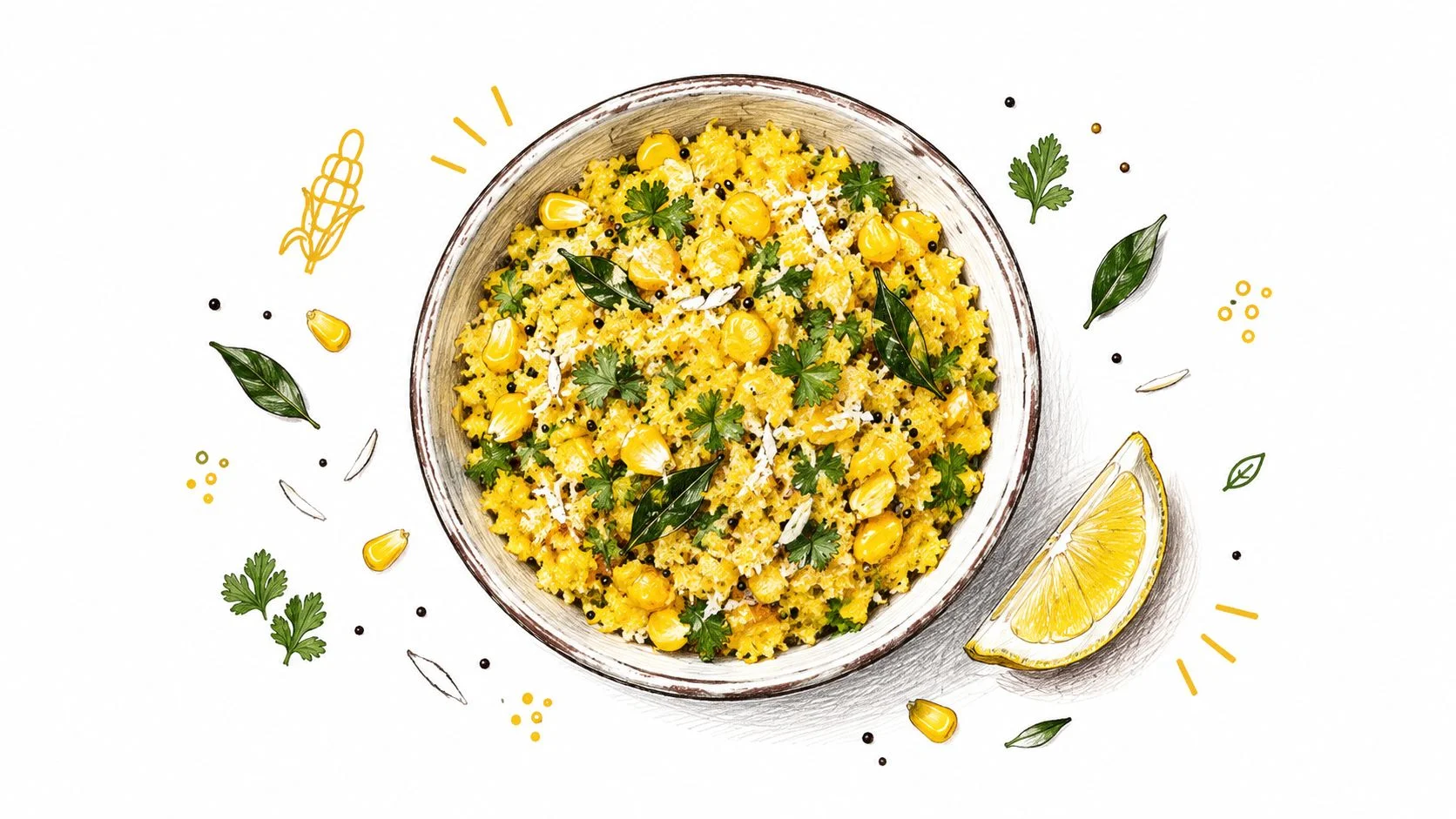
For a Maharashtra- or Madhya Pradesh-inspired variation, rinse poha according to its thickness and allow it to soften without becoming waterlogged. Temper mustard seeds, curry leaves and chilli in measured oil, soften chopped onion, then add turmeric, cooked corn and vegetables.
Fold in the poha gently, cover until heated through and finish with lemon and coriander. Add water cautiously if it seems dry; too much makes it difficult to recover the texture.
Choose the accompaniment before the garnish
For a workday breakfast, decide what you'll eat with the poha before reaching for sev. Curd, an egg or cooked sprouts can make the meal more rounded, while peanuts work best as a deliberate addition rather than an unlimited topping.
- For diabetes: Keep the poha-and-corn serving consistent and review it alongside your usual glucose response.
- For PCOS: Make room for protein instead of treating a breakfast of mostly poha and kernels as automatically balanced.
- For weight management: Use vegetables for variety and measure both oil and peanuts.
- For hypertension: Finish with lemon, coriander and chilli before deciding whether more salt is necessary.
Thick poha may be easier to handle in this preparation, but don't assume thickness alone proves a higher fibre content. Check the product rather than assigning it benefits based on appearance.
When cooking for children and adults together, keep the base mildly spiced. Add chilli and crunchy toppings individually, with portions adjusted to each person's needs.
8. Corn Upma
There are different ways to make corn upma: use coarse maize as the base, or add tender kernels to familiar rava upma. Pick the version before starting, because their hydration and cooking needs aren't interchangeable.
For a sweet-corn rava version, roast the rava separately until fragrant without letting it scorch. In a deeper pan, temper mustard seeds, curry leaves and ginger, soften onion and chopped vegetables, then add cooked kernels and hot water.
Stir in the rava steadily to avoid lumps and cook until hydrated. If you're using coarse maize instead, follow a method suited to that ingredient rather than copying the rava process unchanged.
Don't trade texture for a health claim
Oats or broken wheat can be useful alternatives, but each changes the result. Broken wheat needs appropriate cooking, while too many substitutions can leave you with a breakfast nobody in the family wants to repeat.
Kitchen judgement: A familiar upma with measured oil and a protein accompaniment is often more workable than a heavily modified version you don't enjoy.
Serve with sambar, curd or an egg according to preference. DietOwl's weight-loss breakfast guide offers a broader context for fitting familiar breakfasts into a routine.
For diabetes or PCOS, account for both rava and corn rather than treating the kernels as a free vegetable addition. For weight goals, increase vegetable variety while keeping the base portion deliberate.
For hypertension, watch the combined salt from upma, chutney and packaged accompaniments. A homemade tomato or coriander chutney lets you control seasoning, while a measured coconut chutney serving can still have a place.
For a busy household, prepare the chopped vegetables ahead and cook the upma fresh for the texture you prefer.
9. Makki Dhokla (Corn Flour Dhokla)
Steaming is useful, but it doesn't make every dhokla a high-protein food. What goes into the batter and what gets poured over the finished pieces still matter.
For a maize-based dhokla inspired by Gujarati and Rajasthani preparations, combine makki atta with besan, ginger, chilli and a suitable fermented or quick-prepared batter base. Use a tested recipe for the batter proportions and raising method, since flour blends don't all set in the same way.
Pour into a greased steaming dish and steam until the centre is cooked. Check with a skewer, allow the dhokla to settle, then cut it rather than slicing while it's fragile.
Keep the tempering purposeful
Warm mustard seeds and curry leaves in a little measured oil, then distribute the tempering across the batch. Avoid repeatedly soaking the pieces in extra oil or sweetened liquid.
For an evening family snack, serve coriander chutney and curd alongside, with sweet chutney offered separately. That approach keeps the base preparation shared without requiring everyone to choose the same additions.
- For diabetes or PCOS: Count the flour-based serving and include a protein accompaniment if the dhokla is replacing a meal.
- For weight management: Pre-portion what you intend to eat rather than grazing from the storage box.
- For hypertension: Review salt in the batter, tempering and chutney together.
Besan changes the recipe's protein contribution, but the final amount depends on the actual mix and serving. Don't apply a generic high-protein label to a predominantly maize-flour batch.
Refrigerate leftovers promptly and reheat thoroughly. Keeping the chutney separate also helps the remaining pieces retain their texture for another planned snack.
9 Indian Corn Recipes Comparison Guide
| Dish | Preparation Complexity | Time / Effort | Nutritional Profile | Key Advantage | Ideal Use / Note |
|---|---|---|---|---|---|
| Makki di Roti with Sarson da Saag | High: maize dough needs careful hand-rolling; saag is slow-cooked | More involved; seasonal greens and hands-on roti preparation | Whole-grain maize, fibre-rich greens; butter or ghee adds saturated fat | Traditional, filling winter meal with seasonal ingredients | Winter family meals; moderate added fat and jaggery portions as needed |
| Bhutte ka Kees | Low: grate corn, season, and cook in one pan | Quick; about 15-20 minutes | Corn provides fibre and nutrients; butter or coconut can add calories | Light, adaptable snack using fresh corn | Monsoon snack or breakfast side; limit toppings for a lighter version |
| Masala Corn Chaat | Very low: boil or steam corn, then toss with seasonings and vegetables | Very quick | Low in fat without creamy toppings; sodium may be high from chaat masala | Convenient, vegetable-rich snack | Office or evening snack; reduce salt and choose hygienic preparation |
| Makai Palak (Spinach Corn Curry) | Moderate: prepare spinach gravy and cook with corn | Batch-cooking friendly | Spinach provides folate and vitamins; corn adds fibre and carbohydrates | Combines leafy greens and corn in a versatile curry | Family meals with roti or rice; skip cream to reduce fat |
| Makai Pulao (Sweet Corn Pulao) | Moderate: cook rice with corn, vegetables, and spices | Convenient one-pot preparation | Rice and corn provide carbohydrates; protein is limited unless paired | Packs easily for lunch or travel | Tiffin or family lunch; pair with dal, paneer, or raita |
| Makki ka Cheela (Corn Flour Chilla) | Moderate: maize batter can be crumbly and harder to flip | Quick, with some care at the pan | Gluten-free when made with pure maize flour; fibre-rich, but relatively low in protein | Simple gluten-free breakfast option | Breakfast or snack; serve with curd or add besan for binding and protein |
| Makai Poha (Corn Poha) | Low: combine poha, corn, and tempering | Quick and suited to busy mornings | Corn and peanuts add fibre; poha is mainly starch with little fibre | Familiar breakfast with added vegetables | Breakfast or light meal; add protein and keep salt measured |
| Corn Upma | Low to moderate: one-pan cooking with rava and vegetables | Quick; about 20 minutes | Corn and vegetables add fibre; rava is refined unless substituted | Practical, portionable one-pan breakfast | South Indian-style breakfast; add sambar or a dal side for more protein and fibre |
| Makki Dhokla (Corn Flour Dhokla) | Moderate: mix batter, steam, and temper | Can be prepared ahead | Besan adds protein and fibre; steamed preparation keeps added fat low | Make-ahead alternative to fried snacks | Snack or lunch box; watch added sugar and sodium in chutneys |
Make Corn Fit Your Plate, Not Fight It
The most useful corn decision isn't whether it's allowed. It's which form you're eating, how it's prepared and what it replaces.
Roasted bhutta, boiled kernels, makki roti, popcorn and cornflour-thickened sauces aren't interchangeable portions. Even a simple cob needs context: IFCT 2017 puts tender local corn at about 120 kcal and 22.7 g carbohydrate per 100 g of kernels, so the size of the cob and the butter, salt or masala rubbed on decide what one bhutta adds up to.
Use a simple decision guide rather than searching for a universally best dish.
- For weight loss: Start with steamed, boiled or lightly cooked preparations, then measure added oil, butter, ghee, coconut and toppings. A dry-looking snack can still contain considerable cooking fat.
- For diabetes or prediabetes: Standardise the cooked serving, add an appropriate protein food and decide whether corn replaces some rice, roti or another starch. Your glucose targets and treatment plan should guide the final portion.
- For PCOS: Build a repeatable meal with protein, vegetables and a deliberate starch serving. Corn doesn't need a special ban, but neither should it receive an automatic healthy-food exemption.
- For hypertension: Watch salt across the entire plate, especially chaat masala, black salt, pickle, sev and packaged chutneys.
- For family cooking: Keep the base dish shared, then adjust portions, protein accompaniments and garnishes individually.
If you're boiling corn for several dishes, keep some kernels plain so the same batch can become chaat, palak corn or a measured addition to breakfast, rather than seasoning everything with butter immediately.
Timing questions also need context. Corn at night isn't a separate category of food from corn at lunch; the useful discussion is how the serving fits your evening meal, appetite, medication routine and individual glucose response.
If you want corn with roti, decide how much of each belongs in that meal rather than assuming the combination is forbidden. For diabetes, avoid changing prescribed medication based on a recipe swap, and seek individual advice if you're uncertain about portions or glucose readings.
DietOwl coaches on WhatsApp can adapt these familiar dishes to your portions, timings, medical conditions and daily schedule. Meal photos and a clear description of the corn form give a coach a more useful starting point than a log entry that says corn.
Traditional food doesn't have to compete with a nutrition plan. A plan becomes more workable when it accounts for the food your household cooks.
DietOwl offers personalised nutrition and lifestyle coaching on WhatsApp, with meal feedback and plans suited to Indian food habits and medical conditions. Visit DietOwl to discuss how makki roti, corn chaat or your usual breakfast can fit your portions, health goals and family routine.
Related Topics
Biological Audit
Need a customized Indian Nutrition plan?
Join 100+ Indians on a personalised Indian plan, on WhatsApp.
Deepen your Discovery.
Half Fried Egg Calories: Portion Sizes and Cooking Fat
A half fried egg is one whole egg: about 74 kcal from the egg, plus 20-45 kcal from half to one teaspoon of oil or ghee. Here is how to count it.

Uric Acid Diet: What Indians Should Eat and Avoid
High uric acid does not mean giving up dal. Here is what actually raises uric acid in an Indian diet, what the purine lists get wrong, and a practical plan that keeps your food.
How Much Protein Is in 1 Egg? Boiled, Whole and Per 100 g
One large egg gives about 6.28 g of protein, whether raw, fried or poached. Here are boiled, white, yolk and per 100 g values, plus what 2 to 5 eggs add up to.